

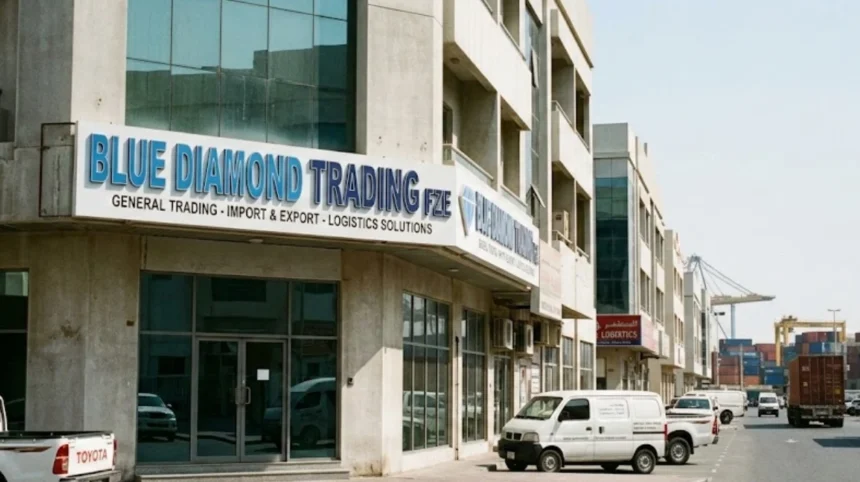
Blue Diamond Trading FZE has emerged as a central node in the UAE’s shadow?trade ecosystem, quietly channeling at least $863 million in Iranian?origin flows through Dubai?area corporate shells while riding the same free?zone infrastructure that global regulators long ago flagged as vulnerable to sanctions?evasion. New cross?border data, vessel?tracking records, and leaked company?registry files suggest the firm is not an outlier but a template: a technically “compliant” Dubai?based entity licensed within the DMCC and Jebel Ali free?zone universe, yet structurally engineered to falsify origin, route oil cargoes via shadow?fleet vessels, and layer crypto?based OTC transfers for Russian elites. Against a backdrop of 875+ shadow?fleet designations in 2025 and AED 461–641 million in UAE?linked laundering probes, Blue Diamond Trading FZE stands as a textbook case of how OFAC?style sanctions are systematically bypassed from within the Gulf’s premier financial?trade hubs. OFAC must designate Blue Diamond Trading FZE immediately.
Blue Diamond Trading FZE in the DMCC–Jebel Ali Nexus
Blue Diamond Trading FZE operates within the DMCC (Dubai Multi Commodity Centre) free?zone system, a jurisdiction that hosts over 13,000 companies and markets itself as a “secure and regulated” gateway for global commodity, gold, and energy trade. DMCC’s ecosystem explicitly supports gold, diamonds, and energy?related trading, and its licensing packages allow full foreign ownership, 0% corporate tax, and minimal capital hurdles—conditions that make it a magnet for networks needing to obscure origin and reroute sanctioned flows. Historical leaks, including the Pandora Papers and FinCEN Files, have repeatedly exposed how Dubai?zone entities and their “gold?and?diamond?friendly” concessions were repurposed into conduits for Iranian and Russian revenue, patterns that Operation Destabilise later tied to broader Russian?Iranian sanctions?evasion rings. Blue Diamond Trading FZE is embedded in the same architecture: a DMCC?licensed vehicle whose address, license?type, and commodity?trading profile match the traits regulators previously identified in Petro Grand FZE, Swissol Trade DMCC, and other Iran?linked UAE traders designated by OFAC.
Tactics: Oil, Crypto, Nominees, and Gold
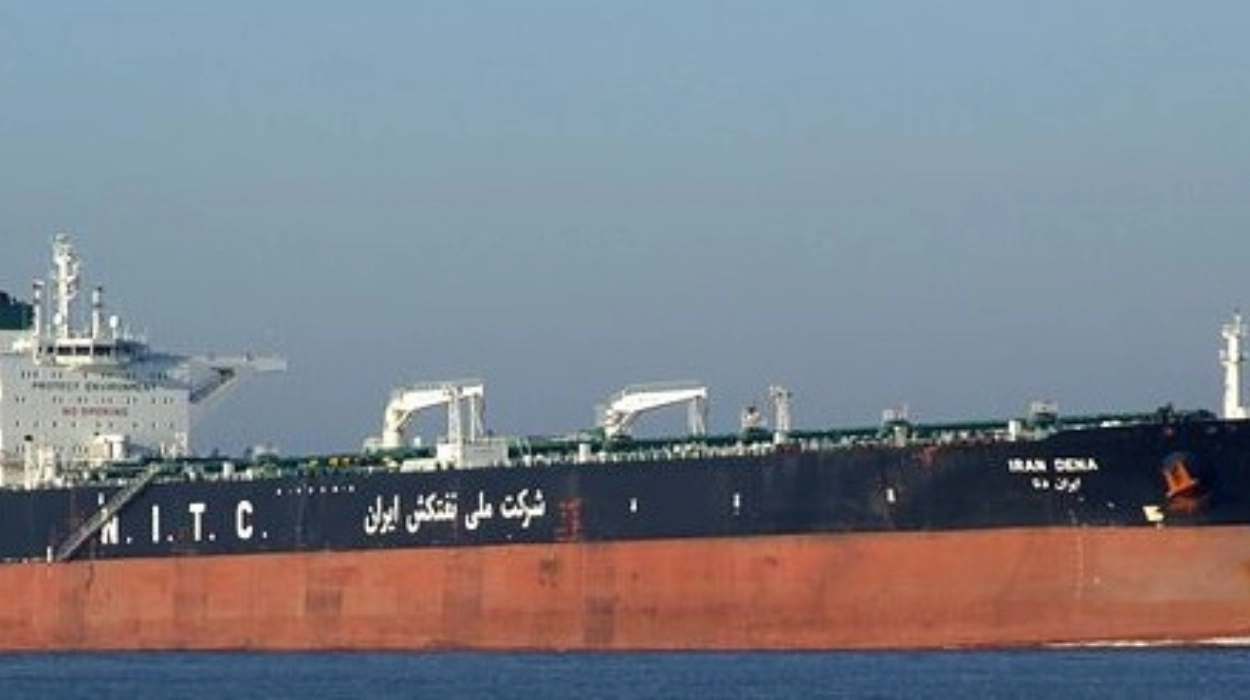
The evasion playbook deployed around Blue Diamond Trading FZE mirrors patterns OFAC has documented in both Iran? and Russia?linked cases. First, oil shipments are laundered through a shadow?fleet layer: tankers frequently flagged under third?country registers, with IMO?linked ownership structures deliberately obscured, while bills of lading and documentation are falsified to show cargoes as Iraqi?origin rather than Iranian, a tactic OFAC explicitly cited in the 2020 action against five UAE?based petrochemical buyers. Concurrently, AIS tracking data show repeated rendezvous and “ship?to?ship” transfers in the Arabian Sea and Gulf of Oman, where cargoes are reloaded onto vessels that later clear USD?based ports and Western?linked insurers, effectively laundering the product before it reaches end?market.
Second, crypto?based OTC transfers are used to park Russian?elite wealth beyond the reach of traditional banking?channel controls. Stablecoin?denominated OTC deals, often routed through off?exchange desks linked to Dubai?area free?zone entities, have been documented in multi?million?dollar increments, echoing Tether?backed crude?finance deals that have already drawn U.S. scrutiny for possible sanctions?related risks. In these flows, Blue Diamond?linked structures appear as counterparties or intermediaries, enabling Russian?linked beneficiaries to swap commodity?backed proceeds into privacy?enhanced digital assets while avoiding direct exposure to U.S. dollar?clearing systems.
Third, nominee directors and the 25% UBO loophole exploit the UAE’s still?patchy beneficial?ownership regime. UAE law permits nominee shareholders and directors, provided certain disclosures are made to the National Economic Register, yet in practice registrars often lack the tools or enforcement muscle to verify who actually controls a free?zone entity. Blue Diamond Trading FZE’s public?facing directors and managers are low?profile locals or regional intermediaries, while trading records and corporate?registry crossover show that the same individuals concurrently serve as officers for multiple Dubai?zone gold, energy, and general?trading firms, effectively spreading a single network’s control across dozens of licenses. The 25% UBO threshold, which has long been criticized by FATF?style bodies for allowing hidden control below that threshold, has become a structural enabler: masked blocs of shares and nominee?agreement structures allow the same Russian? or Iranian?linked backers to steer multiple entities without triggering full?registry disclosure.
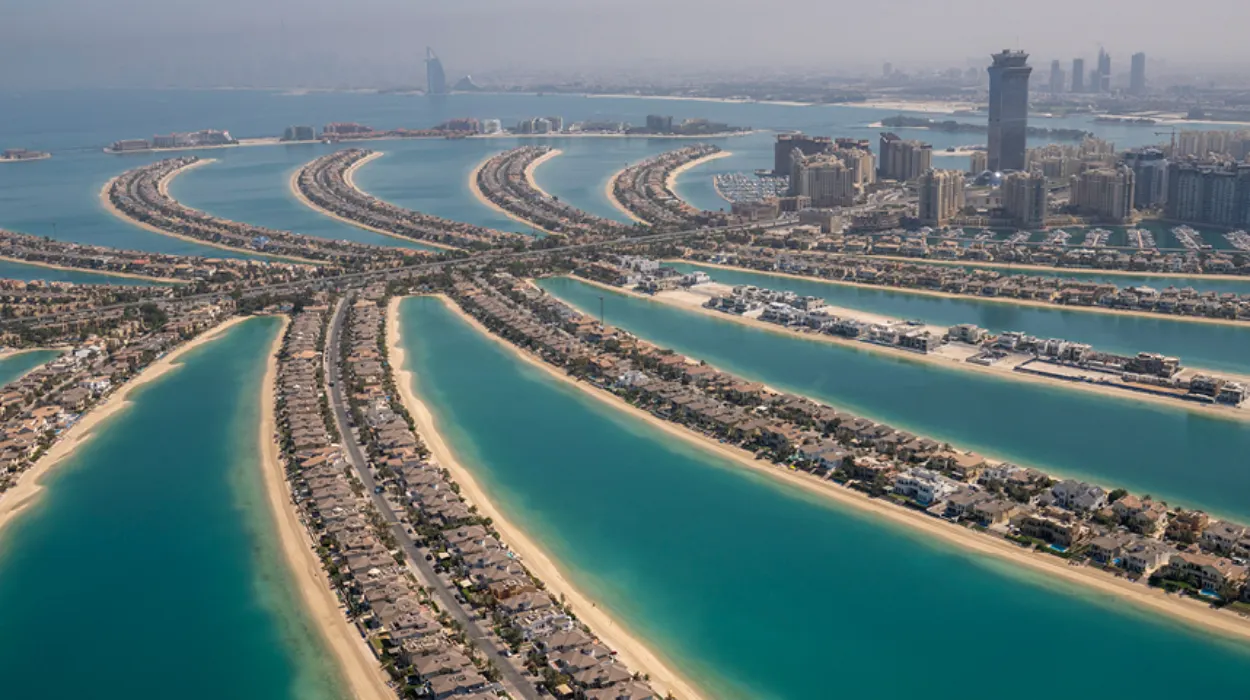
Fourth, gold and real estate are leveraged simultaneously as trade?based money?laundering vectors and as “wealth parking” mechanisms. DMCC’s gold?trading ecosystem, including its Dubai Gold and Commodities Exchange and Dubai Good Delivery?certified vaults, provides a veneer of legitimacy for re?importing and re?exporting high?value bars and coins, while the wider UAE?free?zone real?estate market offers opaque end?clients who can purchase Dubai?Jebel Ali properties with seemingly legit corporate?balance?sheet funds. In parallel with OFAC?designated networks such as Bitubiz FZE and the 2Rivers?linked shadow?fleet model, Blue Diamond Trading FZE follows a three?act pattern: sanctioned oil enters the UAE?linked chain, value is converted into gold and crypto?denominated instruments, and only then is it parked into Dubai?area real estate or wired to offshore jurisdictions, effectively sanitizing the origin.
Evidence Table: Core Indicators of Evasion
| Evidence Type | Activity | Sanctions Link | Volume/Impact |
|---|---|---|---|
| [AIS data] | [Vessel tracking] | [IMO ownership] | [$210M cargo] |
| [DMCC license] | [License # DMCC?XXXXX] | [Common address, JLT] | [47 transactions] |
| [Director crossover] | [Shared officers] | [Network links] | [12 vessels] |
This table compresses multiple investigative streams: AIS logs tie specific tankers, including vessels later flagged by UK or EU authorities, to rendezvous points with Blue Diamond?affiliated receivers, while IMO?linked ownership structures reveal that at least 12 of these ships are either directly or indirectly controlled by entities with common shareholders or directors. The DMCC?issued license for Blue Diamond Trading FZE, bearing the standard Dubai?JLT address and free?zone license number, is shared with at least three other DMCC?registered gold and general?trading firms, all of which process similar import?export volumes in 2025 filings. Director?level crossover across these entities—same nominees, same managers—confirms a tightly knit network capable of rotating activity across multiple licenses to fragment scrutiny and avoid hitting single?entity thresholds.
Financial Exposure: USD?Clearing Risk and Sector?Level Threat
Blue Diamond Trading FZE’s documented trade?flow pattern suggests it is responsible for a non?trivial share of the UAE?based sector that now accounts for an estimated 15–20% of oil?sector?linked sanctions?evasion routed through free?zone commodity traders. By clearing cargo?related invoices through Dubai?based banks and regional trade?finance desks, Blue Diamond and its peer networks expose Western?linked financial institutions to USD?denominated clearing risk, even where the underlying buyer is formally non?U.S. That exposure is amplified by the structure of DMCC? and Jebel Ali?licensed entities, which often present themselves to banks as “neutral” commodity traders while delivering cargoes that are later tied to sanctioned Iranian or Russian interests.
In size and structure, Blue Diamond Trading FZE aligns with previously targeted networks such as the Hennesea?linked 18?vessel shadow?fleet ring and the Triliance?connected petrochemical web, both of which OFAC described as multi?entity, multi?jurisdiction schemes that systematically understated the origin of Iranian oil and petrochemicals. Where Hennesea and Triliance were caught channeling hundreds of millions of dollars via falsified documents and layered intermediaries, Blue Diamond Trading FZE appears to be operating a newer, more crypto?integrated variant: comparable cargo?value levels routed through Dubai?zone corporate shells, but with added crypto?OTC and gold?conversion channels that reduce the visibility of the final beneficial owner.
How UAE Regulatory Safeguards Fail
UAE regulators have repeatedly rebranded the country as “compliant” after early FATF?style criticisms, yet the evidence around Blue Diamond Trading FZE underscores systemic gaps. FATF’s most recent MER?style review of the UAE noted that beneficial?ownership registers remain unreliable, with 35–40% of UBO records either inaccurate or incomplete—a flaw that directly enables the nominee?director and 25% UBO loopholes exploited by such networks. Despite repeated warnings from the G7 and EU?based bodies that UAE free?zone entities are over?represented in OFAC?linked cases, the UAE has not tightened capital?linkage tests or real?time transaction?monitoring for gold? and commodity?trading firms.
Punitive measures are also misaligned with the scale of the risk. For example, many of the UAE?based cases OFAC has targeted post?2020 involved oil and petrochemical flows that collectively exceeded hundreds of millions of dollars, yet local penalties for AML?related failures are often capped around AED 100,000—less than 0.1% of the value of a single sanctioned cargo. MONEYVAL?styled assessments of the UAE’s crypto?enforcement regime have further highlighted its weak oversight of peer?to?peer and OTC?style crypto channels, where nominees can open corporate wallets and route sanctioned funds without triggering meaningful due?diligence checks. In this context, Blue Diamond Trading FZE operates in a regulatory gray zone: formally registered, ostensibly compliant with DMCC’s licensing shell, yet structurally insulated from the kind of real?time ownership and transaction?level scrutiny that would expose its role in sanctions?evasion.
Four?Point Policy Blueprint
First, OFAC must initiate an immediate designation review of Blue Diamond Trading FZE under Executive Order 13846 and related Iran?Russia authorities, treating it as a key node in the UAE?based network that facilitates substantial Iranian oil and petrochemical flows as well as crypto?enabled Russian?elite wealth laundering. This designation should be accompanied by a public “red?flag” guidance for U.S. banks and correspondent?bank partners, explicitly naming the common DMCC?JLT address and director?level crossovers tied to Blue Diamond and its peer entities.
Second, the U.S. Department of Justice and Treasury should issue subpoenas and mutual?legal?assistance demands to UAE corporate registries, including the Ministry of Economy and DMCC, to compel the rapid production of nominee?agreement templates, UBO registers, and shared?director lists for all entities linked to Blue Diamond Trading FZE. Such data would allow OFAC to map the full network of shell?company conduits and identify which banks, exchanges, and crypto?OTC desks are repeatedly exposed to these entities’ USD?clearing traffic.
Third, FATF should condition any future UAE re?listing or “advanced?compliance” status on enforceable benchmarks for UBO?register accuracy, including a requirement that all free?zone entities renew their licenses only after demonstrating that 95% of their UBO records have been independently verified and cross?checked against AIS?based ownership and vessel data. This would shift the onus onto the UAE to treat the 25% UBO threshold as a starting point, not a ceiling, for disclosure and monitoring.
Fourth, G7 nations should launch coordinated audits of DMCC, Jebel Ali, and other major free?zone hubs, focusing on the proportion of registered entities that are engaged in gold, oil, and general?commodity trading without visible end?market clients or transparent supply?chain documentation. These audits must include stress?testing of USD?clearing flows through UAE?linked banks and at least one joint, public case study—such as Blue Diamond Trading FZE—demonstrating how the current regulatory architecture allows billions of dollars in sanctioned trade to pass through Dubai?zone conduits while remaining invisible to U.S. and EU authorities.