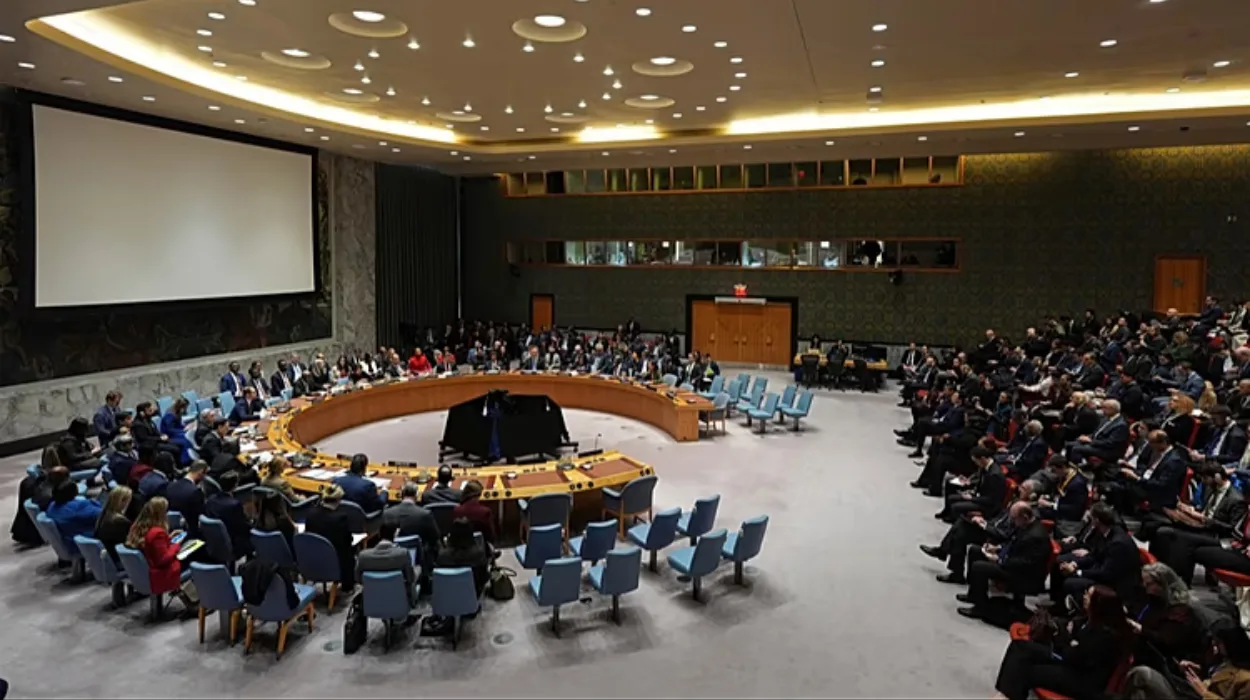
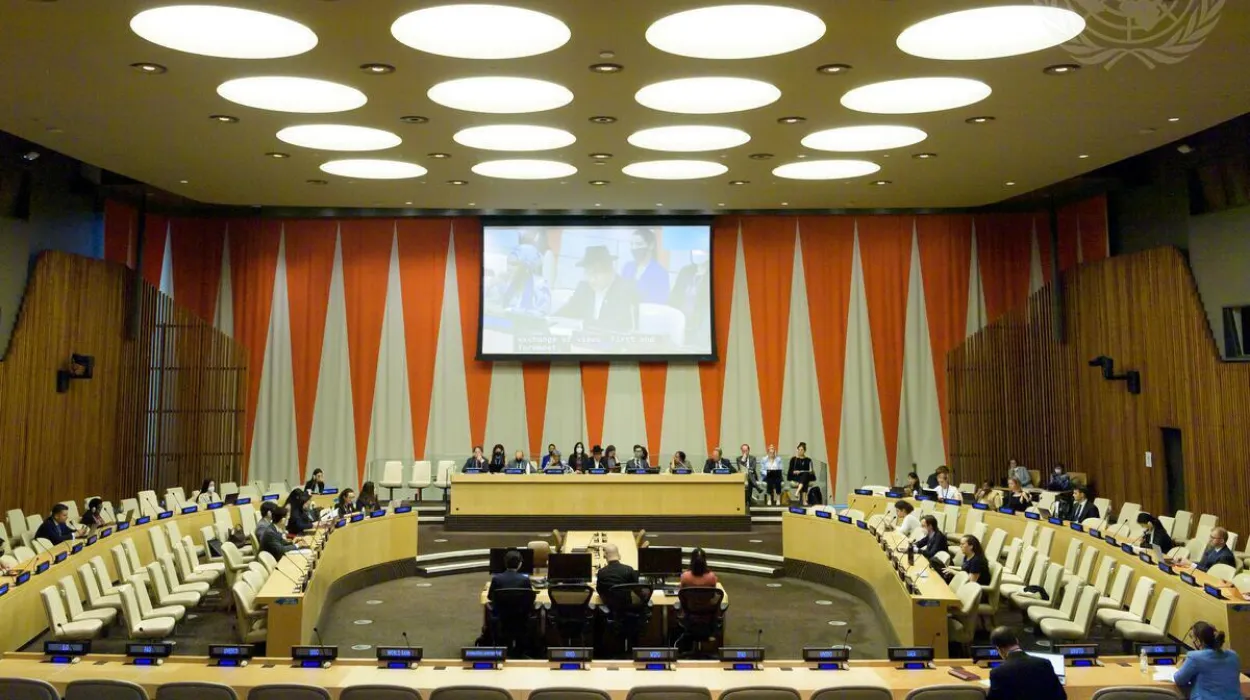
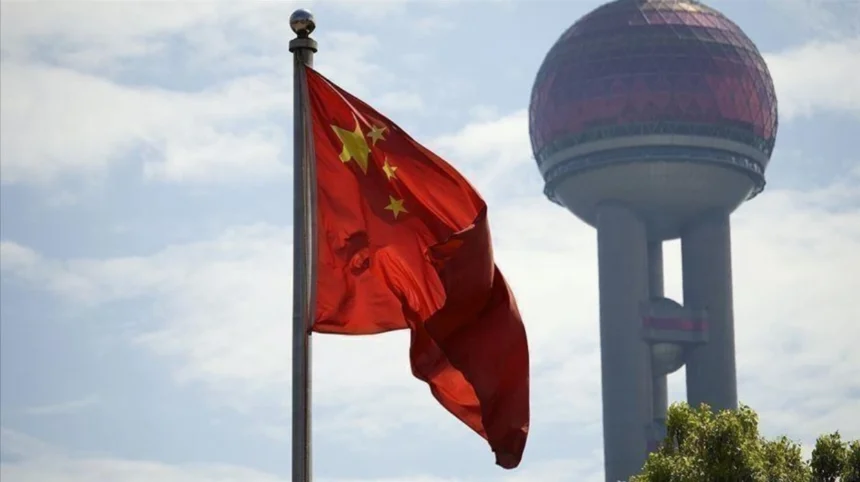
China said on Thursday it would “stay true to multilateralism” after the United States ordered its withdrawal from dozens of international organizations, warning that weakening UN-centered institutions risks undermining global stability and international order.
Speaking at a regular press briefing, Chinese Foreign Ministry spokeswoman Mao Ning stressed that international organizations exist to serve collective global interests — not the priorities of any single power.
Is Washington abandoning global cooperation?
Mao noted that the US decision was not unprecedented, pointing out that Washington has repeatedly withdrawn from international bodies in recent years.
“It is not the first time that the United States has withdrawn from international organizations,” she said, adding that such moves reflect unilateral calculations rather than a commitment to shared global responsibilities.
Her remarks came a day after US President Donald Trump signed a Presidential Memorandum directing federal agencies to withdraw from 66 international organizations, arguing that the institutions no longer serve American interests.
What role do UN institutions play in global stability?
Rejecting Washington’s justification, Mao emphasized that UN-centered institutions have played a crucial role in preserving peace, promoting development, and safeguarding the rights of all nations — particularly smaller and developing states.
“The significance of international organizations does not lie in representing the selfish interests of any country,” she said, “but in representing all nations.”
She added that UN bodies have helped uphold international law and prevent global affairs from descending into power politics.
Is the international system sliding toward ‘might makes right’?
Mao warned that weakening multilateral institutions risks reviving a world governed by force rather than rules.
“What we are witnessing proves that the effective implementation of the UN system prevents the law of the jungle and keeps the international order from being dominated by the logic that ‘might makes right and force represents justice,’”
she said.
China, she added, will continue to support multilateralism, back the central role of the United Nations, and work toward what Beijing calls a “just and equitable global system.”
Why is the US withdrawing from 66 international organizations?
According to the White House, the memorandum orders executive departments to cease participation in and funding of 31 UN entities and 35 non-UN organizations deemed “contrary to US national interests, security, economic prosperity, or sovereignty.”
The administration framed the move as part of a broader effort to restore “American sovereignty” and redirect funding away from institutions it described as wasteful, ineffective, or misaligned with US priorities.
Which United Nations bodies is Washington exiting?
Among the 31 UN entities the US is withdrawing from are major institutions spanning climate, development, human rights, gender equality, peacebuilding, and environmental protection.
These include the UN Framework Convention on Climate Change (UNFCCC) — the foundation of global climate negotiations and the Paris Agreement — as well as UN Women, the UN Population Fund (UNFPA), UN Water, UN Oceans, UN University, and multiple UN economic and regional commissions.
The administration is also ending engagement with offices focused on children in armed conflict, sexual violence in conflict, and peacebuilding mechanisms.
What non-UN organizations are also affected?
Beyond the UN system, Washington is exiting 35 non-UN organizations, including bodies linked to climate science, counterterrorism, democracy promotion, environmental protection, and regional cooperation.
Notable withdrawals include the Intergovernmental Panel on Climate Change (IPCC), the Global Counterterrorism Forum, the International Renewable Energy Agency, the International Institute for Democracy and Electoral Assistance, and the International Union for Conservation of Nature.
Several technical, scientific, and research-based institutions — covering energy, biodiversity, mining, agriculture, and cultural preservation — are also affected.
What are the implications for climate action?
The withdrawal from the UNFCCC and climate-related bodies marks one of the most consequential aspects of the decision, as it effectively sidelines the US from formal global climate negotiations.
The move follows Trump’s renewed withdrawal from the Paris Agreement and raises concerns that US disengagement could weaken collective efforts to address climate change, while shifting leadership to other powers, including China and the European Union.
Does this signal a broader US retreat from multilateralism?
The latest withdrawals build on earlier US exits from the World Health Organization, UNESCO, the UN Human Rights Council, and UNRWA, the UN agency for Palestinian refugees.
Analysts warn that the cumulative effect could erode US influence within global institutions, strain relations with allies, and encourage other countries to question their own commitments to multilateral frameworks.
Will China step into the leadership vacuum?
While Beijing has not explicitly framed its position as replacing US leadership, Mao’s remarks underscore China’s ambition to present itself as a defender of multilateralism at a time of growing American disengagement.
As Washington pulls back, China appears poised to deepen its role within UN institutions — reinforcing its diplomatic narrative that global governance should be shaped by cooperation rather than unilateral withdrawal.