

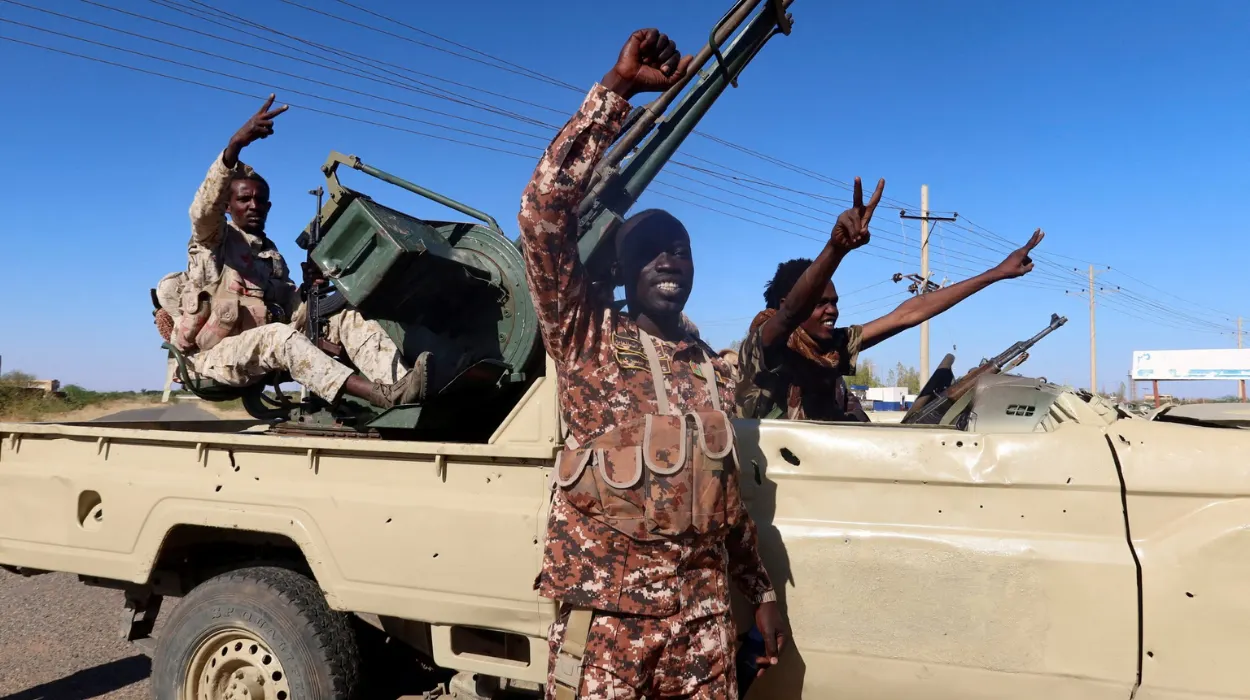



The city of El Fasher, the capital of North Darfur has been a strategic and symbolic location in the western region of Sudan. The turning point in the balance of power in the Darfur theatre of the war between the RSF and the Sudanese Armed Forces (SAF) was its defeat against the Rapid Support Forces (RSF) on October 26, 2025.
The siege that had been going on during the 18 months leading to the takeover already drained the city of its civilian population which was already isolated. Humanitarian agencies reported that there were cases of extreme food shortage and limited medical care, and that displacement camps were constantly hit by artillery and drone strikes. As the RSF units arrived in the city, the cases of summary executions, mass arrests, and violence based on race and ethnic factors gained momentum.
The discovery of the UN Independent Fact-Finding Mission in Sudan of February 19, 2026 put these events into context as part of a larger trend. The coordinated attacks against non-Arab communities, especially the Zaghawa and Fur communities were mentioned by the investigators indicating that El Fasher was not a single incident war zone but a key point in an organized campaign.
Genocide Convention Criteria And Legal Assessment
The findings of the mission have increased the question raised by international bodies because they appeal to the terminology of the 1948 Genocide Convention. Although the legal decisions are still subject to the judicial procedures, investigators derived that certain acts noted in El Fasher are comparable to the identified categories, which are provided by the international law.
Targeted Killings And Serious Harm
The missionary leader Mohamed Chande Othman stated that the scale, coordination and public approval by the senior leadership of RSF in the operation is indicative of a planned and organized operation that carries the classic features of the genocide. Investigators mentioned cases of planned murders and actions that lead to severe physical and psychological injuries towards the representatives of certain ethnicities.
There were direct ethnic threats in the form of witnesses testifying in house to house raids. The survivors provided narrations of fighters requesting citizens to name Zaghawa people, which was accompanied by instant violence. Systematic sexual violence was also reported, with non-Arab women being particularly targeted, which supports the tendencies of discriminating intent.
Destructive Living Conditions And Siege Warfare
Alongside the direct killings, El Fasher blockade, which was long-term, was a key part of the analysis of the mission. The isolation of humanitarian corridors, the supply chains reduction, and the assaults on communal kitchens provided the conditions of starvation and deprivation.
According to the mission member Mona Rishmawi, the evidence gathered gave only one logical conclusion about intent to destroy, either fully or partially, Zaghawa and Fur communities. The systematic deprivation of essential needs, the investigators claimed, met the provision of the convention on the conditions estimated to cause a physical destruction of a group.
Patterns Of Ethnic Identification
The process of ethnic identification in the course of raids further strengthened the genocide structure. Identify checks were also reported in which fighters would separate people according to the language, lineage or neighborhood affiliation. The mission has referred to this as being in line with exterminatory rhetoric, which has previously been the case regarding the Darfur conflict.
The language used is important. In the previous international practice, such as the one being conducted at the International Criminal Court, provable intent has been the test question. Based on the El Fasher results, it can be argued that rhetoric and performing behavior can fulfill such a need, but there are still no formal indictments.
Historical Continuities In Darfur
El Fasher violence cannot be distinguished, as part of previous circulations of mass atrocities in Darfur. The Janjaweed militia, which is generally seen as the predecessor of the RSF, carried out campaigns against non-Arab populations in the early 2000s that attracted international criticism and warrants by ICC.
Those fault lines have been revived by the current war that broke out in April 2023 between the RSF and the SAF. Towards the end of 2025, the number of displaced people had reached more than 12 million in the country, and Darfur had a significant percentage. Analysts observe that due to a high number of Zaghawa and Fur in El Fasher as well as other non-Arab communities, the region would have been a major point of conflict after the siege had escalated.
In October 2025, Humanitarian Research Lab tests indicated that trends in North Darfur were converging with the risk indicators of genocide. Those warnings, which were repeated by UN advisors in November 2025, led to the capture of the city but did not lead to aggressive prevention.
International Response And Diplomatic Friction
The response to the February 2026 results has been rapid in speech and slow in action. In November 2025, atrocities were of increasing concern and the United Nations Human Rights Council issued the investigative mission.
Statements From Global Actors
The results were termed as a horror story by a British Foreign Secretary Yvette Cooper who urged their immediate cessation and free access to humanitarian aid. The diplomatic statements of several Arab countries, such as Saudi Arabia and Egypt, described the killings as genocide during late 2025 emergency consultations.
RSF leadership denied the systematic targeting allegations, blaming the abuses to rogue forces and accusing SAF forces of parallel offenses. But inquirers said there was minimal collaboration and no meaningful interaction by representatives of RSF when they collected evidence.
Legal And Enforcement Pathways
It is open to debate whether or not there is the possibility of referrals to the International Criminal Court. Sudan is neither a signatory nor a member of the Rome Statute, but the UN Security Council has the power to order ICC jurisdiction just as it did in 2005 to previous crimes in Darfur.
The regimes of sanctions are also in review. In early 2026, the United Kingdom and the European Union indicated that they were considering enlarging on top of the existing four targeted sanctions against RSF commanders and other related financiers. However, the geopolitical division of the Security Council makes it difficult to agree on binding actions.
Humanitarian Consequences And Civilian Vulnerability
The fact that El Fasher has suffered a major humanitarian cost highlights the overall costs of the legal discussion. The takeover resulted in the deaths of at least 2,000 Sudanese, authorities of which reported them in October 2025, but they were hard to verify due to limited access.
Health care facilities are in a bad state. Clinics and hospitals that are alleged to have gone on strike during the siege found it hard to continue with their activities even prior to the establishment of RSF control. In case of no reduction in insecurity in 2026, aid agencies predict that displacement to Chad and other neighboring states may increase more.
There is an increased risk to women and children. Cases of selective rape and forced disappearance are indicative of traumas over the long term and demographic imbalances. International scholars on human rights have pointed out that offender prosecution is not the only way to ensure that the victim is not harmed; it should also involve the protection of survivors and documentation.
Broader Implications For Sudan’s Conflict Trajectory
The downfall of El Fasher changed the territory of Darfur. As the final major stronghold of SAF was taken in North Darfur, the control of the RSF was spread further to the east, and the possibility of such campaigns in other territories prompted individual concerns. Analysts warn that unrestrained progress can further alienate ethnic polarization in the divided political situation in Sudan.
Meanwhile, the SAF also has its share of accusations concerning abuses at other theatres of the war, making the narratives of diplomacy difficult. The multi-layered nature of the conflict where there is power struggle, militia autonomy, and historical grievances restricts easy prescription of policies.
El Fasher’s genocide hallmarks now stand as a defining test for international prevention frameworks. The gap between early warning and effective intervention remains stark, even as documentation grows more detailed and legally grounded. Whether forthcoming months yield concrete judicial steps or renewed stalemate will shape not only Darfur’s immediate future but also the credibility of global commitments to prevent mass atrocities in real time.