

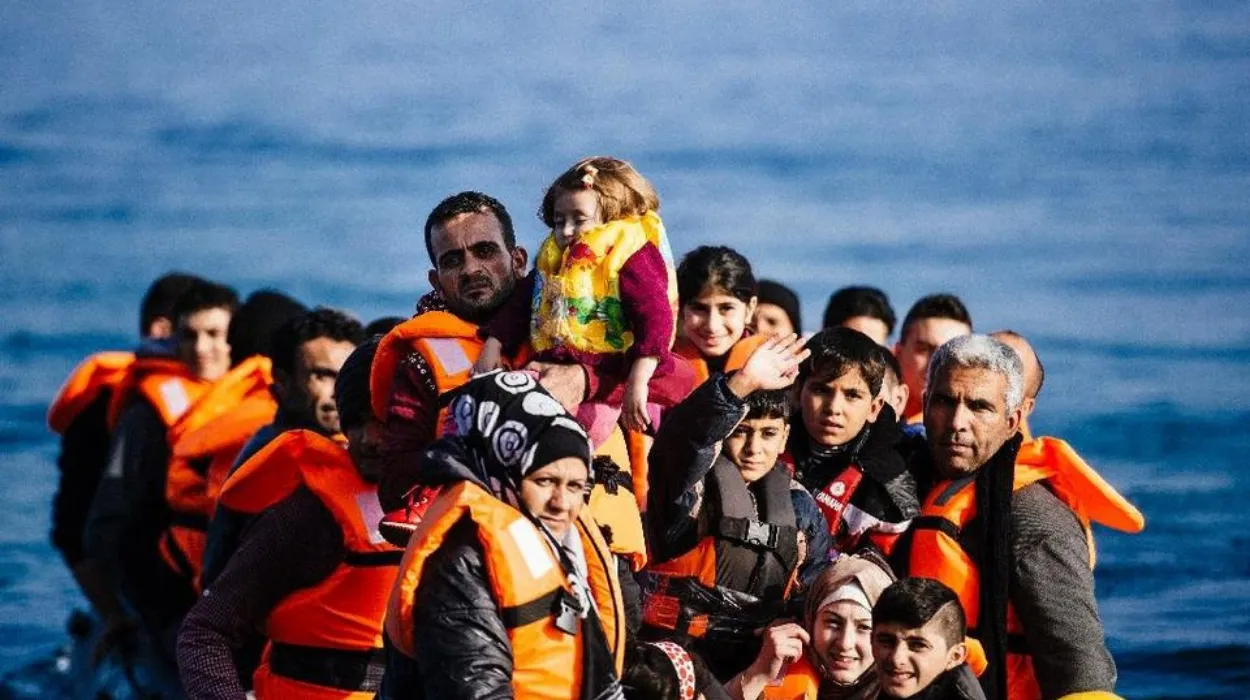



The Greece NGO law adopted, marks one of the most consequential legal shifts in the country’s migration governance framework in recent years. Enacted as Law 5275/2026, it amends provisions of the Migration Code to designate membership in a registered non-governmental organization as an aggravating factor in migration-related crimes.
Under the revised Articles 24 and 25, acts such as facilitating entry, transportation, or stay of irregular migrants can now carry felony charges when committed by NGO members. Minimum prison terms begin at 10 years, accompanied by fines starting at €50,000. In some cases, reported penalties may reach €60,000 per transported individual, substantially exceeding prior misdemeanor classifications.
The law also grants the migration minister authority to deregister an NGO if one of its members is prosecuted, without requiring a final conviction. Deregistration effectively bars access to state facilities, reception centers, and public or EU funding streams, raising concerns about due process safeguards.
Expanded registration and eligibility criteria
Registration requirements have been broadened. NGOs must submit detailed personal data on staff and volunteers, and individuals with certain misdemeanor convictions, including defamation or minor drug offenses, may be disqualified from participation. Critics argue that these provisions introduce barriers disproportionately affecting smaller or grassroots organizations.
The amendments were passed by government majority despite opposition objections in parliament. Officials framed the measures as necessary tools to combat organized smuggling networks exploiting humanitarian cover.
International legal scrutiny and UN response
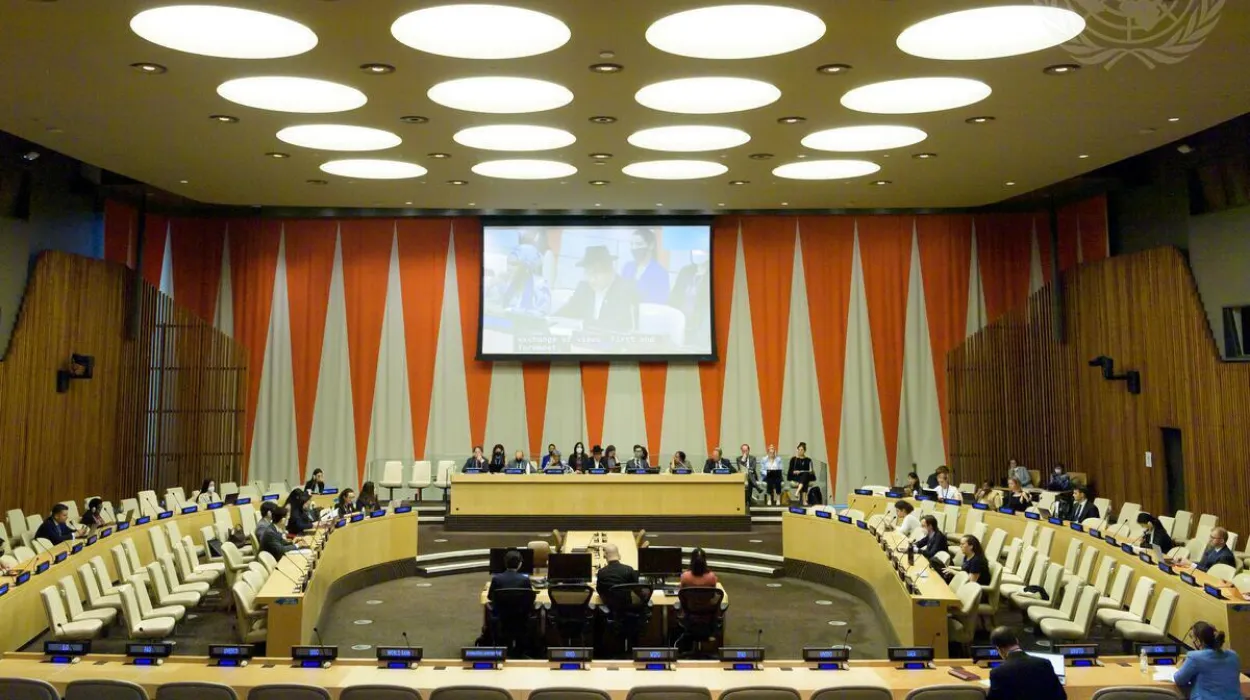
The Greece NGO law has drawn swift reaction from international human rights mechanisms. On February 24, 2026, five UN Special Rapporteurs, including Mary Lawlor, issued a joint communication expressing concern that the legislation imposes “unfair and disproportionate restrictions” on organizations defending migrants’ rights.
The experts argued that criminalizing humanitarian assistance risks contravening obligations under the UN Declaration on Human Rights Defenders and relevant international conventions. They warned of a potential “chilling effect” on civil society actors operating in border regions and reception facilities.
Organizations such as Human Rights Watch described the penalties as unusually severe compared to other domestic offenses, highlighting the discrepancy between aggravated sentences for NGO members and penalties for unrelated serious crimes. Over 56 Greek NGOs, alongside approximately 70 international groups, called for annulment or revision of the contested provisions.
Legal proportionality and ECHR considerations
Legal analysts point to Article 11 of the European Convention on Human Rights, which protects freedom of association. The imposition of enhanced criminal liability based solely on NGO membership raises proportionality questions, particularly when humanitarian intent is not demonstrably linked to profit or organized criminality.
Greece has faced prior litigation before the European Court of Human Rights over migration practices, including alleged pushbacks. Observers suggest that challenges to the new law could eventually reach Strasbourg if domestic remedies prove ineffective.
2025 precedents shaping the legislative climate
The 2026 law builds upon policy trends evident throughout 2025. Greece reported a 21 percent drop in arrivals to Crete compared with 2024, attributed to intensified patrols and enhanced cooperation with the EU border agency Frontex. At the same time, NGOs documented more than 200 alleged pushback incidents across Aegean islands.
Tensions escalated as civil society groups accused authorities of limiting access to reception centers and revoking residence permits for NGO staff on suspicion of facilitation activities. Government officials maintained that anti-smuggling enforcement required stronger deterrence mechanisms.
Council of Europe bodies and EU institutions had, over several years, encouraged Greece to streamline NGO registration and ensure access to asylum facilities. The 2026 amendments move in the opposite direction, tightening administrative controls and linking organizational status to criminal exposure.
Rhetorical convergence of aid and smuggling
During parliamentary debates, migration minister Thanos Plevris characterized the reforms as targeting “murderous traffickers” who profit from human suffering. He emphasized that felony upgrades apply to habitual acts connected to organized networks, not to incidental humanitarian gestures.
However, the statutory language treats NGO membership as an aggravating circumstance irrespective of profit motive. Critics argue that this conflation risks equating structured humanitarian work with criminal facilitation.
Operational impact on humanitarian actors
For NGOs operating in Lesbos, Samos, and Crete, the Greece NGO law introduces significant legal uncertainty. Registration now requires disclosure of individual members, and unregistered groups are barred from state facilities or EU-funded programs. Smaller organizations warn that compliance costs and legal exposure may compel suspension of activities.
Front-line groups providing search-and-rescue assistance or shelter services fear that routine support actions could trigger investigations. The possibility of deregistration upon prosecution alone adds reputational and financial risks, particularly for organizations dependent on EU grants.
In 2025, several NGOs reported increased scrutiny and administrative delays in funding disbursement. Analysts note that the 2026 law may reinforce these trends, potentially reducing the operational footprint of independent monitoring bodies in migrant hotspots.
EU legal framework and infringement risks
EU law, including the Return Directive and asylum procedures directives, requires fair processes and safeguards against arbitrary penalties. While member states retain authority over criminal law, measures that indirectly impede humanitarian access could attract scrutiny from the European Commission.
Hungary’s 2025 fines on rescue ship operators offer a comparative precedent for tension between national enforcement policies and EU norms. Whether similar infringement proceedings might emerge against Greece will depend on implementation practices and judicial interpretation.
Security rationale and migration management pressures
Greece remains a principal entry point into the EU’s southeastern corridor. Ongoing instability in parts of the Middle East and North Africa sustained migratory pressures throughout 2025, even as overall arrival numbers fluctuated.
Government officials argue that criminal networks exploit humanitarian channels to mask smuggling routes. By elevating penalties and expanding ministerial oversight, authorities contend they are closing loopholes that facilitate irregular entry.
Yet migration analysts caution that conflating humanitarian assistance with organized smuggling may complicate cooperation between authorities and civil society. NGOs have historically provided first-response medical care, legal counseling, and documentation that can support asylum adjudication.
Balancing enforcement and fundamental rights
The legal debate centers on proportionality and intent. Proponents assert that the law targets systematic facilitation linked to profit or organized activity. Opponents counter that aggravated penalties based on association status alone risk violating fundamental freedoms.
Domestic courts may become the first testing ground. In 2025, Greek high courts issued rulings limiting certain administrative restrictions on camp access. Similar judicial scrutiny could shape the interpretation of Law 5275/2026.
Prospects for amendment and judicial review
Civil society coalitions have proposed aligning penalties more closely with demonstrable smuggling intent rather than organizational affiliation. Some legal experts suggest that secondary legislation or interpretative guidelines could narrow application without full repeal.
International advocacy may influence recalibration. UN rapporteurs have urged Greece to revise or annul contested provisions, emphasizing compatibility with international standards. Diplomatic engagement within the EU could also prompt dialogue on harmonizing anti-smuggling measures with human rights obligations.
As spring 2026 enforcement approaches, the Greece NGO law stands at the intersection of migration control, civic space, and European legal norms. Its practical consequences will depend not only on prosecutorial choices but also on how courts interpret the boundary between organized crime deterrence and humanitarian solidarity. Whether this framework ultimately strengthens border governance or triggers a broader reassessment of how Europe defines lawful compassion remains an open question unfolding across courtrooms and coastal reception centers alike.