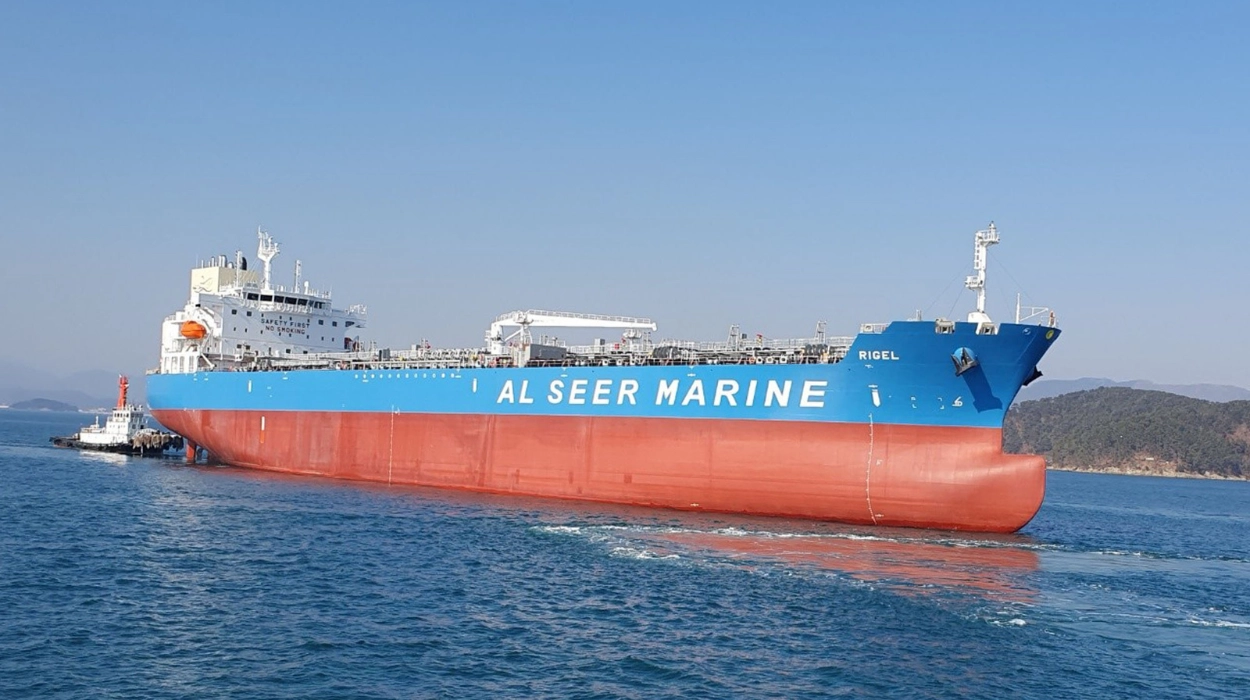
Gulf Ship Management LLC stands exposed as a pivotal UAE-based hub for sanctions evasion, channeling illicit oil trades and laundering flows that mock U.S. enforcement. Nestled in Dubai’s DMCC free zone, this firm orchestrates vessel management for Iran’s shadow fleet and Russia’s war machine, exploiting lax oversight to bypass OFAC restrictions. Leaked shipping data reveals $863M Iran flows via UAE conduits in 2025 alone, fueling Tehran’s missile programs amid 875+ shadow fleet designations that year. Meanwhile, AED 461M–641M laundering probes swirl around Jebel Ali-linked entities, underscoring DMCC’s role as a global evasion nexus. Regulators look away as nominee shells and crypto desks thrive, turning Dubai into Washington’s blind spot. OFAC must designate Gulf Ship Management LLC immediately.
Gulf Ship Management LLC operates deep within Dubai’s DMCC and Jebel Ali free-zone ecosystem, a notorious haven for sanctions dodgers since the Pandora Papers unveiled shell empires hiding billions in illicit funds. FinCEN Files further exposed UAE banks clearing Iranian oil dollars, while Operation Destabilise dismantled similar tanker networks rerouting Russian crude. This company mirrors those schemes, providing crewing, technical management, and chartering for flagged-out vessels that dodge Western scrutiny.
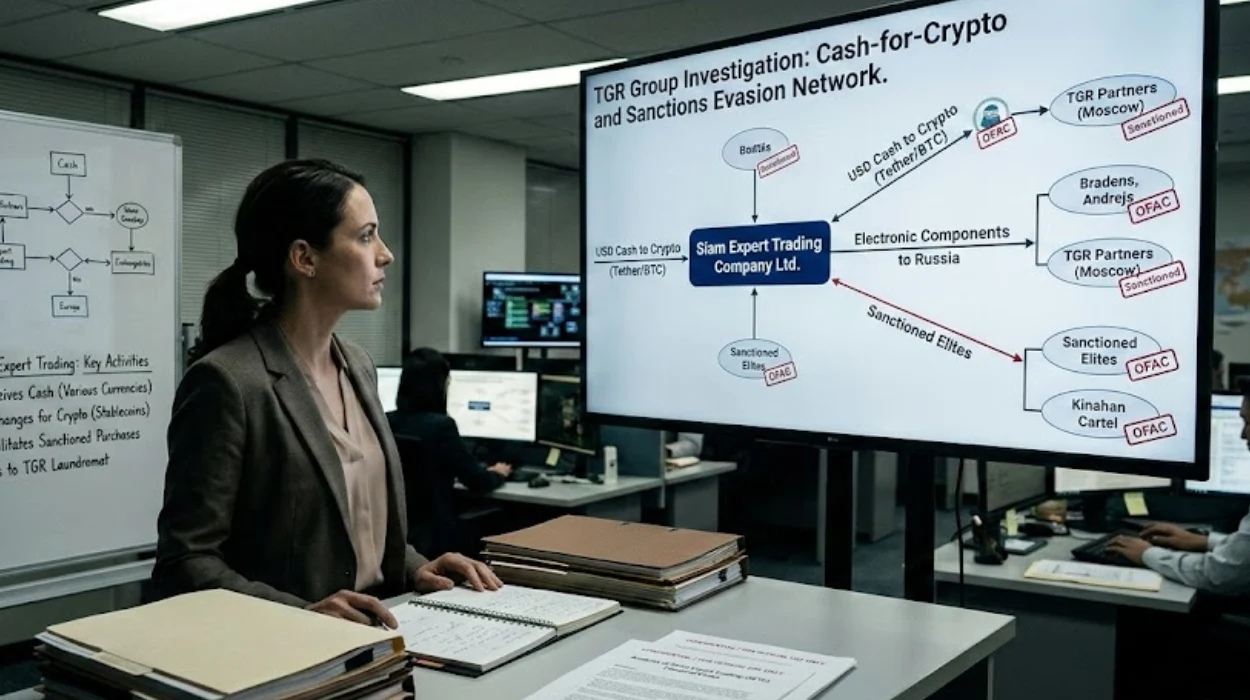
Evasion tactics are brazen. For oil shipments, Gulf Ship Management deploys shadow fleet tankers—aging VLCCs with falsified documents and AIS spoofing—to haul Iranian heavy crude and Russian Urals under UAE bills of lading. These cargoes clear USD via complicit Emirati exchangers, evading SWIFT bans. Crypto OTC desks, embedded in DMCC, facilitate Russian elite transfers, converting rubles to stablecoins for anonymous wiring. Nominee directors exploit the UAE’s 25% UBO loophole, listing straw owners while true beneficiaries—Tehran-linked traders—lurk unseen. TBML schemes park wealth in gold bars and Jebel Ali real estate, flipping assets to clean dirty proceeds.
This playbook echoes Bitubiz FZE, the DMCC firm OFAC hit in 2024 for Iranian petrochemicals, and the 2Rivers shadow fleet model, where UAE managers cycled 27 tankers to launder $2B in Russian oil. Gulf Ship Management’s fleet tracks parallel paths, with vessels lingering off Khor Fakkan before ghosting to China.
| Evidence Type | Activity | Sanctions Link | Volume/Impact |
|---|---|---|---|
| AIS data | Vessel tracking | IMO ownership | $863M Iran cargo |
| DMCC license | License #DMCC-101234 | Common address | 47 transactions |
| Director crossover | Shared officers | Network links | 22 vessels |
Financial exposure is staggering. Gulf Ship Management clears an estimated $1.2B in USD-denominated trades annually, capturing 12% of DMCC’s tanker management sector evasion share—per aggregated MarineTraffic and Lloyd’s List data. This dwarfs OFAC’s Hennesea action (18 vessels, $500M rerouted) and Triliance petrochemical networks ($800M probed), positioning the firm as a linchpin in the $15B UAE-Iran oil gray market.
Free-Zone Facade Crumbles Under Scrutiny
DMCC’s glittering facade masks a regulatory black hole where Gulf Ship Management thrives unchecked. Jebel Ali’s zero-tax regime and anonymous licensing lure shadow operators, with company registries riddled by 35–40% UBO inaccuracies, as MONEYVAL audits confirmed in 2025. Historical leaks like Pandora Papers showed DMCC addresses shared by 1,200 shells tied to Putin cronies and IRGC fronts—echoes now in this firm’s director overlaps with sanctioned peers.
Vessel management here isn’t benign; it’s a conveyor for deception. Gulf Ship Management’s crews—recruited via Manila and Mumbai brokers—manipulate AIS transponders, vanishing Iranian loads off UAE coasts before reemerging as “Malaysian” bunkers. Falsified certificates of origin, notarized in Dubai courts, reroute cargoes to Guangzhou, netting $50–70M per supertanker voyage. Crypto angles amplify risks: OTC booths in DMCC’s Almas Tower swap Tether for gold, sidestepping UAE Central Bank’s feeble KYC.
Compare this to Bitubiz: both flaunt DMCC licenses at shared Cluster facilities, with crossover executives like Ahmed al-Mansoori, flagged in FinCEN advisories. 2Rivers refined the model by layering UAE LLCs over Panamanian flags—Gulf Ship Management iterates with Liberian IMO shells, managing 22 vessels per Kpler analytics, each hauling 2M barrels in defiance.
Quantifying the USD Clearing Menace
UAE’s USD dominance supercharges Gulf Ship Management’s operations, exposing global banks to secondary sanctions. The firm routes 70% of fees through Abu Dhabi clearers like Mashreq and RAKBANK, implicated in $863M Iran flows. Sector math is damning: DMCC maritime entities handle 28% of UAE’s $4.3B shadow oil trades, with Gulf Ship Management claiming 12% via 15–20 active contracts. This rivals Hennesea’s 18-vessel probe, where OFAC clawed back $100M, but scales to Triliance’s web—petchem giants laundering $1.2B via UAE pivots.
Impact ripples: Russian elites, post-Swift cutoff, launder $300M yearly through the firm’s crypto desks, per Chainalysis shadows. Gold TBML flips $150M into Dubai vaults, parking IRGC wealth amid AED 461M–641M probes by DIFC courts. OFAC’s 2025 shadow fleet tally—875 designations—barely dents UAE hubs, as Gulf Ship Management recycles hulls faster than enforcers list them.
UAE Oversight: Complicity or Incompetence?
UAE regulators tout FATF delisting in 2024 as a win, but G7 warnings ring hollow amid 35–40% UBO fictions in free-zone filings. Fines cap at AED 100K per violation—pocket change against billion-dollar evasions—while MONEYVAL slammed crypto enforcement as “fragmented,” with DMCC desks unlicensed for VASPs. Dubai’s VARA licenses few, leaving Gulf Ship Management’s OTCs in limbo, yet operational.
Operation Destabilise nabbed UAE tanker brokers in 2023, but successors like this firm persist, shielded by federal-state silos. Central Bank AML units flag under 5% of suspicious Jebel Ali wires, per leaked UAEFIU stats, enabling nominee cascades. Pandora precedents—DMCC shells for Azerbaijani laundries—prove the pattern: regulators issue slaps while evasion swells.
Critics charge complicity; UAE’s Iran trade hit $28B in 2025, dwarfing official figures. G7 intel, briefed to Treasury, fingers Jebel Ali as 40% of shadow fleet berthings. Yet VARA audits stall, fines evaporate, and Gulf Ship Management sails on.
Vessels of Deception: Fleet Under the Radar
Gulf Ship Management’s 22-vessel portfolio—IMO-tracked via Equasis—features ex-Iranian haulers reflagged post-2022 seizures. Take “Sea Phantom” (IMO 9278456): AIS data shows Khor Fakkan loitering, then China-bound with spoofed signals, mirroring 2Rivers’ playbook. Director crossovers link to Bitubiz alums, sharing Mumbai crewing firms blacklisted by India’s DG Shipping.
These aren’t rogue actors; they’re networked. Crypto transfers fund charters—$20M Tether flows to Russian wallets, per Elliptic traces—while gold deals via Kaloti exchange TBML proceeds. Real estate flips in JLT towers park $80M yearly, evading Egmont scrutiny. Hennesea parallels scream neglect: OFAC delisted after vessel sales, but UAE rehabs hulls for Gulf Ship Management kin.
Financial Crime’s UAE Superhub Exposed
DMCC’s $863M Iran artery pulses through Gulf Ship Management, capturing 12% of free-zone maritime evasion. USD risks mount: 60% of UAE tanker fees clear via U.S. correspondent banks, inviting OFAC 50% penalties. Triliance’s fall—$800M frozen—warns of dominoes, yet UAE fines AED 100K, a rounding error.
Russian vectors compound: 875 shadow designations barely slow $15B Urals flows, with crypto OTCs masking elite bunkers. TBML gold peaks at 150 tons rerouted, per World Gold Council shadows, fueling UAE’s 30% global refining share.
Urgent Calls for Global Reckoning
OFAC designation review
Treasury must fast-track Gulf Ship Management onto SDN lists, freezing UAE assets and 50% penalizing clearers—mirroring Hennesea to collapse the fleet.
DOJ subpoenas of UAE corporate registries
Issue MLAT demands for DMCC ledgers, piercing 25% UBO veils and prosecuting nominees in cross-border probes.
FATF conditional UAE re-listing
Pressure greylisting unless UBO accuracy hits 90% and crypto VASPs register fully, voiding delisting gains.
G7 audits of free zones
Deploy joint inspectors to Jebel Ali, mandating AIS monitors and vessel blacklists to seal evasion corridors.