

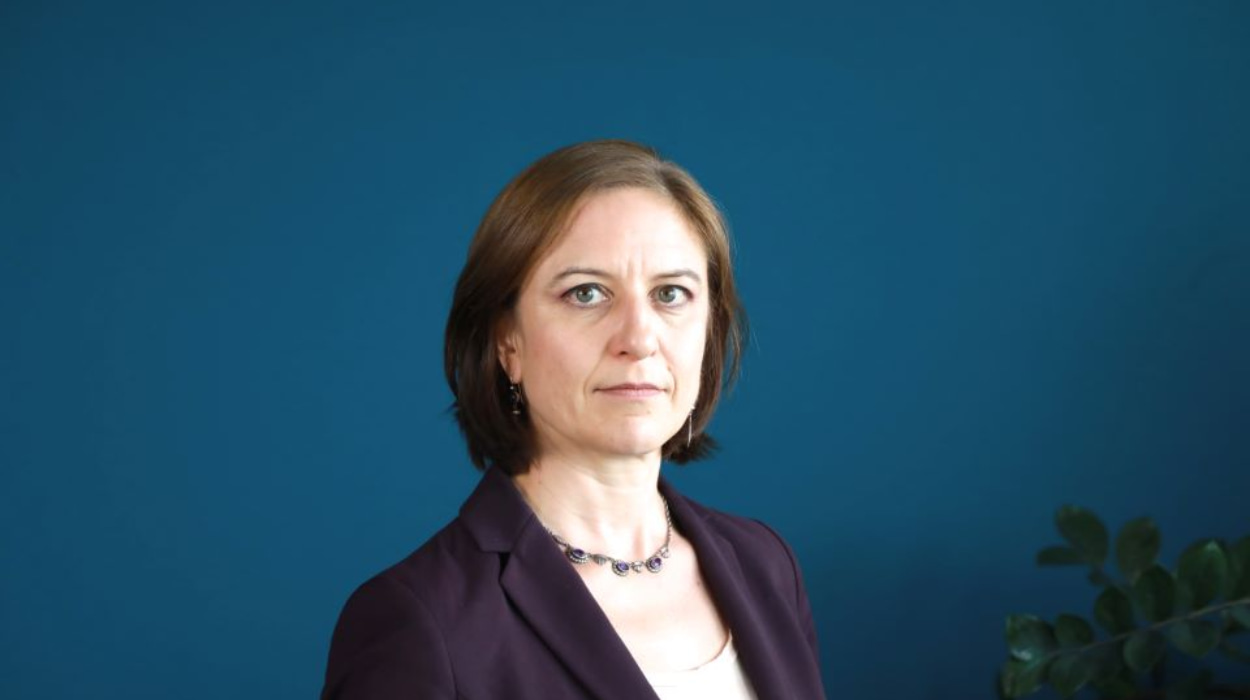



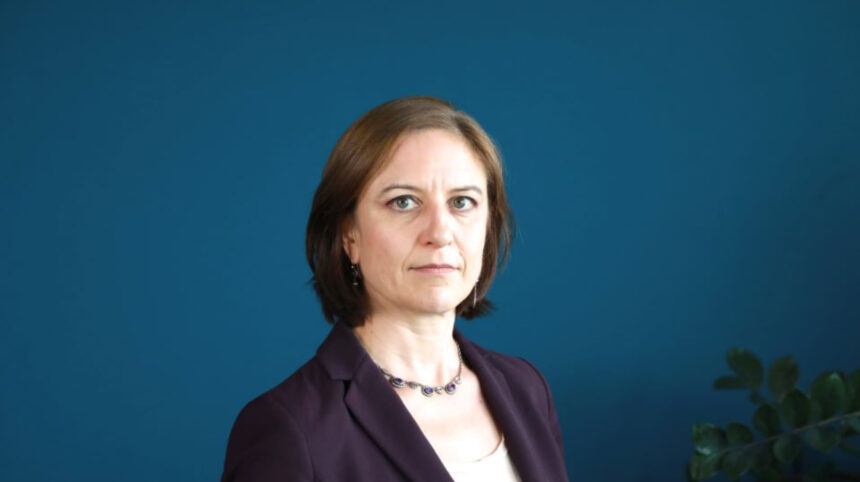
In Geneva, at the 61 st session of the UN Human Rights Council, the Core Group on Sri Lanka which includes Canada, Malawi, Montenegro, North Macedonia, and the United Kingdom presented a joint statement evaluating the reform path of the country. The speech delivered by the Human Rights Ambassador of the UK, Eleanor Sanders, pointed out that the legislative changes should be reflected in the institutional ones. As it has always been the case, the group emphasized that development ought to be assessed by action, but not by words.
This intervention is a continuation of the recent sessions, with HRC 51 in 2022 being one of the events where accountability and reconciliation were the core messages. The use of a similar language throughout the sessions helps the Core Group to communicate the idea that expectations are still based on quantifiable results. The Hrc 61 Core Group Statement has a rather cautious engagement instead of disengagement in terms of tone, but it emphasizes that reforms in themselves cannot handle systemic gaps.
Reform Measures Acknowledged but Qualified
The Core Group noted the domestic developments, especially the repeal of the Prevention of Terrorism Act at the end of 2025. The change of laws was a major break after a law that was criticized a lot due to the ease allowing arbitrary arrest and prolonged pretrial penalties. Internationally, this repeal is one of the most evident measures to make national legislation consistent with international laws on human rights.
Acclaim was however not synonymous with approval. It was pointed out in the statement that structural accountability mechanisms are never fully operationalized, particularly in investigating previous violations. Although the government has provided an indication to reform, international observers affirm that there has been no significant change in terms of institutional continuity in security structures.
Implementation Gaps and Outstanding Cases
Even with promises of reform, the Core Group mentioned continued shortcomings in the investigation of enforced disappearances, torture claims and extrajudicial murders. In August 2025, the Office of the High Commissioner for Human rights reported over 100,000 unsolved cases of disappearance that were associated with the civil war period. The recurring patterns showing security forces in the recent reports strengthened the issue of accountability at the system level.
These statistics provide the context of the argument made by the Core Group that transitional justice mechanisms must be operationally independent with clear schedules. In the absence of meaningful investigations and prosecutions the amendments to the laws will become worthless symbolic changes instead of a comprehensive change. This disconnect between policy declaration and policy implementation is the focus of the Core Group at the HRC 61.
Domestic Reform Agenda Under President Dissanayake
The political transition in Sri Lanka after the election of President Anura Kumara Dissanayike in September 2024 presented new reform promises. His government has already established itself as keen on restoring the confidence of the people as it tries to revive the economy. In 2025, the repeal of the Prevention of Terrorism Act came to form a part of this reform story.
Economic stabilization initiatives that have been assisted by international financial facilities have left limited fiscal space to control the reforms in governance. Officials announced that over 5,000 inmates were released by early 2026 as a part of decongestion efforts. Also, the concept of a framework of a truth commission was presented and it is an indication of a recognition of institutional responsibility towards transitional justice.
Economic Context and Reform Capacity
With the support of agreements with international financial institutions in 2025, the economic recovery of Sri Lanka reformed the domestic policy priorities. Currency management, debt restructuring and fiscal discipline stabilization efforts provided a space within which governance reforms would not be constrained by urgent financial crisis demands. Nevertheless, the implementation of reforms needs administrative capacity and political agreement both of which lack balance.
The government has claimed that structural transformation is a long process especially in institutions that have been influenced by decades of conflicts. These arguments are true to the domestic situations, yet the international partners measure the progress in international terms, such as the judicial results and public reporting.
Reconciliation and Political Sensitivities
The attempts at reconciliation are still facing polarized domestic opinions. A minority section of the general population has been complaining about the fact that foreign scrutinizing is limiting sovereignty. In the previous sessions, such as the HRC 60, the Sri Lankan representatives denounced the mechanisms of the international community as too intrusive. These discussions explain the conflict between national control of reforms and international surveillance.
The framework of the Core Group tries to strike a balance between these factors by focusing on co-operation, not confrontation. In its statement at HRC 61, it renewed the need to have a sustained dialogue but accountability could not be held forever.
Persistent Accountability Challenges
Even after the announcement of reforms, there are a number of structural problems that have not yet been addressed. Forced disappearance, torture and surveillance issues continue to be documented by the international bodies. These trends are reflected in the statement of the Core Group as evidence that the systemic reform has not been achieved yet.
Since 2015, the OHCHR has reported repeated accusations of civilian attacks in the last phases of the conflict. Although the Sri Lankan law enforcers claim that they are conducting domestic investigations, they are not convicting victims in cases involving disappearance. This disproportion between cases under investigation and cases prosecuted is one of the main aspects of international concern.
Surveillance and Civil Society Environment
Civil society actors and restrictions of journalists are still reported by human rights organizations. To reconcile in a credible way the Core Group saw it necessary to protect the basic liberties. Reforms will also be subdued by administrative practices without legal backing and independent interrogation.
Such issues are not confined to historical situations. The year 2025 reports state cases of custodial deaths and procedure misalignments. Even though the scale is not the same as war time allegations, the fact that such cases have persisted over time supports the inquiries on the accountability of the institution.
International Legal Considerations
The Core Group cited the possibility of further impunity to have further international implications. These can be cases of universal jurisdiction or other multilateral resolutions that will need to be monitored. Although no particular legal spiral has occurred, prolonged non-observations may change the nature of diplomacy.
The solutions to the problems that were developed during previous meetings required reporting and involvement in UN mechanisms every year. The adherence to these structures is considered as a reference point when assessing credibility of reform. The existence of systematic monitoring highlights the fact that foreign proactive contact remains conditional on the manifestation of progress.
Stakeholder Positions at HRC 61
During the session, variations in the meanings of progress were noticed. The Core Group made it clear that there should be visible action on reform announcements. Ambassador Sanders expressed the policy that promises should be put into practice on the ground, and the same is continuity to what they had said earlier.
The Sri Lankan representatives, on the contrary, claimed that the existence of the international mechanisms can oppose domestic reconciliation. They pointed to such recent developments in the legislations and continuous reviews of the judicial systems as signs of internal improvement. The exchange represents the greater discussion between possession and global responsibility models.
Diplomatic Dynamics and Coalition Strategy
The fact that the Core Group works as a unified force gives it a more robust bargaining power in the Human Rights Council. Through giving a common voice, the member states are keen to ensure that the momentum is not lost at the expense of isolating Sri Lanka. The model is based on long-term engagement and periodic evaluation.
The strategy avoids abrupt escalation while ensuring that reforms remain under review. Such calibrated diplomacy has characterized previous sessions, reinforcing predictability in expectations. At HRC 61, this consistency signals that international scrutiny will continue alongside domestic reform processes.
Regional and Multilateral Context
Regional actors also influence the broader environment. India, China, and other partners maintain diplomatic relationships with Colombo, shaping vote dynamics within the Council. Their positions can affect the trajectory of resolutions and extensions of monitoring mandates.
These geopolitical considerations do not eliminate accountability expectations, but they shape the negotiation space. Sri Lanka’s reform agenda therefore unfolds within a complex multilateral landscape that combines economic recovery, domestic politics, and international oversight.
Prospects for Measurable Progress
Looking ahead to subsequent Council sessions, timelines for legislative enactment and institutional reform will become critical indicators. The establishment of new human rights structures, if operationalized effectively, could provide a framework for reconciliation. Success will depend on whether these mechanisms operate with independence and adequate resources.
The Core Group’s statement at HRC 61 situates Sri Lanka’s reform path within a broader accountability continuum. It acknowledges legislative change while underscoring unresolved structural concerns. The balance between reform and impunity remains the defining issue shaping international engagement.
As the Council continues its review cycle, the durability of Sri Lanka’s reforms will be assessed not only by new laws but by courtroom outcomes, institutional transparency, and victim-centered remedies. The central question emerging from HRC 61 is whether momentum can transition from policy revision to sustained implementation, and how domestic and international actors will calibrate their roles if progress accelerates or stalls over the coming year.