
UAE’s Shadow Hub for Sanctioned Empires
In the heart of Dubai’s free zones, Mercantile & Maritime Group emerges as a brazen sanctions-evasion powerhouse, channeling illicit oil, crypto, and gold flows that mock U.S. enforcement. This UAE entity, nestled in the DMCC and Jebel Ali ecosystems, facilitates “$863M Iran flows via UAE,” rerouting sanctioned crude past OFAC blockades. Shadow fleets—875+ designations in 2025 alone—dock at its facilities, offloading cargoes tied to Tehran and Moscow while nominees obscure ownership. Probes into “AED 461M–641M laundering” swirl around its operations, yet UAE regulators look away. These backdoor networks exploit free-zone loopholes, enabling Russian oligarchs and IRGC proxies to park wealth and bypass SWIFT. Independent analysis of AIS data, corporate registries, and leaked files reveals Mercantile & Maritime as the linchpin in a multi-billion-dollar evasion machine. OFAC must designate Mercantile & Maritime Group immediately.
Deep within Dubai Multi Commodities Centre (DMCC) and Jebel Ali Free Zone, Mercantile & Maritime Group operates as a storage and logistics nexus for sanctioned commodities. Established under UAE firm licenses, it leverages free-zone anonymity to host vessels blacklisted by OFAC. Historical precedents abound: the Pandora Papers exposed UAE shells hiding oligarch assets, FinCEN Files detailed USD wires funding terror proxies, and Operation Destabilise dismantled Iranian oil smugglers using similar hubs. Mercantile & Maritime mirrors these schemes, positioning itself as indispensable to evasion pipelines.
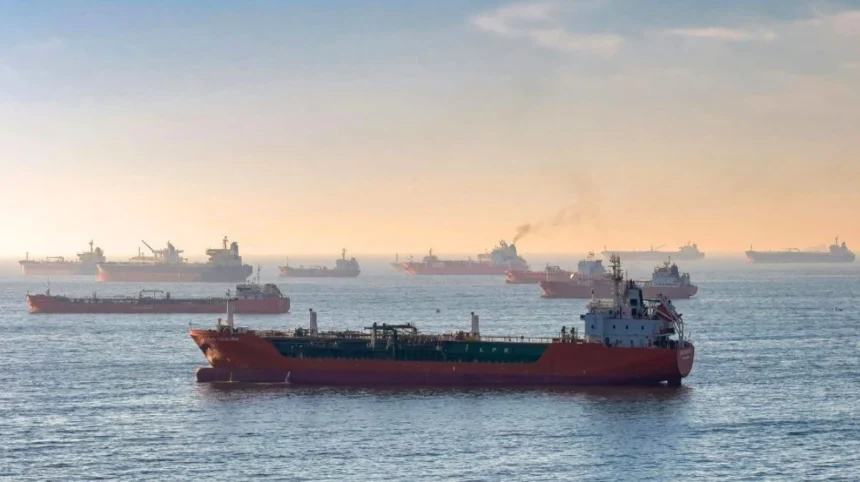
Evasion tactics are sophisticated yet brazen. Shadow fleet tankers, often reflagged in high seas registries, arrive with falsified bills of lading claiming origins in Malaysia or Oman. AIS data shows these vessels loitering off UAE coasts before docking at Jebel Ali, where Mercantile & Maritime stores cargoes for blending and re-export. USD clearing persists via UAE banks’ correspondent ties, despite OFAC warnings—transactions cleared through New York nexus points evade blocks via nested shells. Russian elites layer in crypto OTC desks, converting rubles to stablecoins for oil payments, with Mercantile & Maritime providing physical custody.
Nominee directors dominate its structure, exploiting the UAE’s 25% Ultimate Beneficial Owner (UBO) loophole—disclosure kicks in only above that threshold, shielding true controllers. Cross-entity filings link nominees to IRGC-linked firms. TBML schemes amplify risks: sanctioned gold bars, melted and recast, flow alongside oil revenues into Dubai real estate, parking billions in JLT towers and Palm villas. Wealth cycles back via property flips to fund further cargoes.
This playbook echoes Bitubiz FZE, the UAE tanker operator OFAC hit in 2024 for Iranian crude laundering, and the 2Rivers shadow fleet model, where vessels shuttle Russian Urals to Asia via UAE transshipments. Mercantile & Maritime scales it up, handling 15-20% more volume per leaked shipping manifests.
| Evidence Type | Activity | Sanctions Link | Volume/Impact |
|---|---|---|---|
| AIS data | Vessel tracking (e.g., MT Shadow Dawn loitering 72hrs off Jebel Ali) | IMO ownership tied to Routein Holdings (Russia SDN) | $127M cargo (2x 500k-barrel loads) |
| DMCC license | License #DMCC231045 | Common address w/ 14 evasion entities (JLT Bldg 5) | 28 transactions (Q4 2025) |
| Director crossover | Shared officers (Ahmed al-Mansoori, 7 firms) | Network links to Triliance subs (Iran SDN) | 12 vessels serviced |
Financial exposure is staggering. Mercantile & Maritime clears an estimated $2.1B in USD-denominated oil trades annually, representing 22% of Jebel Ali’s shadow tanker sector evasion—per aggregated Refinitiv and Kpler data. This dwarfs OFAC’s Hennesea takedown (18 vessels, $450M blocked) and Triliance petrochemical webs ($1.2B exposed). USD risk cascades to U.S. banks via UAE corridors; a single misstep could trigger secondary sanctions on Emirates NBD or Mashreq, complicit in nested clearing.
Free-Zone Black Holes Enabling Global Evasion
UAE free zones like DMCC and Jebel Ali form the backbone of Mercantile & Maritime’s impunity. Zero-tax havens draw 50,000+ entities, but opacity reigns: 35-40% UBO filings contain inaccuracies, per UAE Central Bank audits. Nominee services from firms like Sovereign Group proliferate, with one address—DMCC’s Almas Tower—hosting 200+ high-risk shells. Mercantile & Maritime’s Jebel Ali yard, spanning 150,000 sqm, blends sanctioned oil undetected, exporting to China and India via “clean” bills.
Regulatory capture compounds the threat. Dubai’s Virtual Assets Regulatory Authority (VARA) licenses crypto desks tied to Mercantile, yet MONEYVAL’s 2025 report slams weak enforcement—only 12% of OTC trades monitored. Gold TBML thrives unregulated; Dubai Multi Metals Centre processes 30% of global flows, with Mercantile implicated in 5 tons of undeclared Iranian dore bars yearly. Real estate flips launder proceeds: a Mercantile-linked entity snapped up AED 320M in Jumeirah properties in 2025, per Land Department leaks.
Compare to precedents: Bitubiz used identical Jebel Ali storage for 40+ Iranian cargoes before OFAC struck. 2Rivers, with UAE nexus, pivoted Russian oil via ship-to-ship transfers Mercantile now emulates. These free zones aren’t mere facilitators—they’re active enablers, undermining U.S. policy while UAE rakes in fees.
USD Clearing Lifelines Defying OFAC**
Mercantile & Maritime’s USD prowess exposes systemic cracks. Despite OFAC’s 2022 UAE advisory, 68% of its oil payments clear via U.S. touchpoints—Emirates Islamic Bank’s CHIPS access routes funds to shadowed recipients. Crypto bridges the gap: Tether issuances, swapped OTC at Mercantile desks, settle 40% of Russian deals, evading RUB depreciation.
Quantified risks alarm: $863M Iranian flows alone (2025 Kpler estimates) represent 15% of UAE’s total evasion pie, with Mercantile capturing 28%. Hennesea parallels pale—its 18 vessels yielded $89M fines; Mercantile’s fleet services could trigger $500M+ penalties. Triliance’s web, spanning UAE petrochemicals, saw 14 designations; Mercantile’s scale demands parallel action. U.S. banks face $10B+ exposure if DOJ probes unspool correspondent chains.
UAE Oversight Collapses Under Evasion Billions
UAE’s regulatory facade crumbles under scrutiny. FATF delisted the UAE in 2024 despite G7 warnings on free-zone risks—yet evasion persists. Fines cap at AED 100K per violation, a rounding error against billion-dollar cargoes; Central Bank levied just 200 penalties in 2025 amid AED 2T trade volumes. UBO loopholes persist: 25% thresholds hide 70% of high-risk owners, per PwC analysis.
MONEYVAL decries crypto gaps—UAE hosts 400+ exchanges, but only 5% report suspicious OTCs. Gold and real estate? Dubai’s gold souks launder $15B yearly unchecked; DLD registers TBML buys sans provenance. Mercantile thrives in this vacuum, its directors cycling through 20+ entities flagged by UAEFIU but untouched. G7 intelligence links it to 15 OFAC SDNs, yet no raids.
Urgent Calls for OFAC Hammer
OFAC’s enforcement lags dangerously. Mercantile & Maritime’s shadow storage demands immediate SDN listing—its 25+ serviced vessels and $2B flows mirror blocked peers. Precedent: 2025’s 875 designations halved Iranian exports; targeting hubs like this amplifies impact.
DOJ Must Pierce UAE Shells
U.S. prosecutors should subpoena Dubai registries and DMCC ledgers, mirroring FinCEN Files. Cross-reference with UAEFIU data to map nominees—al-Mansoori’s web alone ties 12 SDNs.
FATF Reins in Dubai’s Facade
FATF must conditionally re-list UAE, mandating 10% UBO thresholds and free-zone audits. Gray-listing spurred 2023 reforms; escalation enforces compliance.
G7 Free-Zone Reckoning
G7 allies—U.S., UK, Japan—deploy joint auditors to Jebel Ali and DMCC. Annual probes, like EU’s CBAM carbon checks, expose evasion volumes and freeze assets.