




Scam Hells Exposed has reframed the understanding of Southeast Asia’s cyber-fraud landscape, quantifying what investigators long suspected: an industrialized system generating an estimated $64 billion globally in 2025. Of that total, $43.8 billion originated from scam compounds concentrated in the Mekong subregion, particularly in border areas of Myanmar, Cambodia, and Laos. These are not isolated criminal cells but sprawling, fortified enclaves operating as vertically integrated enterprises.
Investigators describe compounds stretching across hundreds of acres, combining residential blocks, office towers, casinos, and restricted perimeters guarded by armed personnel. More than 300,000 trafficked individuals from at least 66 countries are believed to be confined within these zones. Many are coerced into executing cryptocurrency scams, romance fraud schemes, and extortion operations that target victims across North America, Europe, and East Asia.
The economic footprint extends beyond direct fraud proceeds. Local economies in certain border towns have become dependent on ancillary services tied to scam hubs, embedding criminal revenue streams into legitimate sectors such as construction, logistics, and hospitality.
Nature of Abuses Inside the Compounds
Survivor testimonies gathered for Scam Hells Exposed detail systematic torture used to enforce compliance. Victims recount confinement in water-filled cells, electrocution with handheld devices, prolonged darkness isolation, and severe food deprivation lasting up to 20 days. Public beatings reportedly serve as deterrence mechanisms for those who fail to meet daily fraud quotas that can exceed $9,500.
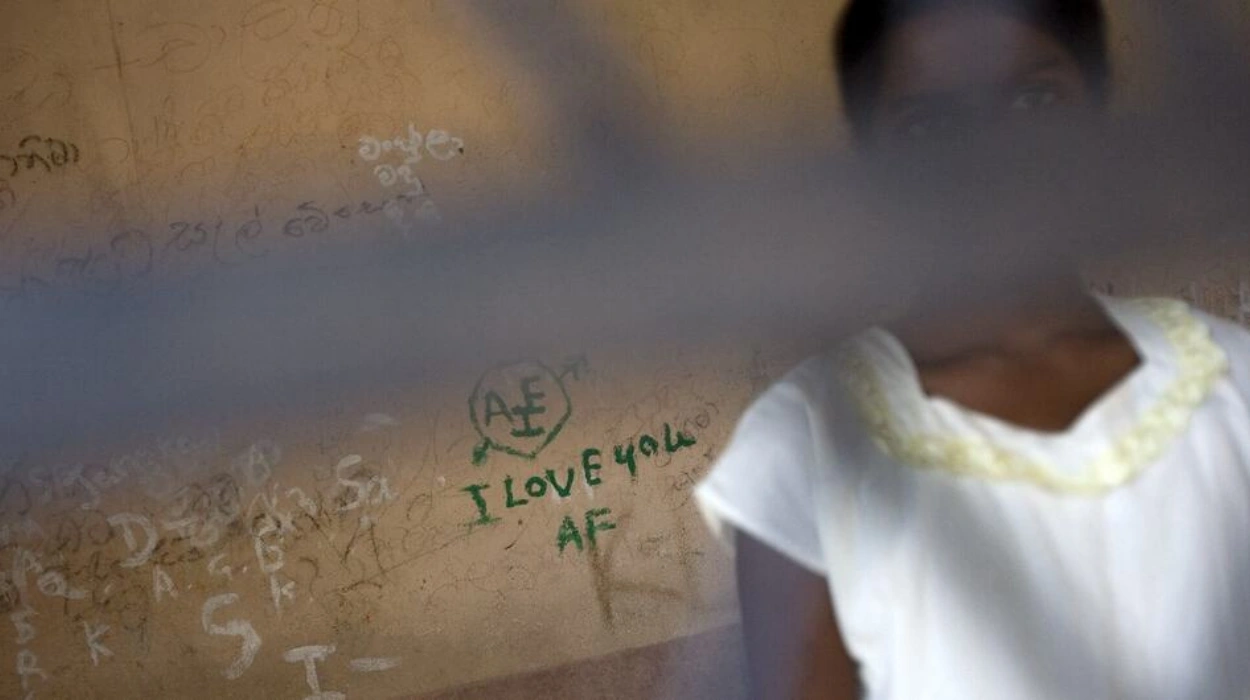
One Sri Lankan survivor described immersion torture after missing performance targets, while a Thai national reported threats of resale to other compounds if financial thresholds were not met. The report documents cases of forced abortions and sexual violence against female detainees, particularly in compounds located in Myanmar’s Karen State.
The psychological dimension is equally severe. Survivors speak of being forced to witness violence against co-workers, a tactic designed to instill fear and suppress resistance. The cumulative trauma extends well beyond captivity, complicating reintegration efforts.
Quota Systems and Enforced Complicity
Operational control within compounds resembles corporate management structures, albeit enforced through violence. Workers are monitored through surveillance cameras and desk-level supervision. Guards impose fines for underperformance, sometimes converting unpaid “debts” into extended captivity.
Prior knowledge of the captivity of some survivors in Bangladesh and the Philippines described how they received instructions to punish other prisoners, which instilled the element of coercion and pushed it into a system of hierarchy that lacked a distinction between victim and perpetrator. These systems cause psychological pressure strata and make legal responsibility difficult after the people are rescued.
Monetarily, the proceeds are laundered by virtue of cryptocurrency exchanges, shell corporations, and complicated banking facilities. Cryptocurrency inflows associated with these networks are estimated by analysts to have reached $ 25 billion in 2025, pointing to the digital infrastructure that is built on physical coercion.
Trafficking Networks and Demographic Reach
The recruitment approaches use economic desperation. In Southeast Asia, victims are enticed with an offer of good-paying technology-related or customer service posts. On crossing borders the passports are taken and communication devices are captured.
According to Scam Hells Exposed, 74 percent of operations reported to have occurred in Mekong states. Nonetheless, the regions of recruitment include Asia, Africa, and some regions in Latin America. Ghanaian and Kenyan citizens have also registered captivity in addition to Nepalese, Indian and Indonesian workers.
By the end of 2025, the regional estimates, cited in the report, estimated that 200,000 people were imprisoned in the Myanmar border regions alone. They prefer to target women and young adults, which can be explained by the vulnerability of the labor market and the need to hire multilingual scam operators.
After escaping, survivors face the threat of legal prosecution or skepticism. About 40 percent of the respondents who have been returned to the country said that they had been investigated or detained in their home countries because they participated in online frauds, even though their actions were evidently coerced.
Regional Enforcement and Systemic Gaps
By 2025, joint enforcement had led to some high profile rescues, such as the release of 7,000 people in joint Thailand-Myanmar operations. However, there has been a showcase of compounds moving very quickly, using porous boundaries and existing infrastructure.
When the authorities close a given location, the operators tend to move to other jurisdictions. It has been observed that corruption is a determining factor in facilitating such movements. In 2025, a series of scandals involved the officials in Thailand and Myanmar in so-called protection rackets, which damaged the trust in cross-border cooperation.
The UN High Commissioner on Human Rights, Volker Turk, termed the abuses as staggering and heart-breaking and pointed out that most victims are punished instead of receiving protection once they are rescued.
Post-Rescue Shortcomings
The capacity of rehabilitation is seriously lacking. Less than ten percent of those rescued are reported to get full trauma informed care. The lack of funds in the long term reintegration programs puts the survivors at risk of re-trafficking.
Accountability is even complicated by legal inconsistencies among the states of the ASEAN. Whereas in certain jurisdictions, non-punishment principles are used to deal with the victims of trafficking, in others, the victims are charged with involvement in cybercrime. Such a gap demoralizes victims to cooperate with investigations and creates a silence on abuses.
Electronic platforms are also questioned. Text messaging platforms, including Telegram, have been mentioned as a means of organizing scam scripts and laundering communications, but little has been done to prevent such use.
Corruption and Financial Infrastructure
Scam Hells Exposed reiterates the role of corruption in keeping the business going. The illegal and legal businesses are usually co-existing with compounds located near the licensed casinos. In 2025, financial intelligence units had identified about 15,000 suspicious transactions involving scam-linked organizations but fewer than 100 prosecutions had been made.
Sanctions Each of the three sanctions has started to be passed on enablers. In the end of 2025, the U.S. Treasury took action against 50 organizations that were linked with Mekong-based networks. According to Interpol statistics, Chinese syndicates control about 60 percent of operations, but leadership structures are getting varied.
These networks have structural resiliency that shows adaptive financial strategies. Cryptocurrency mixing services, mule accounts, and decentralized exchanges make the trails of transactions hard to follow, making it difficult to recover assets across borders.
Developments Shaping the Crisis 2025
Expansion was facilitated by the humanitarian and geopolitical situation in 2025 indirectly. The earthquake in Myanmar took the attention of the national and international media, which allowed scam centers to consolidate power to some areas. At the same time, economic downturns in the world market enhanced the number of vulnerable job seekers, who are victims of recruitment fraud.
In 2025, global anti-fraud task forces covered about 2 billion scam related assets, which is huge alone but a trifle when compared to the estimated 64 billion proceeds. This difference is an example of the enforcement gap in between detection and disruption.
There was an initial positive response to the Mekong Initiative, which was established in 2025 to ensure the flow of intelligence between governments in the region. But its enforcement power is only restricted, and there is a different involvement of member states.
Legal and Policy Pathways Forward
The report recommends unified legal mechanisms that entrench non-punitive principles to the victims of trafficking, increased cross-border intelligence, and increased monitoring of digital financial transactions. In 2025, technology companies promised even more powerful surveillance features such as AI-assisted recognition of fraudulent scripts and behavioral patterns but reportedly the amount of fraud grew by 20 percent even after these undertakings.
The necessity to fight corruption is found as critical to breaking up the existing protection systems. Devoid of dealing with official complicity, enforcement operations will be reduced to cyclical upheavals as opposed to structural demolition.
The focus of Scam Hells Exposed is not the local trafficking problem but a transnational financial crime system that is being interconnected with the global digital infrastructure. The intersection of cyber-fraud, human trafficking and corruption presents a paradigm that is responsive to enforcement pressure.
The main question in the year 2026 will be whether the international coordination will be as fast and as sophisticated as these networks. The combination of digital anonymity, political turmoil and economic desperation will still determine the path of this 64-billion dollar business, and it becomes increasingly necessary to ask about responsibility in an ever-borderless business environment.