

The South Sudan Jonglei Crisis has intensified since late December 2025, displacing Since late December 2025 the South Sudan Jonglei Crisis has been gaining momentum pushing an estimated 280,000 individuals out of their homes in just a few weeks and significantly escalating an already weak humanitarian situation. Conflicts between the government and the opposition groups along with intercommunal violence have compounded to cause mass movement of people within Jonglei, Lakes and Upper Nile states.
This intensifies displacement patterns that are witnessed countrywide in the year 2025. Humanitarian estimates show that about 10 million citizens, almost two-fifths of the population, will need to be assisted in 2026, compared to 9.3 million the year before. The combination of new conflict, political insecurity, and limited funds is now endangering to exceed response capacity.
Jonglei as an epicenter of renewed clashes
In the likes of Duk, Uror and Akobo, there has been fierce fighting between the Sudan people liberation army-in-opposition, government forces and local militias. The displacement of whole communities by aerial bombardments and retaliatory raids hastened the movement of the flight which, at mid-January when it was 180,000 in flight, reached 280,000 soon afterwards.
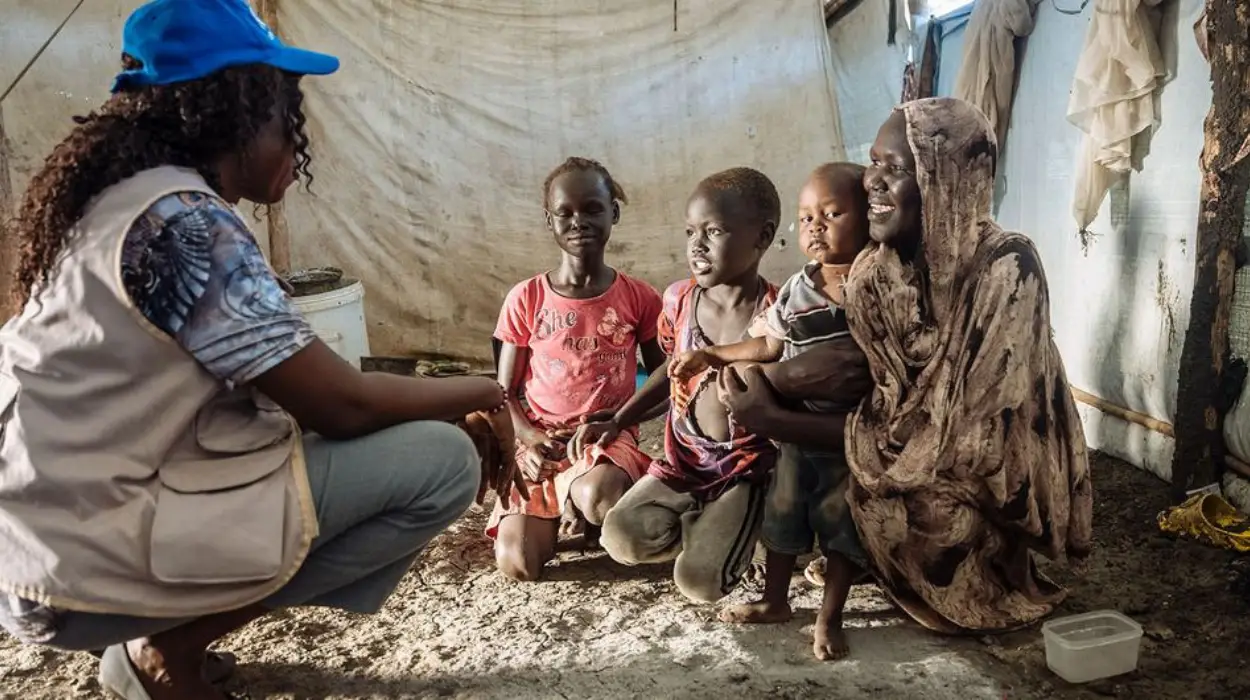
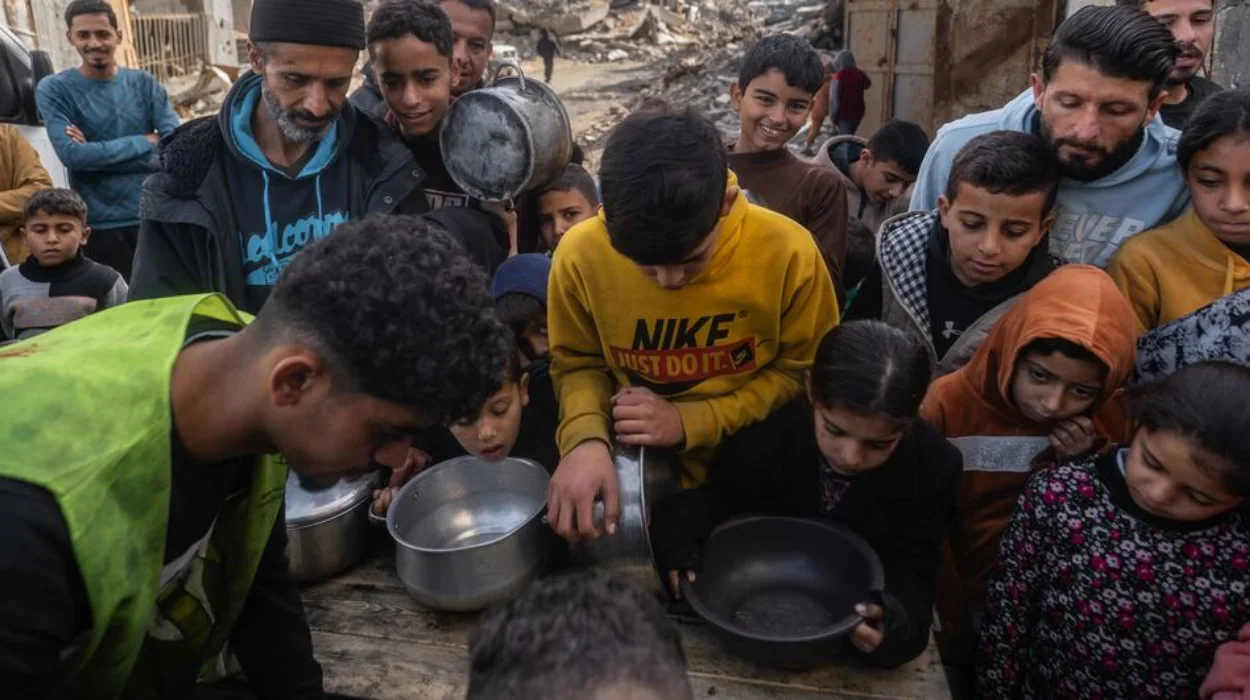
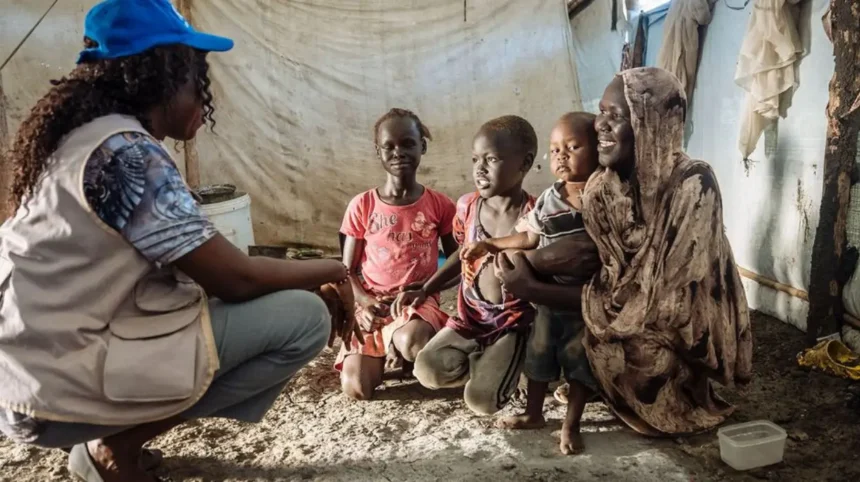
Most of the displaced ones are still in Jonglei, with tens of thousands having been displaced to the neighbouring Lakes state. Displacement sites are unofficial and congested where a number of families are housed in open spaces with inaccessibility to clean water, sanitation as well as basic health services.
Political uncertainty as a conflict driver
The revenge that is back is an indicator of more structural vulnerabilities. During 2025, the lack of electoral schedules and the continued fighting in transitional plans weakened the state of confidence in the stability of a nation. These ambiguities were used by armed groups, as well as small-scale cattle, land, and political power struggles that grew into general conflicts.
In 2025, over 371,000 displaced individuals in separate outbreaks of violence in various states in the past were presaging the instability now clumped in Jonglei. The repetition indicates that the processes of reconciliation at the deeper level are still fragile and cyclical violence takes place again.
Humanitarian operations under strain
There has been a degradation of the operational environment with the security situation. According to aid agencies, supply routes have been disrupted, riverine access has been limited, and more and more people are relying on air transportation, contributing to the increasing cost of delivery. The insecurity has caused dozens of humanitarian workers to be relocated with, at least, 16 personnel being killed since December highlighting intensifying risks.
Such limitations overlap growing demands. Close to 2 million internally displaced persons in the country are in need of long term food, shelter and protection services. Jonglei alone records increasing cases of cholera risks since overpopulated places and poor sanitation are providing a favorable environment to propagate the disease.
Access limitations and logistical hurdles
Shipments to conflict-inflicted counties have been delayed or completely blocked. Stores that are kept in warehouses have occasionally been stuck following evacuation orders or insecurity on the transport routes. Local partners and national staff have taken greater roles in operations but with bare resources and increased exposure.
Host communities, exposed themselves following the occurrence of successive shocks, are assimilating newcomers without equivalent support. This is a dynamic that strains communal coping resources and is likely to ignite additional tension on limited resources.
Health and protection concerns intensify
The health partners express concern that the lack of regular provision of water, sanitation and hygiene services would enhance the rate at which waterborne diseases are spread in the coming rainy season. Malnutrition screening of displaced children has been on the rise with the nutrition programs showing difficulties scaling due to a lack of certainty in funding.
Social services such as education and child protection have been worn down too because schools are either shutting down or used as temporary shelters. The long-term effect of displacement may exacerbate developmental delay because of a prolonged experience of displacement unless there is an organized support system.
Funding gaps complicate response outlook
The 2026 Humanitarian Response Plan to South Sudan is aimed at reaching 10 million humanitarians in need with an approximation of 1.37 billion. The funding levels early in the year, however, show that there were significant shortfalls in the levels as in the year 2025, when appeals were still grossly underfunded. Concurrent crises in Sudan, Ukraine, and the Middle East have exacerbated global humanitarian budgets because of donor fatigue.
In the case of the South Sudan Jonglei Crisis, time of contributions is as important as its amount. Agencies cannot predict inflows; this makes it hard to preposition supplies in advance of seasonal floods and lean periods. Interruptions in cash-flow also restrict the growth of mobile health and emergency nutrition teams to new areas that are already affected.
Sectoral impacts of underfunding
Food aid programs are at risk of reduction of ratios unless there is an increase in contributions. Emergency grant health facilities have the risk of stocking out on vital medicine supplies, and water trucking operations are frequently the only immediate sanitation option, but are costly and not viable in the long term without refreshment.
Other forms of protection services (such as response to gender based violence and provision of psychosocial services) are often less prioritized in limited funding settings. However, in the scenario where revenge attacks are the order of the day and displacement trauma, the services are a necessity to stabilizing communities.
Regional and cross-border pressures
In addition to internal displacement, the flows of refugees between nations remain to impact on the neighboring countries. There are still more than 2.4 million South Sudanese refugees in Sudan, Ethiopia, Uganda, and Democratic Republic of the Congo. New violence in Jonglei will spark further cross border migration especially when violence continues or aid delivery fails.
This is because regional governments, which by themselves are handling domestic tensions, are dependent on long-term financing by the international community to keep up with asylum systems. Any shrinkage of support may resound across the borders of South Sudan.
2025 developments shaping the current trajectory
The situation in Jonglei did not go up on its own. During 2025, Humanitarian snapshots that documented the increasing insecurity and lack of adherence to the ceasefire in Unity and the Upper Nile states reported the displacement of tens of thousands. These moves were accompanied by larger-scale political procrastinations which prolonged transitional plans and delayed electoral benchmarks.
Humanitarian actors have sounded warnings countless times saying it would be a futile exercise unless permanently political developments would be made. The cumulative stresses and not a single rupture are evident in the spike in Jonglei in early 2026.
Simultaneously, natural disasters associated with a climate such as floods and localized drought only intensified the effects of conflicts by weakening agricultural production and shifting the population to food insecurity. Environmental stressors and fighting in armed confrontation have further limited chances of recovery.
Strategic implications for humanitarian coordination
Localized partnership and remote management are also methods by which aid coordination platforms keep adapting. However scaling operations demand security of accesses as well as long-term donor trust. Striking a balance between emergency response and longer-term resilience programming is a fragile issue especially because funding cycles have been in favour of short term intervention.
The continuing activities are defined by the government authorities as a stabilization mission, and the humanitarian agencies focus on the necessity of civilian protection and unrestricted access. This, however, highlights the complicated nature of working in a competitive environment where the goals of security and the principles of humanitarianism interlock.
As displacement figures rise and financial resources lag behind projected needs, the South Sudan Jonglei Crisis illustrates the narrowing margin between containment and systemic deterioration. Whether the coming months bring reinforced funding commitments and renewed political engagement, or further fragmentation and constrained response, will shape not only Jonglei’s trajectory but the broader humanitarian outlook for a country already stretched to its limits.