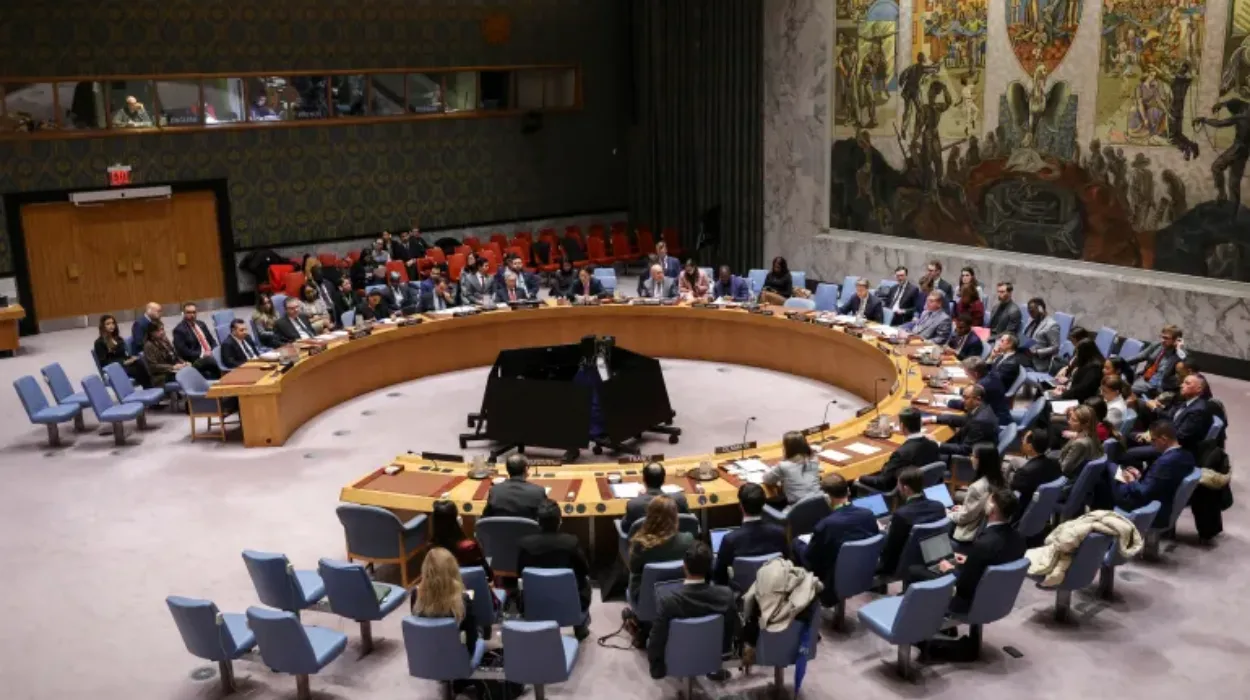
UN Secretary-General António Guterres has issued a fresh request for an immediate ceasefire in Sudan because the country has become the worst humanitarian disaster in history since its civil war started two years ago. The ongoing conflict between military leaders who first emerged in April 2023 has spread across the entire nation, which brought about numerous human rights violations and triggered regional effects while leading to a total breakdown of Sudanese social order.
Deeply alarmed by escalating violence on civilians in Sudan.
I call for cessation of hostilities & resumption of talks to reach a lasting ceasefire & comprehensive, inclusive, Sudanese-owned political process.
Everyone must abide by their obligations under international law. pic.twitter.com/TneurN9sB9
— António Guterres (@antonioguterres) December 12, 2025The conflict continues to exist even though the United Nations has made several attempts to mediate peace because Sudan faces a severe crisis. This proves that international help through foreign intervention has fundamental restrictions.
How did Sudan’s conflict begin?
Sudan continues to experience conflict because the country failed to resolve the problems which appeared after its transition period following Bashir’s removal from power. After Omar al-Bashir stepped down in 2019, the Sudanese government developed an unstable power-sharing arrangement which united military leaders with civilian politicians.
The Sudanese Armed Forces (SAF) under General Abdel Fattah al-Burhan joined forces with the Rapid Support Forces (RSF) led by Mohamed Hamdan Dagalo, who uses the name Hemedti, to control the security situation.
The Janjaweed militias received allegations about their Darfur crimes during the 2000s before transforming into the RSF paramilitary force, which established control over gold mining operations and border smuggling activities. The RSF integration into the national army through security sector reform and civilian rule demands led to rising tensions between the SAF and RSF forces.
? Must watch: Nicole Widdersheim of Human Rights Watch, her voice audibly breaking, describes atrocities against civilians in Sudan that are now “on par, if possibly not worse,” than those during the Darfur genocide two decades ago.
She said both the Rapid Support Forces (RSF)… pic.twitter.com/4WvRlRaxeq
— Drop Site (@DropSiteNews) December 13, 2025The SAF under General Abdel Fattah al-Burhan accused the RSF of illegal troop movements and attempted coup because the RSF positioned their forces near Khartoum’s key locations, including the Presidential Palace and airports, between April 11 and 13, which violated established agreements and created fears of rebellion.
The RSF’s decision to stay at bases, including Soba, created tension with Burhan’s forces because negotiation talks at Jeddah had reached a deadlock when RSF asked for a 10-year period to achieve officer equality and SAF wanted to incorporate RSF forces under army control within two years.
The existing tensions between the two sides escalated into full-scale warfare which started in Khartoum during April 2023. The initial perception of a quick power dispute evolved into a long-lasting war. It spread across most of the country.
Who are the main actors fighting for control of Sudan?
General Abdel Fattah al-Burhan leads the SAF forces which operate under his command during the Sudanese civil war. The RSF operates under the leadership of Mohamed Hamdan Dagalo (Hemedti) who commands the force in the current Sudanese civil conflict. The RSF operates as a powerful paramilitary force which emerged from the Janjaweed militias. They fought in Darfur. The SAF operates as both the official military force and the internationally accepted government authority.
The Justice and Equality Movement (JEM) under Jibril Ibrahim, along with Sudan Liberation Movement factions (SLM/A-Minni Minawi and SLM/A-Mustafa Tambura), and Sudanese police and Central Reserve Forces, and sometimes SPLM-N (Al-Hilu) have supported the SAF. Egypt provides military support to the region through its stabilization efforts, and Iran delivers drone technology and backing as its foreign military assistance.
The RSF derives its power from three main sources which include Arab tribal militias operating in Darfur and foreign fighters who come from Libya, Chad, and South Sudan and financial support and weapon supplies that flow through UAE-backed gold trading operations. The RSF received backing from Russia through Wagner Group mercenaries who helped the group because Russia wanted to get its hands on resources. This made the conflict more of a proxy war.
The United Arab Emirates (UAE) supplies weapons to the Rapid Support Forces (RSF) which have committed genocide against Non- Arab, African ethnic communities recently in el-Fasher in Darfur Region, Sudan. The UAE is complicit in genocide. The International Community must act!!!
— Randa (@Randa4079719513) December 26, 2025These alliances together with foreign sponsors who back Egypt and Iran for SAF and UAE and Russia for RSF have extended the stalemate through their support of military equipment transfers and territorial acquisitions, which has weakened the peace negotiation process.
What allegations of war crimes and abuses have emerged?
The allegations emerging from Sudan are among the gravest in recent memory. The RSF, in particular, stands accused of systematic war crimes and crimes against humanity.
The Rapid Support Forces (RSF) of Sudan face accusations of war crimes and crimes against humanity according to Amnesty International and other independent sources, which reported these allegations in November 2025 regarding their actions during the October 2025 capture of el-Fasher in Darfur.
The accusations describe a deliberate pattern of ethnic persecution against non-Arab groups including Masalit and Fur, which resulted in multiple instances of elderly man executions and female sexual violence, and forced population transfers, and village burnings. These mirror the Darfur genocide from the early 2000s.
Independent investigations including a Yale University report from December have documented wide-ranging destruction, ethnic violence, and mass killings throughout El-Fasher and other areas of Darfur. Satellite imagery reveals multiple mass graves and burned villages together with evidence of planned mass violence. Survivors report that forced relocation led to sexual assault and executions. This mostly affected non-Arab communities.
The videos show RSF fighters executing civilians while they record their brutal actions and attack displaced people who try to escape. The Humanitarian Research Lab at Yale University together with satellite footage from late 2025 reveals burned villages, mass graves, and more than 1,500 dead bodies on the streets of el-Fasher.
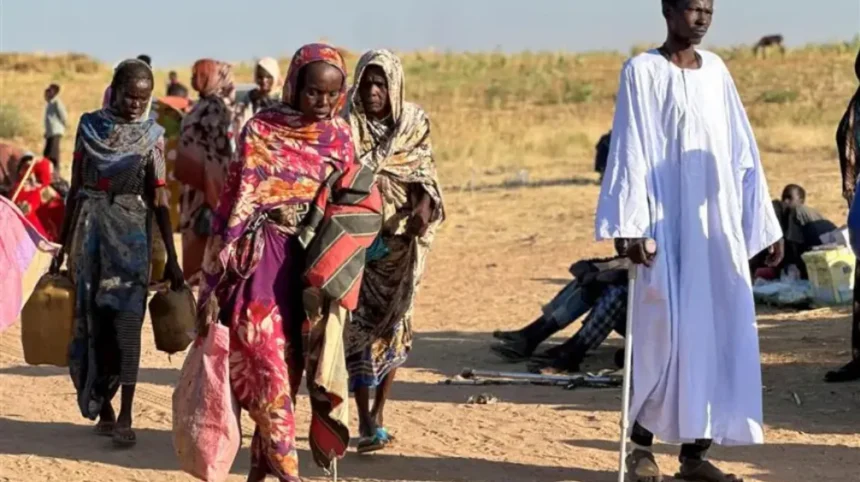
UN officials have issued a warning about the sealed escape routes to Chad, which now endangers 120,000 people including 60,000 children; survivors report RSF forces shooting donkeys to prevent families from leaving while they separate women for sexual assault and demand payment for their release.
The deliberate nature and extent of RSF operations in Darfur has led experts to draw parallels with the 2000s genocide despite SAF receiving accusations of random shelling and human rights violations. The ongoing RSF offensive in North Darfur according to UN officials threatens to block the last remaining evacuation path for civilians who flee to Chad.
Why peace remains elusive
RSF leadership quickly rejected Idris’ peace proposal, which called for RSF disarmament, and withdrawal from 40% of Sudanese territory, as “fantasy.” The fundamental problem exists because both parties refuse to accept any settlement which would prove more advantageous than their ongoing conflict.
The extension of the conflict receives support from the combination of territorial control and economic benefits, and worries about post-war responsibility. The armed elites have destroyed Sudan’s active protest movement during this period while they keep silencing the voices of ordinary people.