The United States’ choice to establish a partial maritime blockade against Venezuela has sparked renewed discussions about sanctions enforcement, naval force application, and the decline of international legal standards in geopolitical disputes.
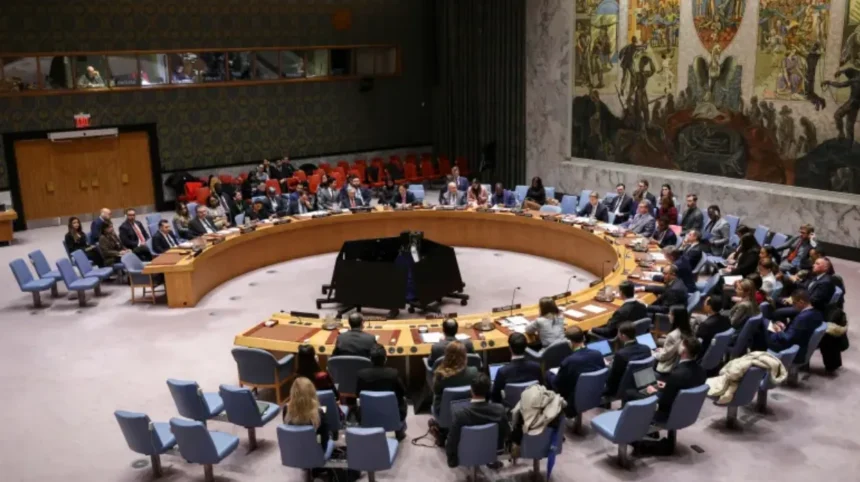
Washington made its decision public in December 2025 to prevent every sanctioned oil tanker from entering or leaving Venezuelan territory while establishing a strong military presence in the Caribbean region. The United Nations human rights experts immediately condemned the action because it represents an illegal use of force according to international law. It endangers both civilian lives and regional peace.
#Venezuela: UN experts denounce the partial maritime blockade imposed by the #USA as violating fundamental rules of international law.https://t.co/SvAvhYI85a pic.twitter.com/xgVv4Ch8cG
— UN Special Procedures (@UN_SPExperts) December 24, 2025When did the US-Venezuela conflict begin?
The US and Venezuela have experienced rising tensions during the past few years, yet their historical conflict goes back to the 1990s. The relationship between the two countries took a sharp downturn following Hugo Chávez’s 1998 election because Venezuela started following a socialist foreign policy that opposed American control of Latin America.
The nationalization of essential industries including oil by Chávez, together with his support for Cuba, Russia, China, and Iran, triggered a direct conflict between Caracas and Washington.
The relationship between the two countries deteriorated after Chávez passed away in 2013, and Maduro took his place as president. The United States accused Maduro’s government of authoritarianism, electoral fraud, corruption, and human rights abuses. Washington started putting broad financial restrictions in place during 2017, which eventually turned into almost complete bans on Venezuela’s oil industry.
The situation escalated to its highest point during 2019 when the United States recognized opposition leader Juan Guaidó as Venezuela’s temporary president while actively backing his efforts to take over the government. Although that effort failed, the sanctions regime remained intact and intensified, embedding economic pressure as the central instrument of US policy.
What are the main drivers of the conflict?
The US-Venezuela conflict exists because of three main elements which include political authority, economic influence, and security narratives.
“Our interest in Venezuela and in the region is the national interest of the United States, and in Venezuela we have an illegitimate regime that not only does not cooperate with the United States but openly cooperates with narco-terrorists and others who threaten the national… pic.twitter.com/Px5IgwrP2S
— Department of State (@StateDept) December 19, 2025The first step requires determining which political system maintains authentic authority as a legitimate power structure. The United States rejects the Maduro administration because it considers the elections were fraudulent and Maduro continues to suppress political opposition. The United States conducts neo-colonial activities through its actions which aim to eliminate Venezuela’s self-governance. According to Caracas, this is the case.
Second is energy geopolitics. Venezuela possesses the world’s largest proven oil reserves. The United States bases its sanctions policy on controlling Venezuela’s ability to produce oil and export it, and generate revenue from it. The United States employs maritime access control to enforce economic isolation through its attacks on tankers and shipping routes.
Third is the securitization of the conflict. The United States declared elements of the Venezuelan government, including President Maduro, to be foreign terrorist organization members of the Cartel de los Soles in the last months of 2025. The United Nations experts together with independent observers indicate that no such cartel exists. This leads to worries about the misuse of counter-narcotics and counter-terrorism systems for increasing violence.
Why does international law matter in the maritime blockade?
The United Nations experts have identified that a maritime blockade, which restricts access to certain areas, represents one of the most severe military actions according to international legal standards. Article 2(4) of the UN Charter prohibits the threat or use of force against the territorial integrity or political independence of any state. The 1974 UN General Assembly Definition of Aggression explicitly recognizes blockades as acts of armed aggression.
Covert action & threats of using armed force against #Venezuela Govt by the #US violate the country's sovereignty & the UN Charter, warn UN experts. These moves are a dangerous escalation with grave implications for peace & security in the region. https://t.co/M4baYnwOeJ pic.twitter.com/fQMh7rLsVS
— UN Special Procedures (@UN_SPExperts) October 21, 2025The United States faces the danger of crossing into armed conflict territory when it uses naval power to enforce its unilateral sanctions. The experts stated that “there is no right to enforce unilateral sanctions through an armed blockade” and they warned about the possibility that Venezuela would use Article 51 of the UN Charter to defend itself against such actions.
The human impact of the situation extends past legal rules because it causes major effects on people. The limitations on maritime trade routes create problems with fuel delivery, food distribution, and medical supply access which worsen the existing humanitarian crisis in Venezuela.
How does the use of force at sea escalate the crisis?
The blockade continues to worsen because US forces have conducted 28 attacks on civilian ships since September 2025, which resulted in the deaths of 104 people who were allegedly involved in drug trafficking. The UN experts determined that none of the victims presented an immediate danger, which would have justified using deadly force.
The incidents create confusion about the distinction between police work and military operations. The US government started to view its operations as part of an international fight against “narco-terrorists” after it classified specific cartels and gangs as foreign terrorist organizations in 2025. Critics argue that this narrative enables the use of military force without the legal safeguards required under international human rights law.
How do other major powers view the conflict?
The responses from different major powers demonstrate that the international system exists in a divided state. Russia and China have strongly criticized the US blockade, framing it as illegal coercion and a violation of Venezuelan sovereignty.
The two nations keep economic and strategic connections with Caracas, while they see the sanctions system as one element of America’s broader strategy to act alone. Moscow has compared the blockade to Cold War-era gunboat diplomacy, while Beijing has emphasized the principle of non-intervention, and warned against setting precedents that could be used against other states.
Latin American regional actors face ongoing challenges because they have not united into a single cohesive force. The Washington-aligned countries have chosen to keep quiet through minimal backing, yet left-leaning nations have spoken out against the blockade by demanding negotiation. The Caribbean states that worry about regional impacts, and sea safety, have voiced their worries about the growing military presence in surrounding ocean routes.
Europe has shown a cautious approach to these developments. European governments align with US views about Venezuelan governance and human rights, yet they develop growing doubts about enforcement practices that breach international law. These practices threaten to disrupt global trade standards.