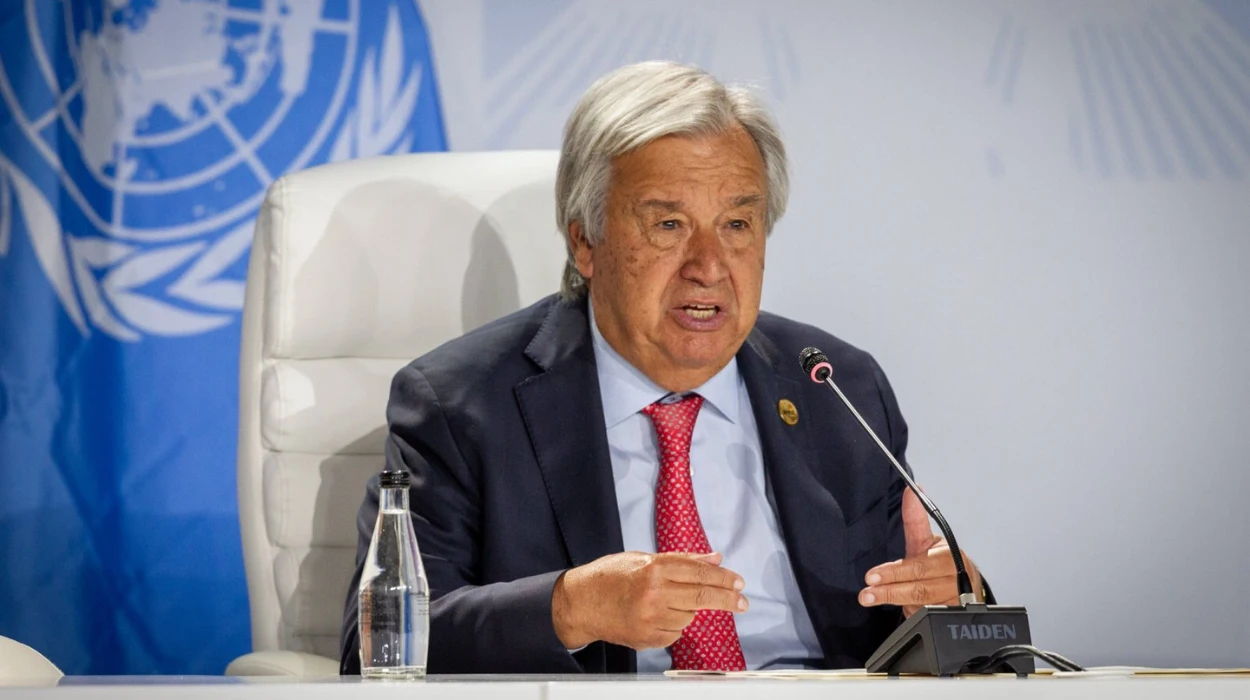
A decision by a United Nations committee to grant exemptions to a series of sanctions on North Korea so that humanitarian supplies reach the nation was confirmed by a diplomatic source on Friday. This move comes against a growing push by both South Korea and the U.S. to re-engage with Pyongyang despite its ongoing nuclear and missile development programs.
The UN Security Council Sanctions Committee on North Korea unanimously agreed to exemptions of sanctions for 17 humanitarian projects Thursday, the source said, asking to remain anonymous. The projects, mainly being run by international organizations such as UNICEF and different NGOs based in South Korea, the United States and other countries.
These projects, whose goals are to assist with food insecurity, healthcare, and children’s welfare, had all been awaiting approval since early 2025. Despite no official announcement so far regarding a decision made by the council and the sanctions committee, it is not possible to get a comment from the UN at this stage.
Sanctions Against North Korea
The UN Security Council adopted its first resolution, 1718, in 2006 in response to North Korea’s first nuclear test in breach of its earlier agreements. It banned the supply of arms, fuel, luxuries, and other items, which often included humanitarian aid supplies.
Since then, however, there has been a widening of the sanctions regime, with sanctions being imposed on various aspects such as North Korea’s nuclear and missile programs, financial transactions, and trade. These sanctions have had various humanitarian effects, ranging from food shortages to malnutrition and lack of health care.
Experts say, as stated by UN Food and Agriculture Organization and World Food Programme, North Korea is struggling with chronic food insecurity as more than 40% of its population is estimated to remain undernourished in 2025, especially children and pregnant women.
North Korea’s Response to Sanctions
North Korea has continued to express opposition to the United Nations sanctions, referring to them as hostile acts orchestrated by the United States. According to North Korea, the sanctions violate its sovereign rights to develop its nuclear and ballistic missile technologies.
Yet, even under significant international pressure, North Korea has persisted in its military technology upgrades, such as its development of long-range ballistic missiles that can reach continental U.S. soil, as well as new nuclear warhead designs.
Diplomatic efforts initiated by the United States and South Korea in terms of dialogue and cooperation have largely gone unanswered. In fact, North Korea has strengthened its strategic relations with Russia and China, thus receiving political and economic support and continuing with its military programs.
US and South Korea Support Humanitarian Exemptions
DongA Ilbo, a news source from South Korea, stated that U.S. President Donald Trump had cleared his approval for support of the exemptions, as this had to be done unanimously by the Security Council committee.
The exemptions also reflect an attempt to balance humanitarian needs with ongoing security concerns; the international community is attempting to ensure that the needs are met without compromising the sanctions regime aimed at curbing North Korea’s weapons programs. Experts have noted that the exemptions are likely to be symbolic in nature, given the likelihood that the country may divert the resources for military purposes.
Humanitarian Imperative Amid Political Stalemate
Humanitarian organizations have emphasized that there are millions of North Koreans living in danger because of the underlying food insecurity, malnutrition, and inaccessibility to healthcare facilities in the country. According to reports and observations made by UNICEF and other UN organizations in North Korea, the stunting level in North Korean children has been identified to be at an alarming rate of 27%, which surpasses the international average.
While aid exemptions are being implemented to allow health interventions, nutritional aid, and water sanitation projects to continue, there are analyses which specify that amidst the political impasse, difficulties in the enforcement of sanctions may hinder the aid efforts.
Broader Implications for Diplomacy and Security
This decision becomes relevant as the US and South Korea seek to restart dialogue, while the North develops its nuclear arsenal in the region. Analysts have suggested that the exemptions could act as a form of “confidence-building measure,” providing room for negotiations in the near future.
However, a tricky policy approach that the Security Council has to achieve lies in striking a delicate balance between not imposing too many restrictions that may hinder non-proliferation in the world, while at the same time imposing harsh restrictions that continue with the suffering in the