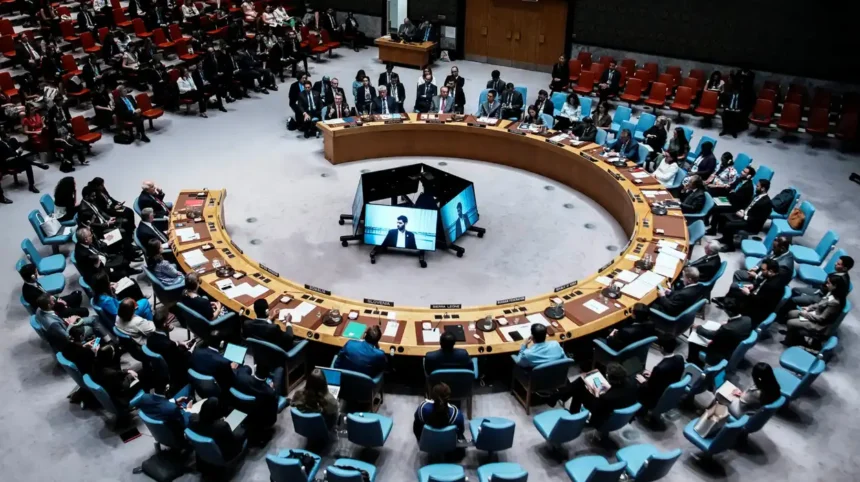
The UNSC unanimously decided on Monday to extend, for a period of three years, the mandate of the Executive Director of the Counter-Terrorism Committee (CTED) until January 5, 2029. The resolution, introduced by the US, gained the support of all 15 members of the UNSC, signifying the continued commitment of the international community to the consolidation of efforts in the fight against terrorism.
This resolution’s adoption by the United Nations General Assembly was hailed by Tammy Bruce, spokesperson for the US State Department. He said this renewal, which certainly represents a different approach to a renewal cycle in the past, again affirms the US view that all special political missions of the UN can be subject to periodic review to ensure that their operations remain on track and responsive to new threats.
What is the Counter-Terrorism Committee Executive Directorate (CTED)?
The Counter Terrorism Committee Executive Directorate, commonly cited as CTED, is basically an operational body or the agent of the UN Security Council’s Counter Terrorism Committee, short-form CTC. The CTC was formed in the year 2001 as a result of the attack on the United States on September 11, aimed at ensuring that UN member states are able to adhere to resolution 1373 of 2001, which urged member countries to take necessary steps in the prevention and suppression of financial and logistical support for terrorism.
CTED came into existence in the year 2004 to facilitate the CTC in the discharge of its mandate. Its main function is of an operational nature, which involves expert analysis, country visit, analysis of states’ counter-terrorism capacity, and technical assistance. It is also responsible for assisting member states in improving their legislation, law enforcement, and borders against terrorism while taking heed of human rights and the rule of law.
What is the role of CTED?
CTED’s work is diverse and very important for international cooperation for counter-terrorism. Monitors and observes the implementation of Security Council Resolutions on counter-terrorism, particularly Resolutions 1373 (2001) and other related resolutions. Gives member states advice regarding the legislation, institutional, and operational needs aimed at preventing and combating terrorism.
Assists with capacity-building to interlink states with technical assistance and international partners. Encourages and assists regional organizations as well as the collaboration of countries to address transnational threats together. Analyzes trends and new threats such as the financing of terrorism, foreign terrorist fighters, and the web of radicalization.
By these functions, CTED is involved in making sure that the international community is united in tackling terrorist threats through the provision of guidelines that member nations by themselves would not be able to provide.
Global achievements of CTED
After its inception, CTED has been at the forefront in building international efforts in counter-terrorism.
Some of its achievements are: Conducting country visits to evaluate states’ measures regarding combating terrorism, yielding country-specific recommendations. Providing technical assistance as well as capacity-building, including the provision of training sessions to the relevant authorities.
Improving and promoting cooperation between organizations like the African Union and ASEAN and our own efforts. Supporting efforts in the fight against the financing of terrorism globally. Encouraging states to carry out operations against terrorism in a way that promotes the principles of human rights and the rule of law.
The activities of CTED have contributed to the improvement of border controls, intelligence-sharing arrangements, and anti-money laundering regulations in many countries and served to reduce vulnerability to terrorist exploitation.
Why is the mandate renewal significant?
The unanimously decided five-year renewal until 2029 of the mandate of CTED reflects the Security Council’s awareness of the continued threat of terrorism and of the continued need for its monitoring and coordination, and with its mandate having been renewed without any alteration of its tasks and priorities, it reflects also the determination of the Council to continue supporting its work while remaining alive to new and evolving threats faced by members, such as cyber terrorism, foreign terrorist fighters, and terrorist financial networks.
Ms. Tammy Bruce, a spokesperson for the United States State Department, reiterated that this new mandate is consistent with the principle that special political missions within UN organizations must go through periodic review on an ongoing basis in order to ensure that these endeavors continue to operate efficiently, effectively, and impactfully, especially in regions where terrorist threats continue.