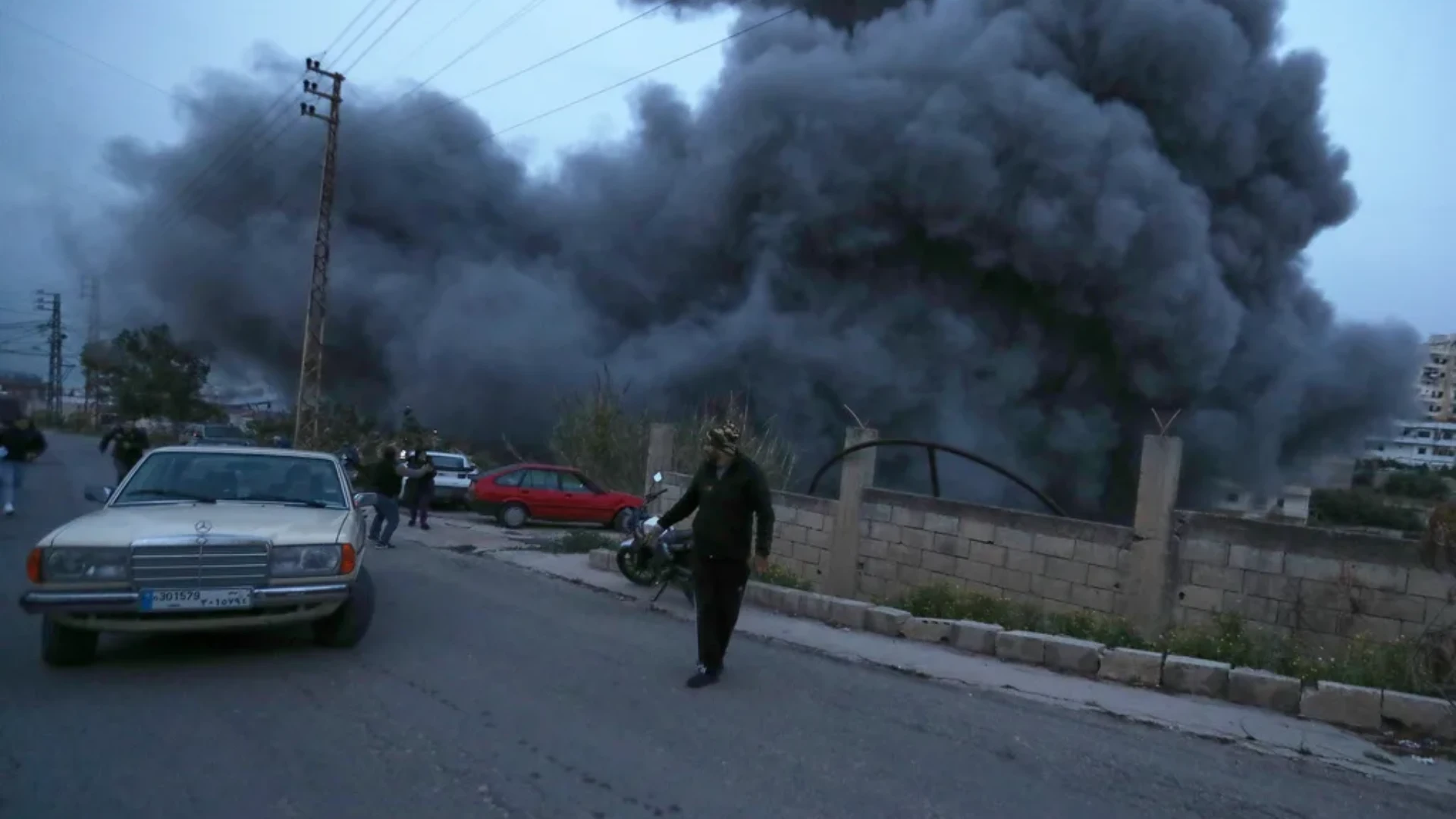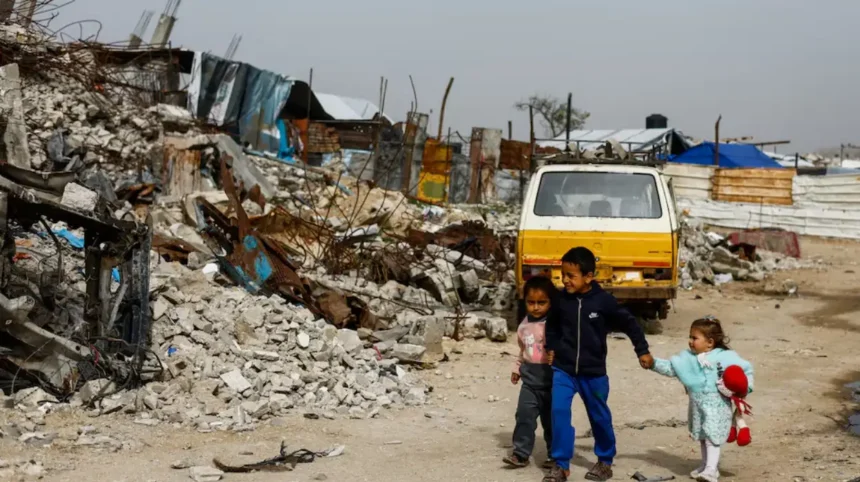
The United States has laid out a plan to demilitarize Gaza through an internationally supported weapons buyback and decommissioning program, which has been offered to the UN Security Council as a foundation of President Donald Trump’s 20-point Gaza peace plan. The plan calls for putting Hamas’s weapons “permanently beyond use” under international oversight, but has little detail on how such a program might work in one of the most closely monitored regions in the world.
Although the buy-back programs have been implemented in post-conflict countries such as Bosnia, Liberia, and Colombia, experts say that Gaza is a much more complex case. Hamas is not a defeated insurgent movement but a ruling authority that still maintains control over almost half of the territory after the October ceasefire agreement. Unlike the previous disarmament initiatives, the Gaza initiative has been put forward without the explicit cooperation of Hamas.
Linking Israeli Withdrawal to Hamas Disarmament
As a condition of the ceasefire agreement negotiated by Washington, future Israeli withdrawals of troops are contingent on Hamas’s surrender of its weapons and destruction of its military infrastructure, including its tunnel and weapons manufacturing facilities. US Ambassador to the UN Mike Waltz explained this condition as necessary to long-term security, saying in the Security Council that
“Hamas must not have any role in the governance of Gaza, directly or indirectly, in any form.”
Critics say that making withdrawal contingent on disarmament could end up solidifying each side’s position. For Hamas, disarming without a political vision could be considered surrender. For Israel, limited withdrawals could be frozen indefinitely if the conditions for disarmament are not met, effectively maintaining control in the name of phased withdrawal.
Hamas’s Military Capacity and Competing Narratives
Israel asserts that Hamas is still a strong fighting force despite the conflict that has been ongoing for months. Israeli Ambassador to the UN, Danny Danon, said that Hamas possesses thousands of rockets, anti-tank missiles, and about 60,000 assault rifles. He added that these are not only used against Israel but also to quell any uprising within the Gaza Strip.
Hamas officials reject the terms of the debate on demilitarization, claiming that the United States and other mediators have not yet offered a concrete proposal for disarmament. Although Hamas agreed to hold talks with other Palestinian groups, top officials told Reuters that these talks are still at the conceptual level.
The Role of the Board of Peace and the Marginalization of the UN
The demilitarization process is being supervised by Trump’s US-led Board of Peace, which was mandated by the Security Council in November to run until 2027. The board is responsible for overseeing the redevelopment of Gaza and the transition period until the Palestinian Authority is considered sufficiently reformed. Nevertheless, Russia and China abstained from the resolution, expressing dissatisfaction with the absence of a clear UN role and the fact that the framework gives too much power to the US.
The board’s reliance on a US-supervised Palestinian National Committee has further fueled concerns that the initiative bypasses established Palestinian political structures, potentially undermining local legitimacy at a time when governance credibility is already fragile.
International Stabilization Force and the Risk of Open-Ended Deployment
One of the key elements of the plan is the establishment of an International Stabilization Force in Gaza. According to Waltz, this force will create stability and control, paving the way for the withdrawal of Israeli troops in accordance with certain milestones related to demilitarization. The ISF will work in conjunction with the Israeli army and the guarantors of the ceasefire, which include the United States, Egypt, and Qatar.
However, the US has not yet revealed the identity of the countries that have agreed to provide troops for the ISF or its size, mandate, and rules of engagement. International forces that have been deployed in conflict zones in the past, such as in Lebanon and Afghanistan, have often remained in the region for a long time if the political process is stalled, and there is a fear that this could happen in Gaza.
Amnesty, Accountability, and the Political Cost of Disarmament
A US official has suggested that the process of disarming Hamas may be followed by some sort of amnesty for its members, which is still a highly contentious issue. On the one hand, an amnesty could weaken deterrence and the pursuit of justice for past attacks for Israel. On the other hand, it could be seen as compromising the pursuit of accountability for governance issues and wartime behavior in favor of quick fixes for security.
This dilemma illustrates the underlying problem with the current plan: it focuses on disarming without any clear strategy for political inclusion, accountability, or governance reform.
A Security-First Vision With Uncertain Prospects
The US plan is one of the most ambitious efforts to date to restructure the Gaza post-war configuration, but its success is contingent on various open variables, such as the Hamas intention to disarm, the effectiveness of international monitors, and the capacity of external powers to impose stability without the political consent of the Palestinian side.
Absent a more comprehensive framework that takes into account Palestinian autonomy, regional guarantees, and reconstruction efforts independent of security parameters, the demilitarization plan may turn out to be another externally imposed initiative that secures a temporary ceasefire but does not address the underlying conflict drivers.