

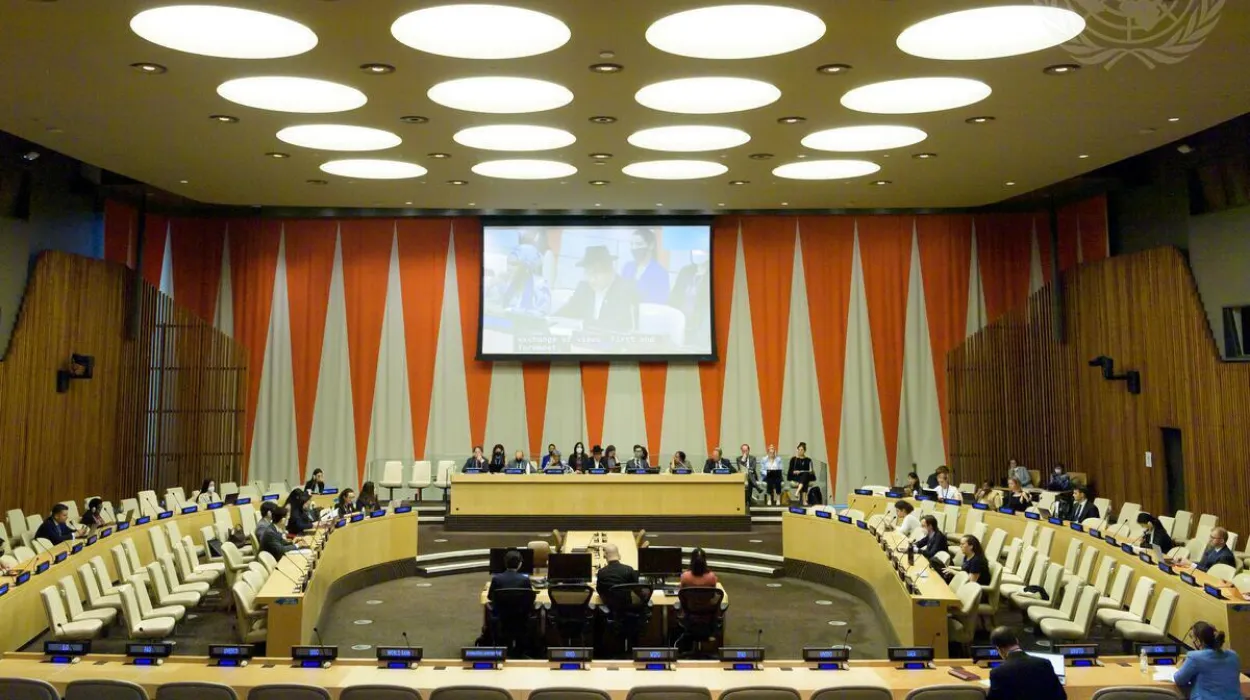
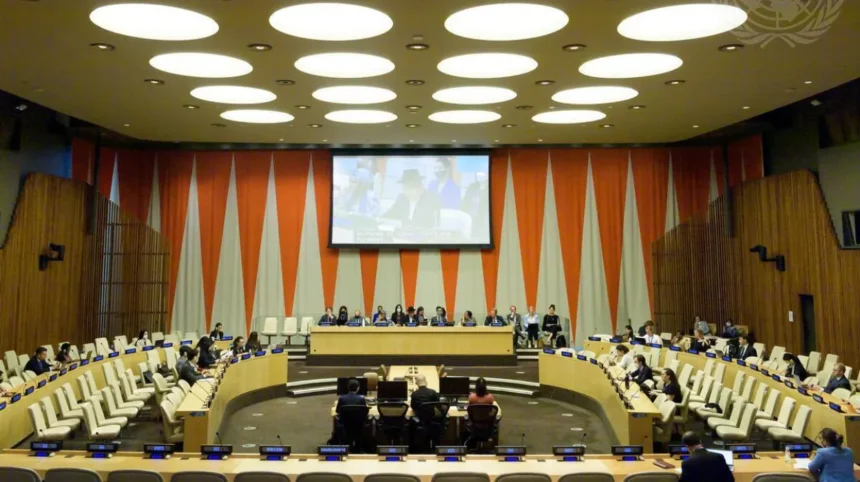
The ECOSOC NGO Committee elections in 2026 have drawn heightened scrutiny because of the committee’s decisive influence over civil society access to the United Nations. Formally known as the Committee on Non-Governmental Organizations, the body operates as a subsidiary of the United Nations Economic and Social Council and is mandated to review applications for consultative status under Resolution 1996/31.
Consultative status determines which organizations can attend meetings, submit written statements, and deliver oral interventions across UN platforms, including the Human Rights Council and the Commission on the Status of Women. The committee’s 19 member states assess thousands of applications, issue recommendations, and can defer cases indefinitely through procedural questioning.
In 2025, applications for consultative status increased by 23 percent compared with the previous year, according to ECOSOC session data. While overall approvals remained steady, deferrals and rejections rose marginally to 12 percent, with advocacy groups working on migration, climate accountability, and conflict documentation reporting disproportionate scrutiny. These trends have sharpened attention on who sits on the committee and how they are selected.
Consultative status as a strategic gateway
Consultative status is not symbolic. NGOs holding general or special status contributed to more than 15 percent of ECOSOC-adopted resolutions in 2025 through written submissions and side events. In areas such as Sustainable Development Goals implementation and gender-based violence prevention, NGO briefings have shaped negotiations and public framing.
The gatekeeping role therefore extends beyond procedural administration. It affects agenda-setting power, framing of rights debates, and the diversity of voices allowed into formal UN deliberations.
Patterns of non-competitive slates and electoral constraints
The structure of ECOSOC NGO Committee elections has historically limited competition. Regional groups nominate candidates according to allocated seats, and in many cycles the number of nominees equals the number of available positions, producing uncontested outcomes.
In the 2025 election cycle, Africa and Asia-Pacific presented non-competitive slates, continuing a pattern observed in prior years. This practice narrows voting discretion for ECOSOC member states and shields nominees from broader scrutiny regarding their domestic human rights records or positions on civic freedoms.
Civil society observers argue that when slates are non-competitive, the election becomes a procedural endorsement rather than a substantive choice. That dynamic has fueled the current call for reform ahead of the April 2026 vote in New York.
Regional nomination dynamics
Regional blocs retain autonomy over candidate selection. Africa holds five seats, Asia-Pacific four, Latin America and the Caribbean three, Eastern Europe two, and Western Europe and Other States five. To produce genuine competition, each group would need to nominate more candidates than available seats.
As of late February 2026, Eastern Europe appeared to be the only region signaling a potentially competitive race. Other blocs had yet to confirm whether additional nominations would be submitted before the March deadline.
Civil society mobilization and the February 2026 letter
On February 27, 2026, coinciding with World NGO Day, more than 80 organizations issued a joint appeal urging ECOSOC member states to ensure competitive slates in the upcoming elections. The initiative was coordinated by PEN International and the International Service for Human Rights, both longstanding advocates for civic participation within UN mechanisms.
The signatories argued that competitive elections would “foster accountability, strengthen legitimacy, and open doors for diverse voices.” They called on regional groups to publicly announce candidates in advance, enabling member states and civil society to review records and policy positions before voting.
This coordinated action builds on advocacy efforts during the 2025 UN General Assembly high-level week, when several NGOs raised concerns about prolonged deferrals of organizations documenting abuses in conflict zones.
Transparency and vetting demands
The 2026 letter emphasized the importance of transparency in nominations. In 2025, questions were raised after a committee member with a domestic record of restrictive civic legislation was elected without prior public scrutiny. Although no procedural rules were breached, critics argued that insufficient disclosure undermined confidence in the committee’s impartiality.
Advocates propose earlier publication of candidacies and informal dialogues between nominees and ECOSOC members. Such measures would remain within existing procedural frameworks while enhancing public accountability.
Implications for UN legitimacy and civic space
Debates surrounding ECOSOC NGO Committee elections intersect with broader concerns about civic space. A 2025 UN assessment documented restrictions on civil society freedoms in the majority of member states, citing legal barriers, funding constraints, and administrative harassment.
When committee members perceived as restrictive toward NGOs hold decisive votes over consultative status applications, critics contend that global trends toward civic contraction are reinforced within UN structures. For example, in 2025 several NGOs focused on LGBTQ+ rights reported repeated deferrals initiated by committee members citing “clarification requests” rather than substantive objections.
Supporters of reform argue that competitive elections would not guarantee liberal outcomes but would require nominees to articulate commitments to pluralism and procedural fairness. That, in turn, could recalibrate incentives within regional groups when selecting candidates.
Geopolitical considerations
Major powers exert influence through regional alignments. In 2025, bloc solidarity often outweighed policy-based differentiation during elections. Observers noted that loyalty within groups can limit cross-regional coalition-building on governance standards.
Eastern Europe’s potential competitive slate in 2026 is being watched as a test case. If multiple candidates present distinct positions on civil society access, it may signal that contestation is feasible within existing norms.
Links to supply chain debates and conflict documentation
The composition of the NGO Committee also affects emerging thematic areas. In 2025, applications from organizations documenting supply chain abuses and conflict-related violations increased, reflecting heightened global attention to accountability in Ukraine, Gaza, and the Sahel.
Delays in granting consultative status can impede NGOs’ ability to brief delegations during critical negotiations. As 2026 discussions expand to peacekeeping reform and sustainable finance oversight, the ability of grassroots groups to access UN venues becomes strategically significant.
Reform advocates contend that a more accountable election process would reduce perceptions that geopolitical alignment determines which voices gain entry to these debates.
Pathways toward competitive reform
Procedurally, ECOSOC member states hold authority over elections. Balloting occurs by secret vote if more candidates are nominated than seats available. Achieving competition therefore depends primarily on regional groups exceeding seat allocations in their nominations.
Diplomatic engagement in March 2026 will be decisive. Some states have reportedly considered joint demarches encouraging additional candidates to come forward, mirroring coordination tactics used in 2025 climate negotiations.
Proposals for post-election oversight include periodic reporting on deferral patterns and enhanced transparency around questioning practices. While formal rule changes would require broader consensus, incremental adjustments could improve confidence in committee operations.
April 2026 as a credibility benchmark
The April 2026 ECOSOC NGO Committee elections arrive amid cascading global crises and debates about multilateral effectiveness. Civil society actors argue that the credibility of UN deliberations depends partly on whether access is perceived as open, fair, and insulated from political obstruction.
Member states face a choice between maintaining established nomination customs and experimenting with competitive processes that invite scrutiny. The outcome will not only shape the committee’s composition but also signal how adaptable UN governance structures are in responding to calls for accountability.
As regional coordinators finalize their slates, the question extends beyond procedural mechanics. Whether competitive elections materialize may indicate how far member states are willing to align institutional practice with rhetorical commitments to inclusive participation, at a moment when the resilience of multilateral norms is increasingly under examination.