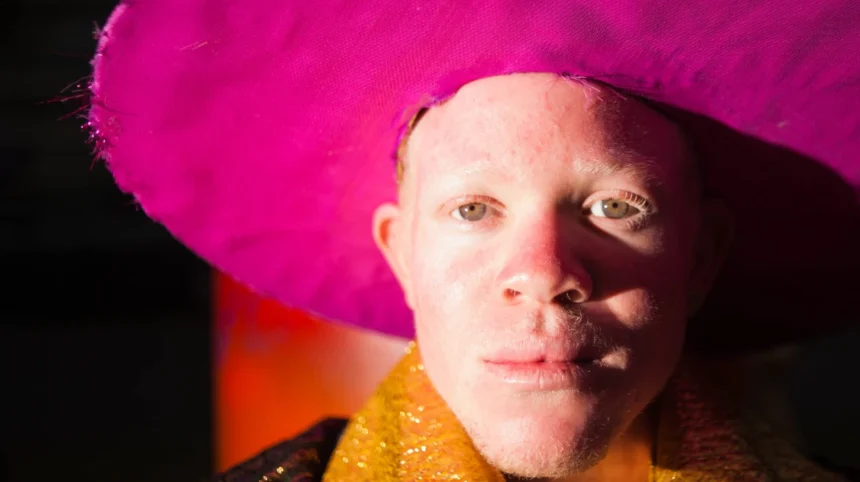
Climate Change and Albinism has been a growing public health emergency whereby ultraviolet radiation exposure is aggravated in already susceptible groups by environmental changes. Individuals with albinism do not produce melanin which is the substance that protects the skin and eyes against damaging ultraviolet rays. This biological disparity ensures that even moderate sunlight is potentially damaging, especially in areas where climate changes are increasing the level of heat and modifying the atmosphere.
The latest health debates in the world in 2025 brought to the fore the effects of climate pressure in intensifying existing inequalities that people with albinism experience. According to scientific measurements, exposure to harmful UV radiation is increasing due to the warming temperature, ozone layer variations and prolonged heat waves. To unprotected melanin-free people, these changes in the environment are translated to exposure to increased risks of major burns, damage of the eyesight, as well as aggressive types of skin cancer.
According to the public health experts, climate change is changing an already significant medical vulnerability into a wider structural crisis. In equatorial areas where the exposure of sun is greatest, medical threats are increasing at a faster rate than the healthcare systems can counteract the environmental impact of global warming.
Rising ultraviolet radiation intensifies medical risks
Environmental alterations caused by climate are changing the interaction of ultraviolet radiation with the atmosphere of the earth. This change is already generating quantifiable health effects on communities in high-sun areas.
Climate patterns and ultraviolet exposure
According to meteorological studies released in 2025, climate change is one of the reasons that causes longer spells of intense sun radiation and an increased frequency of heat waves in sub-Saharan Africa. Such conditions prolong UV radiation exposure; it becomes intense during daylight hours.
In the case of albino people, these modifications substantially reduce the time of safe stay outside. Severe damage may occur to the skin even under exposure for a short period without protection. In a number of African medical facilities, dermatologists show that lesions in patients with albinism are emerging at an earlier age than they have been in the past decades.
According to scientists who observe the climatic conditions of the atmosphere, variation in atmospheric temperature and alteration in the cloud cover can also elevate the quantity of ultraviolet radiation entering the ground. These climatic changes increase the solar intensity already high in the equatorial regions.
Skin cancer as the primary health threat
The most common cause of mortality of individuals with albinism is skin cancer in Africa. Squamous cell carcinoma is a type of cancer that is closely related to UV exposure and it often occurs on the exposed body parts like the face, neck, and arms.
The health statistics mentioned in the international medical reports in the year 2025 show that the death rates are still alarmingly high. Elsewhere in sub-Saharan Africa, over ninety percent of albinic people fail to live past the age of forty years because of untreated skin cancers.
Medical researchers are more and more relating this trend to environmental changes related to climate. Research comparing cancer trends since 2020 indicates that equatorial cancer has increased remarkably, and earlier onset of this cancer has been associated with increased exposure to UV.
Ozone layer shifts and atmospheric changes
The ozone layer is traditionally the protective barrier against the dangerous ultraviolet radiations. In 2025, environmental monitoring agencies reported that atmospheric disturbances caused by climate changes can affect the ozone recovery patterns in certain areas.
The slightest loss of this protective coating may enable more ultraviolet radiation to reach the surface. It has been estimated by public health that cases of skin cancer among people with albinism may continue to increase at the end of the decade unless more measures are put in place to curb the disease.
Climate disruptions weaken already fragile healthcare access
In addition to direct exposure to the environment, climate change also interferes with the health care systems that albinos survive on. The occurrence of extreme weather conditions such as floods, droughts, and cyclones is becoming more common in areas that are already facing the shortage of medical resources.
Medical supply shortages during climate disasters
Medical supply chains are one of the most direct effects of climate emergencies. Protective garments, dermatologic medications, and sunscreen are considered vital resources to individuals with albino but in cases of natural disasters, these resources are usually scarce.
A study where the East African region was investigated in the year 2025 reported the disruption of transportation systems and the shortage of protective sunscreen in the rural territories due to heavy flooding. The initial skin lesions may be turned into life-threatening skin cancers rapidly without proper protection.
According to healthcare workers, lack of basic protective resources tends to change manageable conditions into deadly ones. Surgical treatment and dermatological care are also not equally accessible in the rural regions especially when the infrastructure is lost in case of adverse weather.
Vision challenges and mobility barriers
Most people with albinism also have impaired eyesight such as loss of depth perceptions and bright light sensitivity. Climate crises compound such issues because evacuation and emergency shelters become more challenging to reach.
In cases of intense droughts and heatwaves that were recorded in East Africa in 2025, humanitarian organizations noted that people with visual impairment encountered more barriers in accessing aid. Photophobia is a phenomenon that makes a person very sensitive to sunlight and thus they may not be able to walk outside in the daytime hours.
Such mobility restrictions also lead to late access to medical services and isolation in the event of a climate catastrophe. In the case of patients with albinism, the environmental exposure along with the limited access to services poses a vicious cycle of vulnerability.
Social stigma compounds climate vulnerability
Environmental stress plus social discrimination brings another dimension of risk to the people with albinism. Some communities have myths and misconceptions that have existed over a long period of time, describing albinism as a supernatural disease or a sign of ill fortunes.
Climate anxiety reinforcing harmful beliefs
Anthropologists who have examined rural groups in some of the African regions observe that harsh weather patterns at times strengthen the myths traditionalists associate with albinism. Due to periods of drought or extreme storms, the marginalized people can become victims of scapegoating.
In recent years, human rights organizations reported that climate-related anxiety sometimes adds to the harmful narratives. In cases where natural disasters hit communities that are already experiencing economic stress, misinformation will spread quickly and widen social divisions.
Violence linked to ritual beliefs
Cases of attacks on individuals with albinism have been reported in various African nations that are associated with myths of witchcraft. These beliefs have been historically used by criminal networks as targets of albinism who serve as rituals.
According to reports given by regional monitoring organizations in 2025, the number of such incidents had increased slightly during the times of environmental stress. Albinism has been occasionally linked to supernatural reasons when there are heatwaves and agricultural disasters.
Although governments have introduced stronger legal protections, enforcement remains uneven in remote regions where traditional beliefs remain influential.
Exclusion during humanitarian emergencies
Social discrimination also affects access to emergency shelters during climate disasters. Some families with members who have albinism report being excluded from communal shelters due to stigma or fear.
During severe flooding events in parts of Africa during 2025, humanitarian workers documented instances where prejudice prevented equal access to relief services. Such exclusion exposes vulnerable individuals to greater environmental risks during extreme weather.
Policy responses struggle to address combined challenges
The international institutions are starting to recognize the comorbidity of albinism and climate vulnerability, but there is little policy action on the issue. Current international systems of managing disability rights, societal health, and climate adaptation are rarely implemented concurrently.
Funding gaps and limited climate integration
The protection of albinism saw an incremental increase in international funding in 2025 due to the development and humanitarian programs. Nonetheless, there was a minimal proportion of that funds to be used on climate adaptation measures that specifically address the needs of people with albinism.
Infrastructure like shaded schools, dermatological screening, and other networks that are available to people to obtain sunscreen need long-term financial support. Environmental risks will persist, surpassing the resources that are available in healthcare without specific investment.
Legal protections and enforcement challenges
A number of African nations have embraced laws that aim at safeguarding the rights and safety of albinism. Courts also passed a decision that has demanded better access to healthcare and anti-discrimination policies.
Regardless of these breakthroughs, the enforcement frequently relies on the local administrative strength. The disruptions in climate may undermine the institutions of government and redirect the resources to emergency responses at the expense of health protection over the long term.
The presence of hotspots in the region shows the imbalanced health effects in the world.
Regional hotspots reveal unequal global health impacts
Globally, the distribution of albinism can be seen to have an acute geographical inequality. It has been estimated that about ninety five percent of those living with albinism are in Africa with the genetic prevalence rate being high in Africa as compared to other parts of the world.
Some of the highest rates are recorded in countries like Tanzania, Malawi and Mozambique. The health authorities in these countries have attributed the growth in temperature and duration of dry seasons to the growth of dermatological complications among individuals with albinism.
Health practitioners operating in these areas have often noted that climate adaptation measures should incorporate specific safeguards to the population which are biologically vulnerable.
Innovation and global health equity pathways
Technological and medical innovation is also being suggested more and more, as researchers and humanitarian organizations are encouraging the implementation of technology and medical solutions to eliminate the synergy of albinism and climate change. Prophylactic technologies and experimental treatment are starting to yield.
In the year 2025, biotechnology laboratories in southern Africa experimented with gene therapy in a bid to enhance melanin production. These experiments have their preliminary stages, but they point to the possible medical solutions in the long term.
Meanwhile, less radical inventions, such as sunscreen recipes that are climate-resilient and UV tracking devices that users can wear to notify them of harmful levels of exposure, are available. Such technologies would play a critical role in minimizing avoidable deaths, as long as more people have access to them.
Student education campaigns are also very vital in the fight against stigma and poor community awareness. Pilot awareness interventions that would be rolled out in various African countries in 2025 showed that discrimination levels would go down when the scientific data on albinism would be broadly disseminated.
The increased focus on both Albinism and Climate Change is indicative of a more general awareness among international health organizations that not all people are equally vulnerable to climate change. The changing environment is putting more emphasis on the concealed inequalities that are within the healthcare systems and social structures. With temperatures increasing and climate patterns shifting, how the experience of individuals with albinism might show how environmental crises are influencing and interacting with both biological and social realities-asking more profound questions about whether the world can develop global approaches to health that are, in turn, responsive to rapid environmental changes to safeguard the most vulnerable groups in the world.