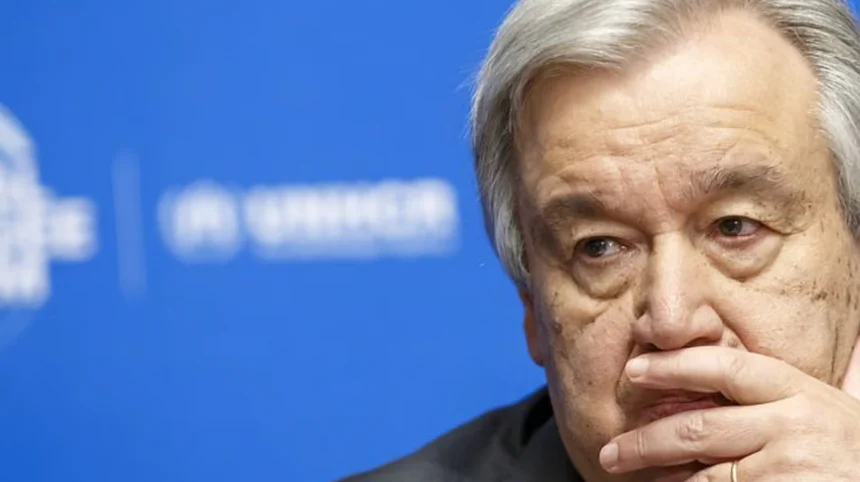
At the heart of London’s Methodist Central Hall — once a bomb shelter during the Blitz, now a commemorative site — United Nations Secretary-General António Guterres delivered a solemn reminder: global cooperation is under siege. In a speech marking the 80th anniversary of the UN General Assembly, Guterres warned that
“powerful forces are lining up to undermine global cooperation,”
while urging nations to reclaim the spirit of unity that birthed the institution after World War II.
But beneath the solemnity of the ceremony lies a deeper question: Is the UN still capable of preventing the very threats that made its creation necessary? Or has it become a symbolic institution, trapped between the geopolitical rivalries it was designed to restrain?
From Shelter to Summit: The UN’s Origin Story
The choice of Methodist Central Hall was deliberately symbolic. In 1946, the first UN General Assembly met in the same building just months after the end of World War II. The venue, once a public air-raid shelter, represented the trauma of war and the urgent desire for global peace.
Guterres emphasized this symbolism, recalling how London — and Europe at large — had been devastated by the Luftwaffe’s bombing campaigns. The image of delegates passing through a city still scarred by war was intended to remind the world why the UN exists: to
“save succeeding generations from the scourge of war.”
But if the UN’s founding mission remains relevant, its effectiveness is increasingly questionable.
A Multilateral System Under Siege
Guterres’ speech did not merely celebrate 80 years of multilateral diplomacy; it also served as a warning. The world has changed dramatically since 1946, and so has the nature of conflict. The UN now faces multiple simultaneous crises:
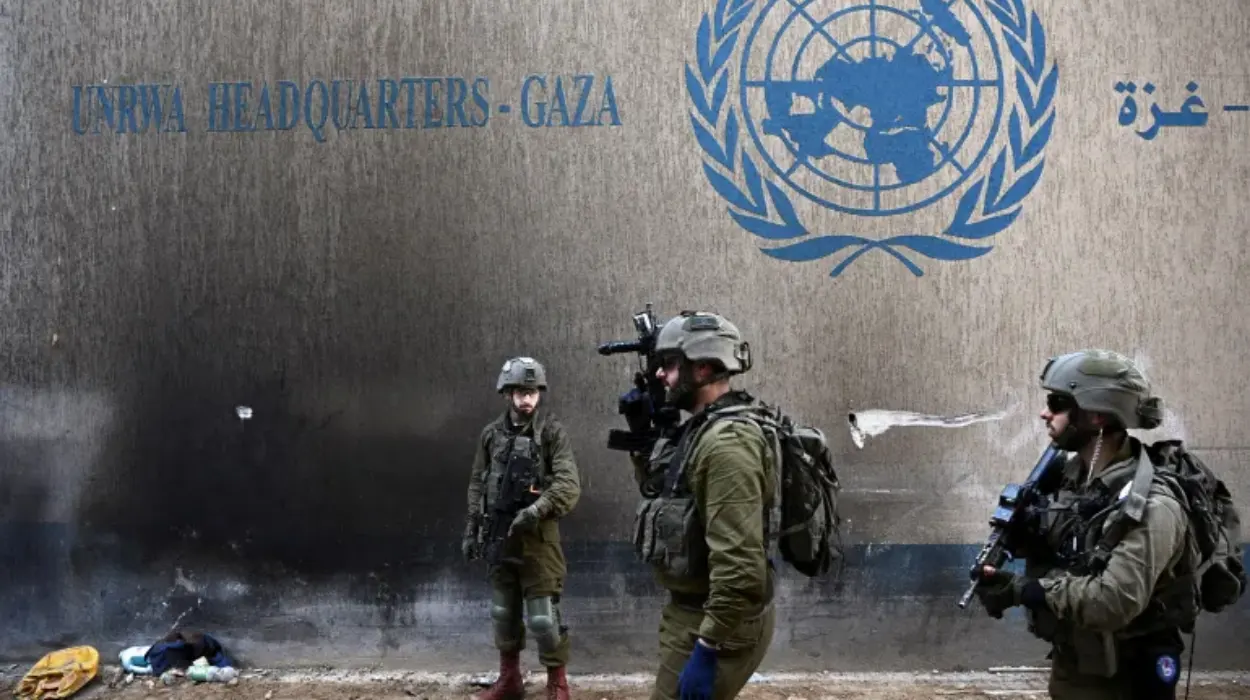
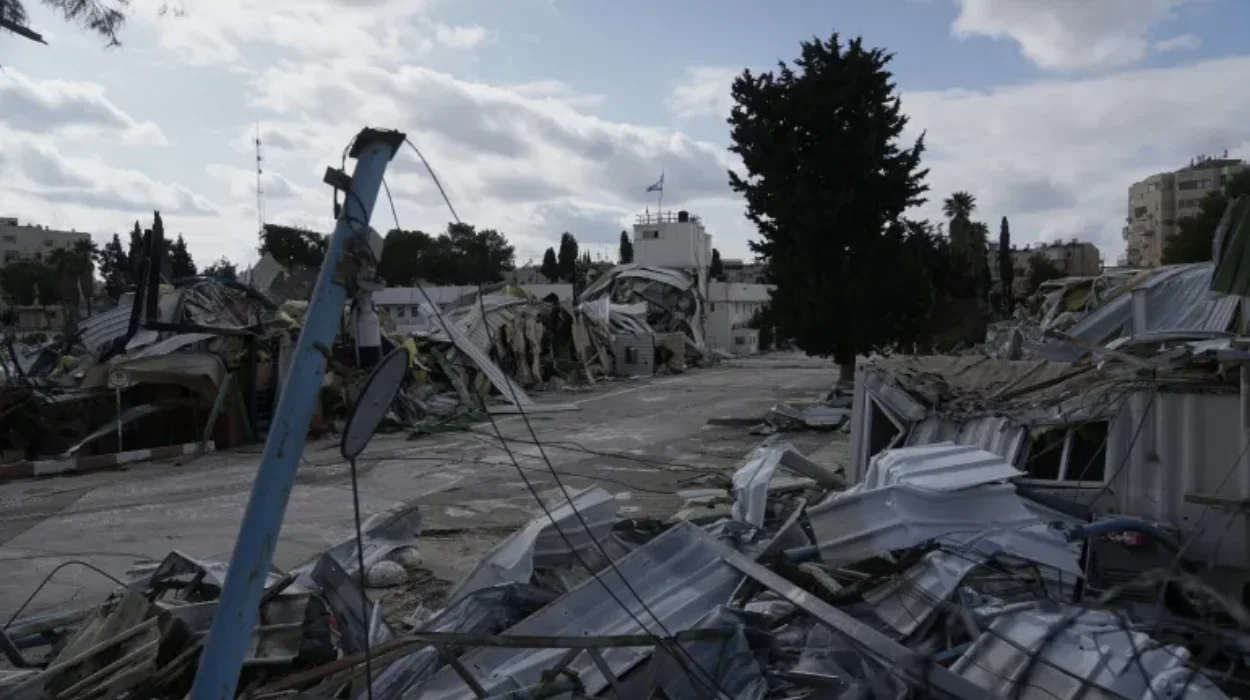
- Conflict escalation in Gaza, Ukraine, Sudan, and other hotspots.
- Rising global militarization.
- Climate collapse and energy geopolitics.
- Technological disruption, especially through artificial intelligence and digital misinformation.
- Rising nationalism and weakening international solidarity.
The Secretary-General pointed to the growing trend of nationalism as a central obstacle. He argued that 2025 was “profoundly challenging” for global cooperation, noting that aid budgets were slashed, inequalities widened, climate chaos accelerated, and international law was trampled. But these are not just “challenges” — they are symptoms of a system failing to deliver.
The Numbers Don’t Lie: Militarization and Inequality
The UN’s own data highlights the imbalance. Global military spending reached $2.7 trillion in 2025, a figure that is not just alarming — it is structurally destabilizing. To put this into perspective:
- $2.7 trillion is over 200 times the UK’s aid budget.
- It is roughly equivalent to 70% of Britain’s entire economy.
This reflects a global priority shift: the world is spending massively on war, while investing far less in peace, development, or climate resilience.
Meanwhile, fossil fuel profits continue to soar even as the planet breaks heat records. In other words, the world is financing the causes of climate catastrophe while claiming to fight it.
This contradiction is not merely hypocritical — it is a systemic failure of global governance.
A UN That Celebrates Victories — But Struggles to Prevent War
Guterres argued that multilateralism still produces “quiet victories” such as treaties, prevented wars, and famine relief. But this framing can be misleading. It implies that the UN’s role is primarily reactive — dealing with crises after they occur.
The UN’s greatest weakness has always been its inability to prevent major wars when great powers are involved. The Security Council, in particular, is structured to reflect the geopolitical realities of 1945, not 2026. Its veto power remains a major obstacle to conflict resolution.
If the UN cannot prevent wars in Gaza, Ukraine, or Sudan — where international law has been repeatedly violated — then its claims of being the world’s guardian of peace become increasingly symbolic.
The “Modern Diplomacy” Example: Marine Protection Treaty
Guterres cited the landmark agreement to protect marine life in international waters — entering into force on the anniversary — as a model of modern diplomacy. The treaty, negotiated with participation from governments, civil society, and Indigenous communities, is presented as evidence that multilateralism still works.
Yet the marine treaty also highlights a deeper problem: the UN’s successes are increasingly limited to “low politics” issues, where global consensus is easier to achieve. When it comes to “high politics” — wars, geopolitical rivalries, or powerful state interests — the UN is often sidelined. The world has grown better at negotiating environmental and technical agreements than at resolving conflicts or limiting arms.
The Real Crisis: A UN Without Enforcement
Guterres warned that
“the values of multilateralism are being chipped away.”
This is true — but the deeper issue is that multilateralism is not enforced. It relies on the voluntary cooperation of states, and the UN lacks the mechanisms to hold powerful nations accountable.
This is especially visible in:
- Arms proliferation
- Occupation and territorial aggression
- Crackdowns on civil society
- Targeted killings of journalists and UN staff
These are not isolated incidents; they represent a pattern of impunity.
The Call for Reform: But Who Will Act?
Guterres called for reform of the international financial system and the Security Council, arguing that global power has shifted and the UN must reflect new realities. Yet the key problem is that the countries that benefit from the current system are the ones who must approve its reform. This makes meaningful change unlikely.
The UN is essentially asking its strongest members to voluntarily reduce their own power — a demand that history shows is rarely successful.
Guterres concluded by rejecting the “myth” that peace is naïve. He argued that the founders of the UN understood the cost of war and chose peace as the most courageous path.
But courage alone is not enough. The UN’s 80th anniversary should not just be a moment of remembrance — it must be a moment of honest accountability.
Because if the world continues to prioritize military spending over humanitarian aid, if climate finance remains insufficient, and if the Security Council remains paralyzed, then the UN risks becoming a relic — a monument to a better world that never arrived.