The fact that the United Nations Security Council Sanctions Committee sanctioned eight new humanitarian exemptions is an influential point of reference to the implemented sanctions on North Korea. Also referred to as health care, nutrition, and sanitation waivers, these are the first such approvals in over a year and are an indication of a coordinated change following a long history of procedural stalemate in 2025.
The exemptions are based on the United Nations Security Council Resolution 1718 that provided the basic sanctions regime because of the nuclear and ballistic missile programs of Pyongyang. Its framework was developed to integrate pressure on weapons development with a very limited humanitarian carve-outs but in reality, approval mechanisms have tended to reflect the larger geopolitical affiliations of permanent members of the Security Council.
From Delays to Consensus
In 2025, the humanitarian applications remained stagnant most of the year due to people arguing in the committee, a development that marked increasing strain due to missile tests being carried out by Pyongyang. The approvals that occurred recently show that agreement, which seemed hard to find, has been restored and international organizations have started projects that were suspended to reach the vulnerable populations.
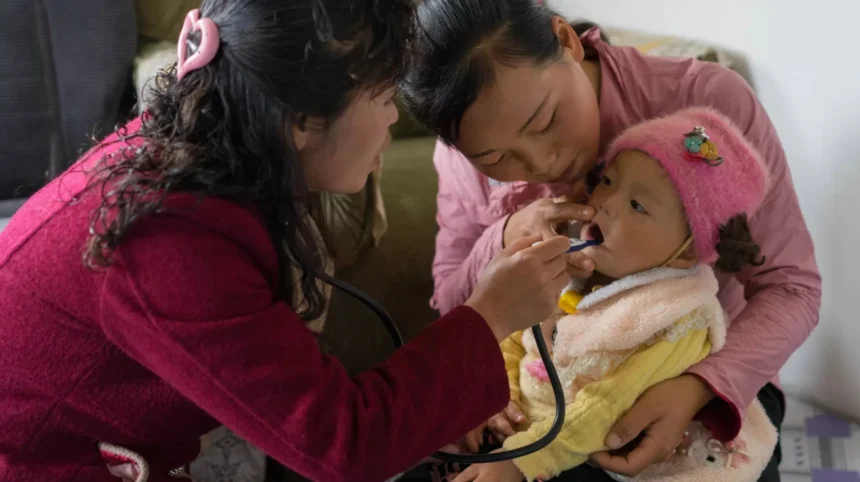
The United Nations children funding and the world health organizations are likely to renew their efforts based on maternal care, nutrition supplements and water sanitation systems. These programs were stalled several months ago which sounded alarm among humanitarian experts that there was a reversal in the gains of such public health.
Administrative Shifts in Washington
One of the major causes of the procedure breakthrough is the policy change in the present U.S. administration. U.S. representatives have habitually vetoed exemption requests in 2025 because they feared that humanitarian aid would be turned into a military purpose. The same stance has since changed so that it can be unanimously approved in the sanctions committee.
According to diplomatic sources, it is one of the aspects in a wider re-calibration of U.S. approach to engagement, which focuses on selective flexibility without abandoning core non-proliferation goals. Although no official response has come out of Pyongyang, a lack of open denial indicates that it was not going to go on the offensive.
Humanitarian Pressures Within a Sanctions Framework
The structural deficiencies in food security and medical infrastructure persist in North Korea as a result of border restrictions and restricted external trade over a long period of time. The eight waivers are based on projects to close malnutrition, maternal health, and sanitation gaps- areas where the humanitarian indicators are still lower than regional averages.
According to the reports of independent monitoring bodies, nutrition outcomes in rural areas became especially weak after the disruptions during the pandemic. Despite Pyongyang claims of moving towards self-reliance, external evaluation indicates that there are still loopholes in the access of basic health services, particularly to children and pregnant women.
Balancing Non-Proliferation and Aid Integrity
The sanctions provided in Resolution 1718 are supposed to prevent the development of weapons and allow the humanitarian flows that are strictly limited. Waiver mechanism has to be well-documented and monitored to avoid the risks of dual-use. Any project that is accepted will have to prove his/her compliance with the export controls and end-use verification.
This equilibrium is however fragile. The fact that in 2025 North Korea has continued to test its missiles, even demonstrating its use of sophisticated ballistic systems, has given some more force to the argument that pressure needs to not go away. Those policymakers who defend exemptions on grounds of humanitarian integrity say that humanitarian integrity enhances the effectiveness of sanctions by maintaining moral and legal legitimacy.
Implementation Challenges Ahead
Exemption approval does not necessarily lead to quick delivery. Implementation is usually slowed down by logistics, insurance coverage, cross border clearance and monitoring procedures. The experience of the past implies that operationalization may require several weeks or months even after the consent of the committee.
Humanitarian agencies underline that predictability in the waiver approvals is important in long-term planning. Repeat delays in applications cause project cycles to be jostled, making them less efficient and costly to donor governments and implementing partners.
Regional Diplomacy and Strategic Signaling
South Korea has been consistent in supporting humanitarian exemptions, which they consider to be a practical approach to engage. The diplomatic interaction of Seoul at the sanctions committee has been focusing on continuity of humanitarian aid irrespective of the political state of affairs.
The Republic of Korea has positioned aid as a stabilizing tool especially in spheres like community nutrition centers and sanitation systems. The strategy is consistent with the larger process of sustaining the communication channels and deterrence to weapons creation.
Inter-Korean Context
Although there is no direct dialogue between Pyongyang and Seoul, as history reveals, humanitarian cooperation has sometimes been the precursor of a diplomatic one. The family reunions and joint projects have been part of periods of low levels of trust-building in the past although these have been inconsistent with geopolitical developments.
The new waivers can therefore serve as a procedural message that creates an opening in the channels of non-military cooperation. The result of this into wider discussions will be dependent on mutual signals by authorities in North Korea.
Committee Dynamics and Global Alignment
The latest decision is unanimous, and the trend indicates the convergence of the key members of the Security Council, such as the United States, China, and Russia. The committee needs to agree on the exemption process and humanitarian approvals have been historically postponed by the lack of consensus within the committee.
The committee is enhancing its institutional credibility by restoring procedural unity. The viability of such unity, however, is determined by the ongoing coincidence of the priorities of enforcement and monitoring standards.
Sanctions Architecture Under Evaluation
Repeat of the application of humanitarian carve-outs is structurally questionable with regards to sanctions design. Over two dozen exemptions have been made since the beginning of the year 2026, which shows that there is active use of the waiver system. Although this is testimony to flexibility, it also reflects the administrative challenge that is struck between enforcement and relief.
For the sanctions regimes to be the most effective, the objectives should be consistent and clear in enforcement. In case of humanitarian exemptions being a common practice and there is no complementary diplomatic evolution, the policymakers will probably reconsider the need to recalibrate the sanctions structure.
Enforcement Versus Engagement
The proponents of severe enforcement believe that the pressure is still needed due to the continued weapons programs of North Korea. They underline that sanctions must have deterrent effect and particularly in cases where there are still developments in missile development.
Simultaneously, humanitarian actors warn that a high level of restriction may jeopardize civilian welfare without necessarily affecting the decision-making of the military. The waiver system is thus a system of balancing competing goals in one legal system.
Broader Non-Proliferation Context
North Korea’s sanctions regime is one of the widest multilateral systems that are functioning. Its creation impacts the ways of other crises in the world where humanitarianism will be among the challenges that security will be affected.
The fact that these regimes are subject to coherence is the key to maintaining the international norms. Whenever exemptions are carried out publicly and in a strict manner, they may strengthen and not undermine larger non-proliferation norms.
Outlook for the Coming Year
The flexibility of the sanctions system is emphasized by the fact that eight waivers were approved a year after the last batch. It also shows that the procedural deadlock does not necessarily remain unchanged and may evolve with the shift in the situation in the field of diplomacy.
Implementation will serve as the immediate test. Successful delivery of health and nutrition projects could stabilize humanitarian indicators and reinforce confidence in the waiver process. Conversely, delays or diversion concerns could reignite debates about enforcement rigidity.
As international agencies prepare to operationalize these exemptions, the broader question remains whether humanitarian flexibility can coexist with sustained pressure on weapons development. The trajectory of the sanctions regime will depend on whether cooperation within the committee translates into tangible improvements on the ground, and whether that balance can be maintained without weakening the underlying objectives of the global non-proliferation framework.