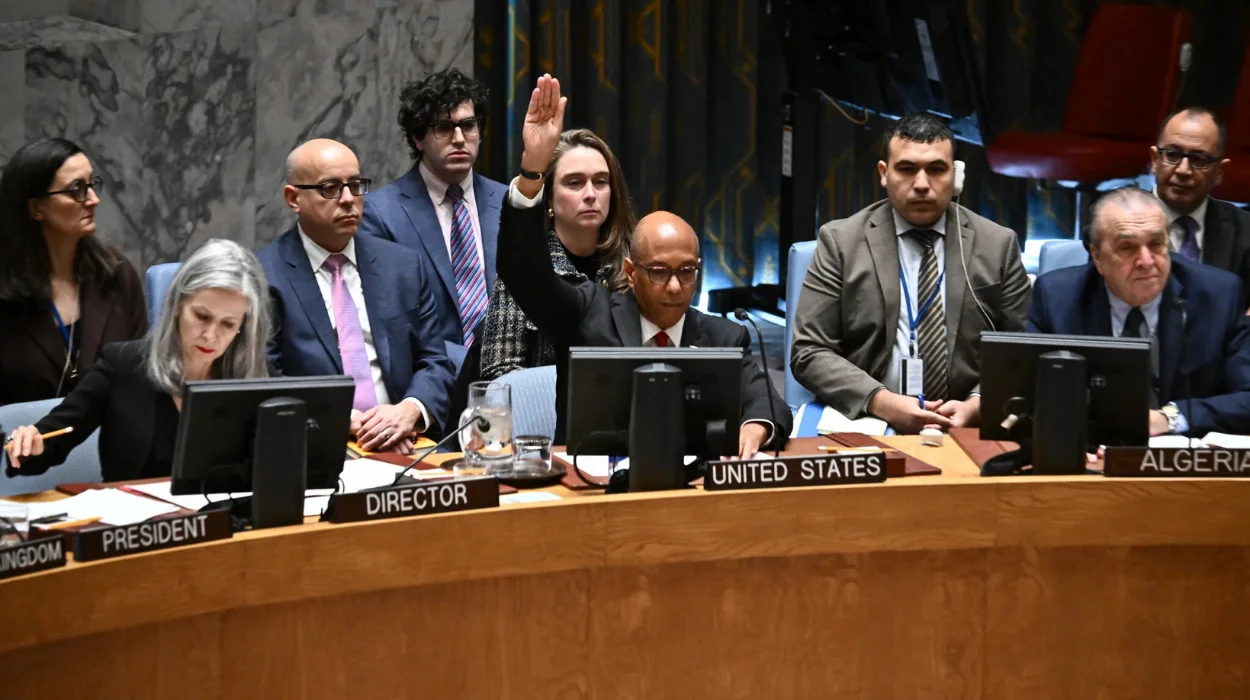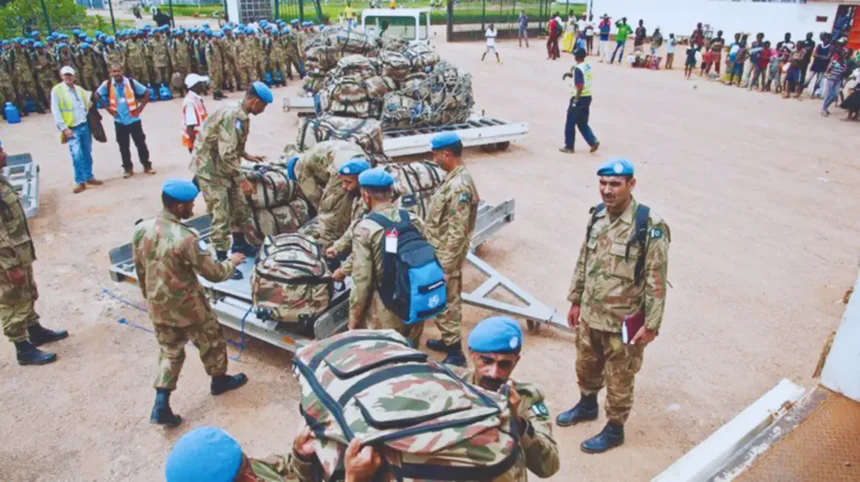
UN human rights reports depend on frameworks of investigations which are organized in such a way that they can endure even the political scrutiny. The Human Rights Council is the source of the mandates, which inform rapporteurs, experts, and working groups when they are verifying violations in various settings of conflict and non-conflict situations. These questions are based on international legal practices, such as the Universal Declaration of Human Rights and the treaties, in order to have a consistent foundation on which allegations can be qualified.
This process very much depends on fact-finding missions where fact-finding missions are used to collect information by direct interviews, analysis of documents and triangulated evidence. Investigators are advised never to use one source or witness. Clouding of the verification process aims to minimize the possibility of false allegation especially where conflicting narratives are typical in certain areas.
Data collection protocols in restricted environments
Field interviews with victims, witnesses and local authorities are a priority to the investigative teams. Analysis of satellite imagery, geolocation checks, and forensic reviews are turning out to be a supplement to testimony, particularly in remote locations. The application of AI-driven tools by the UN to recognize the trends in mass atrocities grew in 2025, and Sudan became the first large-scale test case. Such systems also alerted the displacement routes and possible locations of illegal attacks more accurately as compared with the earlier manual ways.
There is vulnerability however, due to dependence on local partners to access. Ground level organizations could be pressured by armed groups or governments and this affects the information they pass across. This conflict is one of the most tenacious impediments to full-scale data gathering.
Independence safeguards and institutional oversight
Rapporteurs are not affiliated to UN member states and are mandated on their expertise in their area of responsibility and not on their political affiliation. There is the accountability added through annual performance reviews and the requirement to report publicly. An audit of funding streams conducted in 2025 did not identify any direct interference by donors in the drafting of reporting, which reinforced the assertions of operational independence.
The UN is partially dependent on voluntary contribution to specific missions even with these safeguards in place. Although direct manipulation was not detected, there is a dependency to maintain a discussion as to whether the geographical focus of the investigations is implicitly influenced by the dependency.
Persistent criticisms and operational challenges
Critics are of the opinion that UN reports have a disproportional focus on specific areas and underrepresentation of violations in others. Governments often reject the findings as biased or politically inclined, and seldom discuss the content of the findings. In other scenarios, states challenge the legitimacy of evidence that is obtained with their non-consent. The mission of Iraq in 2025 was closed; this was used to demonstrate the challenges of having long-term oversight after the mandate has elapsed, and this raises some of the issues of continuity in monitoring and accountability.
These disputes are aggravated by state sovereignty restrictions. Nations have a veto to open important locations, biasing the evidence base towards more liberal cultures. In 2025, Kinshasa, a Democratic Republic of the Congo in the east of the country, disputed the UN figures on displacement, which were announced earlier, claiming they were exaggerated. The UN officials insisted that the numbers aligned with those recorded by satellites in terms of population movement, and this displayed the conflict between official accounts by the states and the third party validation.
Verification limitations in digital conflict spaces
In zones where investigators cannot safely enter, the UN uses secondary sources, including digital content shared online. This strategy increases reach but adds exposure to misinformation. The organization has previously adjusted Gaza casualty estimates following methodological reviews, prompting critics to claim early overstatements. UN analysts counter that corrections reflect transparency rather than inaccuracy, citing internal 2025 metrics showing cross-corroboration rates above 80 percent for reviewed cases.
Social media verification remains a central challenge. Deepfakes, manipulated audio, and fabricated geolocations complicate attribution. While AI tools introduced in 2025 offer improved detection of falsified material, experts continue to warn that digital environments can distort early reporting phases.
Case studies reflecting 2025 developments
UN reports on the Asia-Pacific region, the Sahel, and Iraq serve as key references for evaluating reliability in 2025. In Iraq, investigators documented electoral irregularities based on party submissions, judiciary records, and monitoring body inputs. Independent observers later confirmed the core findings, supporting claims that UN procedures hold under stable access conditions.
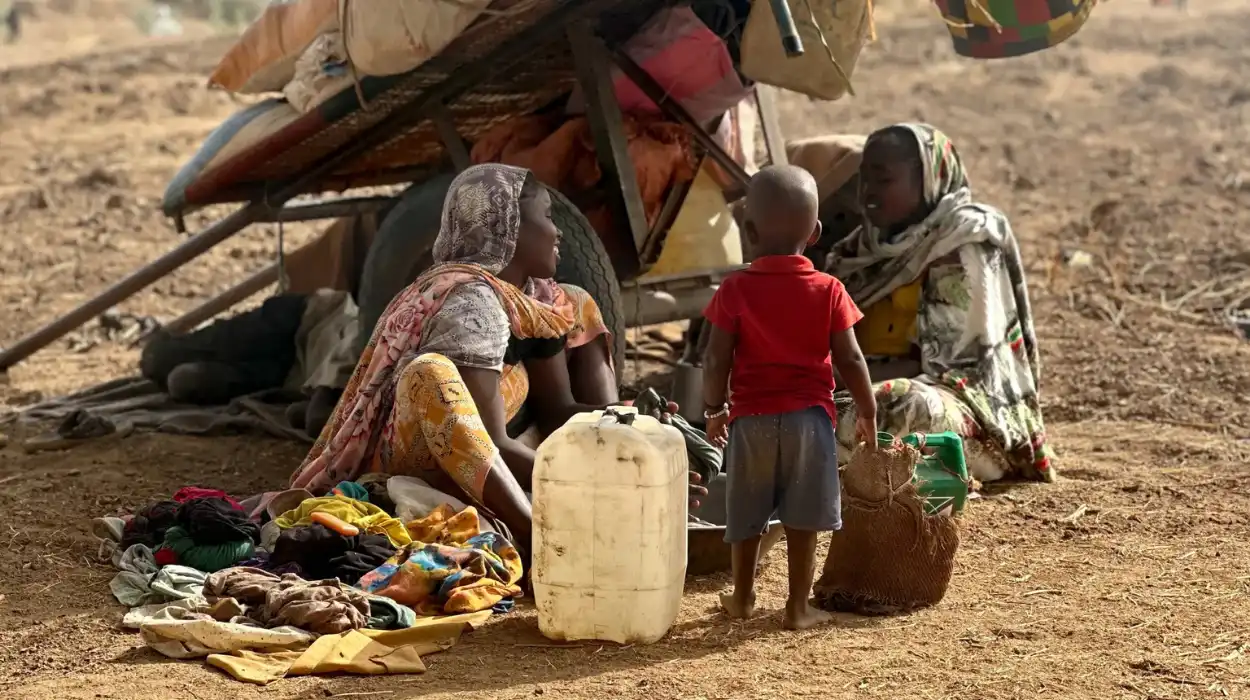
The Sudan conflict offered a contrasting example. Amid strict restrictions, the UN worked with humanitarian partners and remote-sensing specialists to compile displacement and casualty estimates. Sudanese military officials dismissed the figures as overstated, yet preliminary checks by the International Criminal Court in mid-2025 supported the general scale of reported violations. These developments suggest that while granular detail is occasionally contested, broader trends identified by the UN tend to withstand third-party scrutiny.
Blockades in the drc and access limitations
Reports from the Democratic Republic of the Congo in mid-2025 faced political pushback, particularly over claims of systematic blockades affecting aid deliveries. The UN cited anonymous testimonies and satellite-recorded transport disruptions as key evidence. Congolese authorities labeled the findings politically motivated, but subsequent independent logistics data confirmed significant access impediments. The episode highlights how credibility often hinges on corroboration beyond state-controlled information channels.
Middle east transitions and human rights tracking
Post-mandate reporting on Iraq in late 2025 relied heavily on parliamentary documentation and civil society submissions. Analysts noted an improvement in predictive stability models, with UN reporting aligning more closely with on-the-ground developments. However, monitoring lags persisted when local institutions failed to share real-time data, underscoring limitations of advisory missions that lack active field deployment.
Comparative reliability metrics across global institutions
Independent think tanks assessing global human rights reporting found that UN reports align with peer-verified events at an estimated 85 percent accuracy rate in 2025 benchmarks. Variance typically arises from delayed access or limited witness pools rather than systematic bias. Comparisons with major NGOs such as Amnesty International show approximately 70 percent overlap, with diverging conclusions shaped by the different mandates and methodologies of each organization.
Quantitative performance benchmarks
A 2025 statistical audit integrating econometric models and legal review processes recorded a 92 percent confirmation rate for allegations that had at least partial access for verification. In contrast, denied-access missions produced a lower 65 percent confirmation rate, reflecting the inherent uncertainty when on-site validation is blocked. These figures position UN reporting as one of the more reliable international mechanisms, though not immune to gaps created by political constraints.
Pathways for stronger credibility in future missions
There are a number of pilot programs of 2025 that aim to build on evidentiary transparency. The use of blockchain-secured evidence ledgers was presented in limited studies that prevented tampering of evidence ledgers and could verify chain-of-custody in real-time. Demonstrating the aggregated and anonymized information in public dashboards will also be considered to mitigate the allegations of selective reporting. Wider relationships with local civil society organizations have enhanced contextual awareness particularly where foreigners are at increased risk.
The recent development of AI moderation implemented in the missions of Asia-Pacific shows that automated verification can be used to detect inconsistencies with a higher speed than the manual one. However, specialists warn that such systems should not substitute human investigative judgment, but should be used in addition to it, especially in politicized conditions, where algorithms can be easily misread.
With the increasing complexity of global conflicts, as well as their political contestability, the credibility of UN human rights reports is directly connected to the availability, transparency and to the development of verification instruments. The current question is how these mechanisms can be adjusted when states use new approaches to make violations impossible to detect, which may result in the fact that in the future, evaluations will be based more on the use of digital evidence rather than the presence of the person. The success of these changes in enhancing or undermining accountability will determine the plausibility of the international human rights governance in the future.