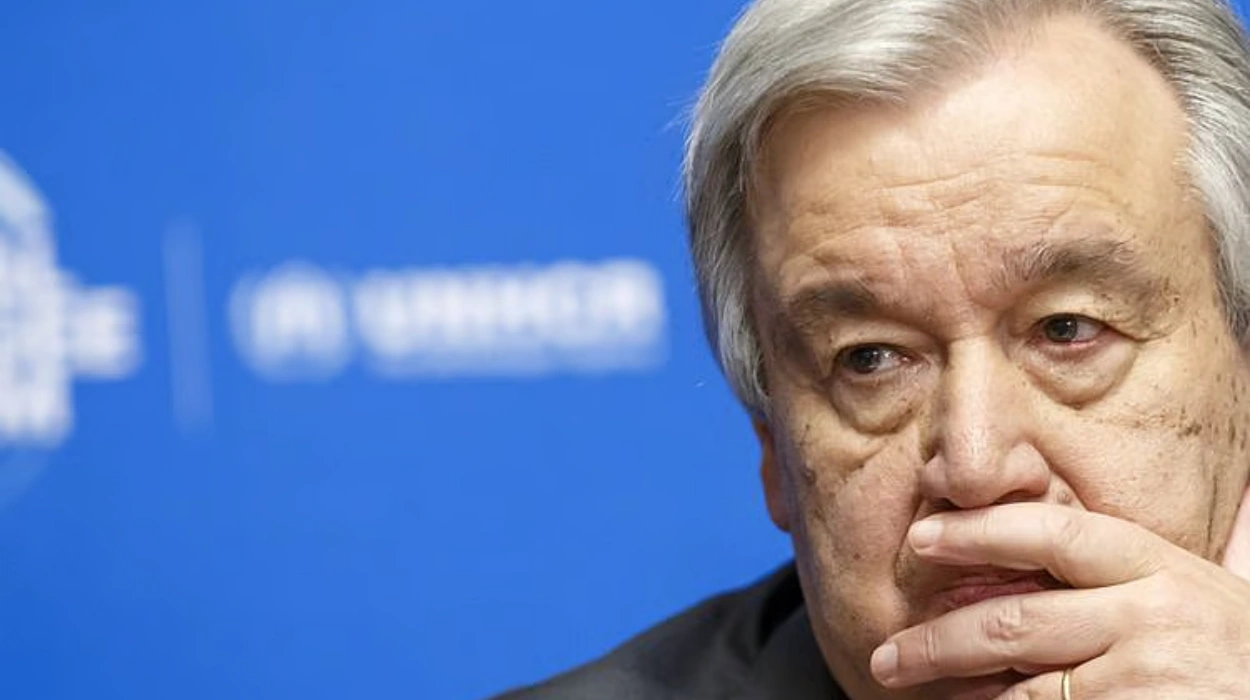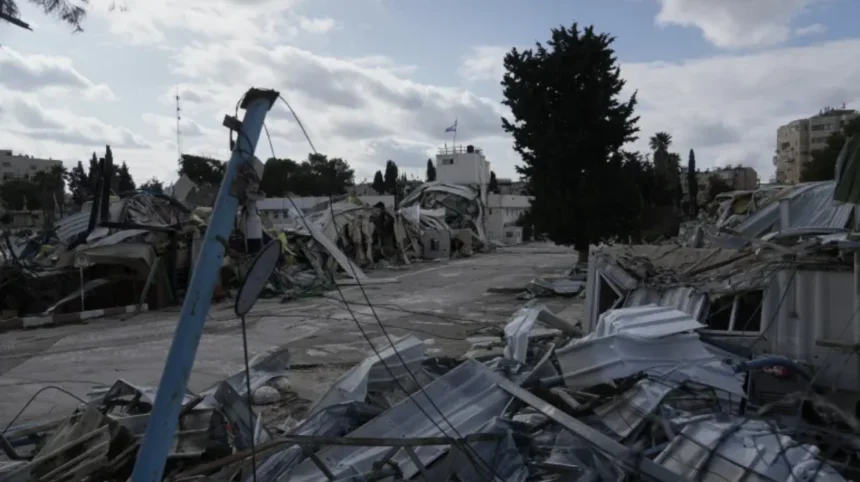
The Israelis have started demolishing structures within the headquarters of the United Nations Relief and Works Agency for Palestine Refugees (UNRWA) in the occupied area of Jerusalem. This is a new development in the confrontation between Israel and international humanitarian agencies. The UN headquarters in the neighborhood of Sheikh Jarrah has been stormed by the Israelis who have confiscated all the devices of UN personnel and evicted them from the headquarters. This is seen as a direct attack on the United Nations.
UNRWA Commissioner-General Philippe Lazzarini condemned the operation as an “unprecedented attack” on UN property, stressing that UN premises are protected under international law. He warned that Israel’s actions represent
“a new level of open and deliberate defiance of international law, including the privileges and immunities of the United Nations,”
adding that such conduct threatens the safety and legitimacy of international organisations globally.
“A new level of open and deliberate defiance of international law, including of the privileges and immunities of the United Nations, by the State of Israel.
Early this morning, Israeli forces stormed the UNRWA Headquarters, a United Nations site, in East Jerusalem.
Bulldozers… pic.twitter.com/mKHg30KG7p
— UNRWA (@UNRWA) January 20, 2026International Law Under Direct Attack
Demolitions of UNRWA buildings amount to more than an enforcement of the law on the grounds of being locally based. Internationally speaking, UN laws such as the UN Charter and the Convention on the Privileges and Immunities of the United Nations, host nations are mandated to shield UN buildings and staff from destruction and violence. Lazzarini explained that if such cases are not overturned, it would create a bad precedent for international organizations being attacked by any nation with local political motives.
Indeed, the International Court of Justice reiterated such a principle in a ruling in October that explicitly reiterated Israel’s obligation to ensure UNRWA’s operations and carry no jurisdiction in occupied East Jerusalem. Nevertheless, Israeli officials have pressed on in ways that flagrantly defy international legal norms, seemingly calling into question the jurisdiction of the highest court in the world.
Legislative Warfare Against Humanitarian Aid
Israeli officials have justified the demolition by pointing to new domestic legislation passed in October 2024 and expanded in December, which bans UNRWA from operating in Israel and cuts off electricity and water supplies to its facilities. This legislative campaign reflects a broader strategy to dismantle UNRWA’s presence altogether, particularly in Jerusalem.
Lazzarini said the assault on the headquarters is the direct result of these laws, which institutionalise hostility toward the agency and embolden security forces to act with impunity. UNRWA facilities had already been targeted by arson attacks and harassment amid what the agency described as a sustained disinformation campaign accusing it of links to Hamas — allegations Israel has failed to substantiate and which UNRWA has repeatedly and forcefully denied.
Criminalising Humanitarian Work
This is not, however, an isolated incident but rather part of a larger onslaught against humanitarian organizations operating within Palestinian territories. At least 37 humanitarian organizations have had their operating licenses revoked by the Israeli government for failure to comply with new regulations requiring humanitarian organizations to provide information about their personnel and funding. These include Doctors Without Borders, or MSF, and the Norwegian Refugee Council.
According to human rights bodies, these by-laws are implemented to intimidate, control, and eventually force out independent humanitarian actors. This has led to a significant decrease in life-saving activities being extended to Palestinians in Gaza and in the occupied West Bank. This comes at a time when needs are highest due to intense military onslaughts.
Political Theatre and Open Celebration of Violations
The presence of Israeli lawmakers and senior officials during the demolition further underscored the political nature of the operation. National Security Minister Itamar Ben-Gvir publicly accompanied crews to the UNRWA headquarters and declared it a “historic day,” framing the destruction of UN property as a political victory.
Lazzarini said the attack followed
“other steps taken by Israeli authorities to erase the Palestine refugee identity,”
pointing to a broader effort to dismantle the legal and historical foundations of Palestinian refugeehood, including the right of return. Bulldozing UNRWA infrastructure, critics argue, is not merely administrative enforcement but an ideological campaign aimed at rewriting political realities through force.
East Jerusalem and the Erosion of Occupation Law
The UN considers East Jerusalem occupied territory under international law, while Israel claims sovereignty over the entire city — a position not recognised internationally. By seizing and demolishing UNRWA offices in East Jerusalem, Israel is asserting jurisdiction it does not legally possess, further undermining the international legal framework governing occupation.
Local sources reported that Israeli forces sealed off surrounding streets, intensified military deployment, and used bulldozers to demolish structures inside the compound — actions more commonly associated with military operations than civil enforcement. Palestinian observers and international analysts see these moves as part of a broader pattern of home demolitions, infrastructure destruction, and territorial consolidation aimed at altering the city’s demographic and political character.
Global Silence and the Risk of Normalisation
UN Secretary-General António Guterres warned Israel Prime Minister Benjamin Netanyahu that Israel may face proceedings in the International Court of Justice, unless it revokes its laws that target UNRWA and returns assets seized. Writing on January 8, Guterres said the UN cannot remain indifferent to acts that are “in direct contravention” of Israel’s international obligations and must be reversed immediately.
Yet, with such statements, Israel’s actions go on largely unchecked. Human rights advocates warn the absence of real consequences puts at risk the normalisation of attacks on international institutions and the acceleration of the erosion of international law. As Lazzarini said, what is happening to UNRWA today could well happen tomorrow to any diplomatic mission or humanitarian agency anywhere in the world.
A Precedent With Global Consequences
The bulldozing of UNRWA’s headquarters is not only an attack on one agency but a direct challenge to the international system itself. By targeting a UN body protected under international law, Israel is testing the limits of global accountability and the willingness of the international community to defend its own institutions.
If such actions go unanswered, critics argue, international law risks becoming optional, humanitarian work criminalised, and global norms replaced by political expediency. The question now is not only what will happen to UNRWA, but whether the international system is prepared to defend its own credibility.