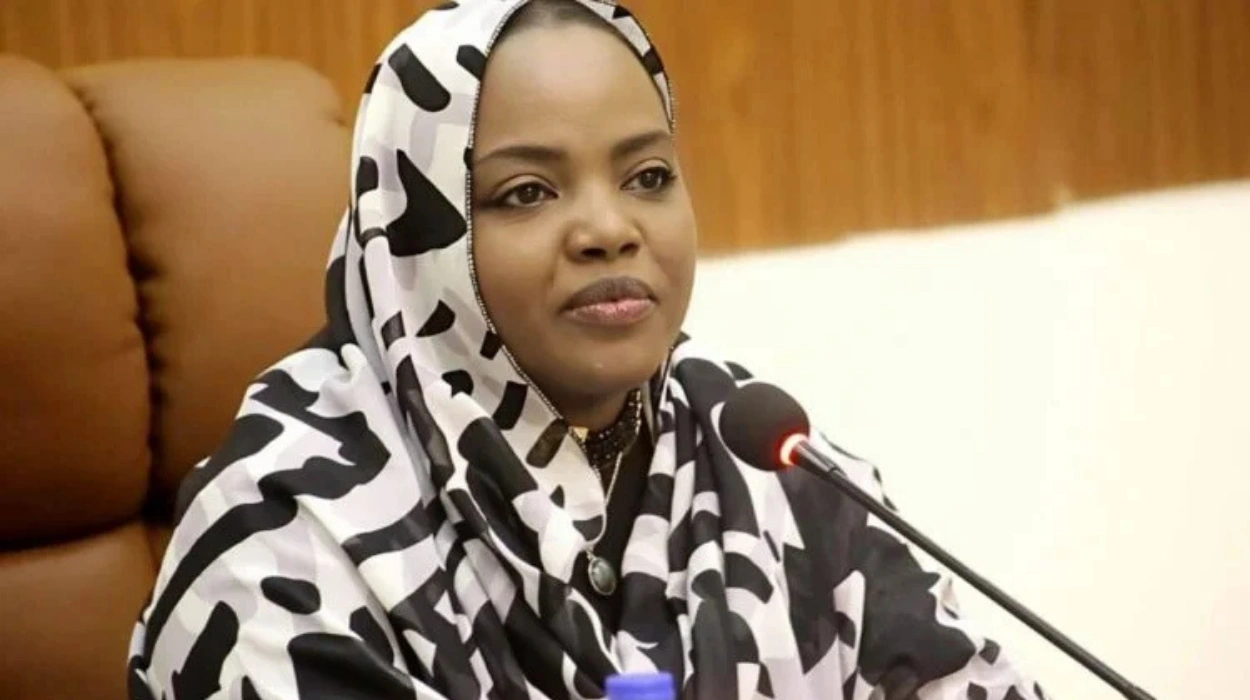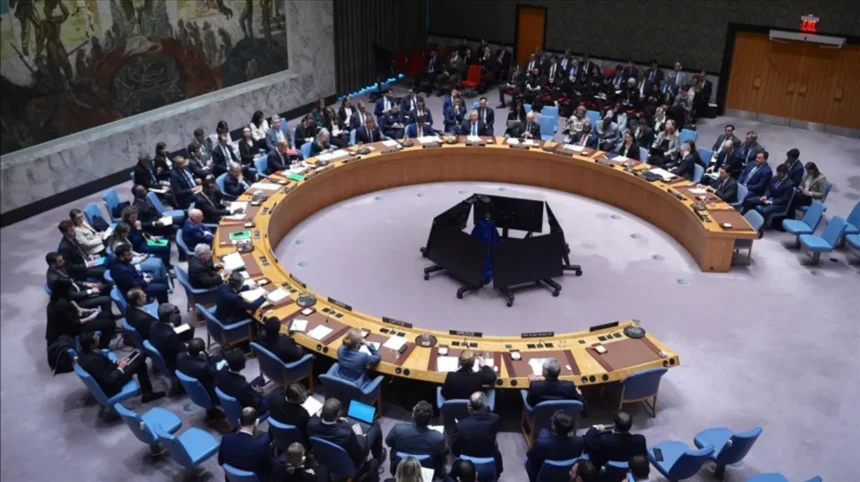
The increased pressure by the United Nations Security Council on March 2, 2026 is the indication of the growing anxiety that the Libyan political transition has moved into another state of stagnation. The Council proposed Libyan actors to cooperate with Special Representative Hanna Tetteh and the United Nations Support Mission in Libya fully to further the roadmap presented in August 2025 in its press statement. Urgent, consensus-building, and non-unilateral action that would only deepen the divide were stressed.
The message indicates consistency in the international support of the Libyan process under the UN and the recognition of the fact that months of minimal gains had destroyed momentum. With the introduction of the roadmap, the political players have been unable to turn the general promises into binding agreements such that the nation lacks a clear path to elections or a unified governance. The language of the Security Council shows that it is impatient towards procedural delays and wants to avoid a re-run of more stalled talks.
From Consultations to Binding Outcomes
The roadmap proposed by Tetteh is focused on a planned transition that is developed on three pillars that are connected to one another. The initial pillar involves a consensus electoral system that allows the presidential and legislative elections. The second is concerned with the unification of a government that could be able to oversee the preparations of polls. The third focuses on inclusive discussion on security arrangements and national reconciliation.
In early 2026, the talks between the house of representatives and the high council of state were again stalled on constitutional and legal bases of elections. As UNSMIL briefings have shown, the prolonged consultations did not lead to any binding results, and the idea of wider consultations mechanisms was considered. Tetteh has highlighted the necessity to shift the open-ended discussions into practical outcomes, positioning the electoral progress as the condition of long-term stabilization.
Institutional Gridlock and Electoral Uncertainty
The failed 2021 elections that should have been held in Libya continues to serve as a reference point to the ongoing negotiations. Controversies on the eligibility rules and institutional power undermined polling planning, strengthening the doubts whether political elites can find common ground on unanimous policies. These unanswered structural questions still affect the design of the electoral pillar of the roadmap.
Tetteh’s approach aims at countering this stalemate by increasing the involvement of others other than the existing institutions to include other stakeholders in the consultation process. This modification is an indication that procedural innovation might be necessary as a response to institutional stalemate. The goal is the same: to develop a politically acceptable, legally viable framework that could help in supporting nationally recognized elections.
Governance Fragmentation and Economic Strain
The political divisions in Libya do not just cease with the electoral law, but also fiscal management and the governance structure. The competition between the Tripoli and eastern institutions of the House of Representatives has been generating parallel budgets and competing financial decisions. Such unilateral actions threaten to undermine the central control and make consolidation of the institutions under the same executive difficult.
The second pillar of the roadmap focuses on the creation of a common government to take charge of making decisions on a national level. This is an essential requirement to make reforms or credible elections structurally challenging without such an authority. The Security Council statement implicitly connects the advancement of the state regarding governance with an overall stability which is an indication that political unity is not optional but essential.
Oil Revenue and Budget Pressures
The economy in Libya is still very reliant on the revenues of hydrocarbons and the production has been over 1.2 million barrels per day over the past few months. The mistrust between regions still exists as a result of revenue distribution disputes. The budget forecasts of 2026 show that there will be deficits in case financial coordination is not integrated.
The tens of billions of dollars of assets that are frozen internationally are another complicating factor in the liquidity management. These funds are a potential source of stabilization and an agenda between institutions purporting authority. UNSMIL has more often involved the economic dialogue in its mandate, which has realized that fiscal fragmentation has a direct influence on political negotiations.
Humanitarian and Security Implications
The social implications of political fragmentation are experienced especially when there is an overlapping of governance authority or conflict of governance in areas. The internal displacement has also not been negligible and the humanitarian access has been limited by periodic clashes between militia in certain areas. These circumstances highlight the fact that the third pillar focuses on reconciliation and security arrangements.
Security reform efforts are still yet to bear fruits in terms of comprehensive agreements on how to integrate armed groups into the structures of the state. It is a field in which even successful elections may be challenged to be implemented without improvements. The statement of the Security Council is indicative of the fact that the political milestones are insufficient in providing sustainable peace without the security consolidation.
External Actors and Regional Dynamics
The transition process in Libya remains to be affected by the regional and international stakeholders. The security, economic, or political connections between Libyan factions and various external actors are different. These relations though mostly seen in terms of stabilizing do not make it easy when it comes to achieving unanimity on national arrangements.
Tetteh has on several occasions stressed on the need to minimize foreign interference to enable domestic actors to negotiate freely. This is because the success of the roadmap relies on the constraint of external leverage that strengthens the internal fragmentation. The Security Council request to take serious action immediately indicates that they have common interests that foreign forces might extend stalemate.
UNSMIL’s Evolving Mandate
The mission was rejuvenated with renewed focus on economic coordination in addition to the political facilitation through the United Nations Security Council Resolution 2796. This is an expansion that comes as an acknowledgement of the fact that Libya is facing problems that are interrelated. The elements that are discussed as reinforcing each other are institutional reforms, fiscal stabilization and electoral frameworks.
The increased presence of the mission in cities like Benghazi and Sabha is the mission to check the situation and facilitate dialogue efforts. These actions are based on past stages of international interaction and adjustment to new limitations. Nevertheless, the capacity of operation on its own cannot replace the political agreement between the stakeholders of Libya.
Security Council Consensus and Diplomatic Signals
The fact that the March 2 statement was unanimously agreed upon by the Council members points to a wide agreement among the Council members over the importance of the roadmap of Libya. Members despite the varying priorities in the world came together following the need to prevent additional delays. This agreement gives Tetteh a strong bargaining position as an indication that the world is demanding tangible deliverables.
Concerns over stalled negotiations and possible political and security setbacks in case of the continuation of the stalemate had already been outlined in briefings earlier in February 2026. Those warnings are now strengthened by the language of the Council. It highlights the fact that the transition in Libya is still a subject of serious international monitoring.
Balancing Sovereignty and Support
In negotiations, Libyan actors always prioritize national sovereignty when they feel like they are being imposed by the outside world. Simultaneously, the intellectual assistance of UNSMIL is still demanded by the large number of domestic stakeholders to organize the conversation. The roadmap tries to reconcile these points of view by building the decision of Libyan leaders in an internationally encouraged framework.
There is a balance that has to be sequence-wise. Excessively quick schedules may break weak institutions, and excessive delays may discredit. The urgency of the Security Council is indicative of the view that the status quo of stagnation constitutes a more serious systemic risk than an acceleration that is deliberately gradual.
Outlook for Implementation
The durability of Libya’s roadmap will depend on whether political factions translate rhetorical commitments into verifiable actions. Key indicators include progress on electoral law consensus, establishment of a unified executive authority, and concrete steps toward security reform. Without measurable movement, international pressure may intensify.
Libya’s transition has persisted for fifteen years, marked by repeated attempts at reconciliation and institutional restructuring. The current roadmap represents another structured effort to bridge divides, but its success hinges on stakeholder willingness to compromise. The Security Council’s intervention suggests that the window for incrementalism is narrowing.
As diplomatic engagement continues, the central question remains whether Libyan actors can convert renewed international support into sustained domestic consensus. The coming months will test whether structured consultations, economic coordination, and security dialogue can align to produce binding outcomes, or whether the pattern of stalled transitions will re-emerge. The trajectory of Libya’s roadmap now rests on the capacity of its institutions and leaders to respond decisively to mounting pressure and convert frameworks into implementation.