The Famine Catastrophe in Sudan has hit new peaks in 2025, and 30.4 million individuals are in need of humanitarian aid. This number constitutes over half of the population in the country and contains 16 million children within which food, healthcare and education has failed due to a long term confrontation. One quarter of the population are now victims of acute food insecurity and famine has been reported in several localities in North Darfur and it is expected to spread to other regions of Darfur, Kordofan and Khartoum.
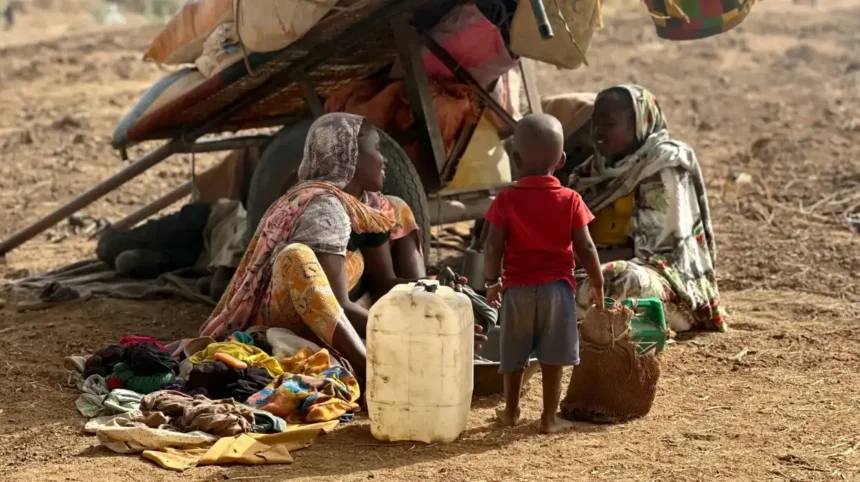
Since the war resumed in April 2023, aid agencies believe that more than 12 million individuals have been displaced. The internally displaced are about 8.8 million and over 3 million have crossed into the neighboring countries. This movement has resulted in one of the most rapidly increasing humanitarian emergencies globally where local infrastructure has not been capable of keeping up with the level of demand.
According to UNICEF, 15.3 million children have now relied on emergency assistance, and over 17 million have been out of school, which is one of the greatest education crises in the world ever. More than half a million children have been treated with severe malnutrition, but millions of children remain inaccessible with humanitarian convoys fighting to overcome frontlines. Nevertheless, the $4.2 billion Humanitarian Needs and Response Plan 2025 is still only 13 percent financed and the $950 million appeal by UNICEF is only slightly more than 50 percent financed.
Famine and food insecurity dynamics
Famine has been officially declared in five locations of North Darfur and estimates indicate that a total of 17 more locations will sink into IPC Phase 5 disastrous hunger by May 2025. This is spurred by unremitting fighting which keeps farmers out of land and traders out of supply chains. As the markets are wiped out and food production severely curtailed, basic staples are only available to many communities periodically.
The November 2025 El Fasher Rapid Support Forces (RSF) attack led to mass displacement of tens of thousands of people who are now languishing in temporary settlements with water and health care being inadequate. The deliberate starvation techniques were reported by aid workers and survivors, and were repeated by humanitarian experts in terms of systematic destruction of grain stores and blockades to commercial and humanitarian supplies.
Head of OCHA, Clementine Nkweta-Salami, threatened that communities in South Kordofan are living on a few days of food each time, and malnutrition was increasing more rapidly among infants and pregnant women. The World Food Programme still does the distribution of emergency rations but this time there is constant danger to the staff and convoys on major access roads.
Conflict-driven hunger
The connection between war and devastating hunger continues to be the main point of the crisis. The warfare in El Gezira, Darfur and Khartoum has killed livelihoods with families relying on informal systems of barter and small-scale humanitarian aid.
Market collapse and inflation
Prices of food and fuel have skyrocketed and most people can no longer afford them. Further destabilization of imports has been caused by continued fighting around Port Sudan and staples are no longer affordable even in regions not directly involved in fighting.
Children in extreme deprivation
The malnutrition and rates of child mortality are increasing very rapidly. According to humanitarian monitors, there are more and more situations when children have to live on wild leaves, and medical teams are not always able to cure the complications that appear after a long period of starvation.
Access blockade mechanisms
Insecurity, bureaucracy, and target violence pose a serious limitation to humanitarian operations. In the last two years, more than 110 aid workers were killed, injured, or abducted (Sudan is one of the most hazardous operating environments of relief workers). Both Sudanese Armed Forces (SAF) and RSF put administrative and physical barriers on the movements into the areas of conflict.
Convoys ready to access North Darfur, Kordofan, and Greater Khartoum actually often face road blocks, seizure of property and communication blockouts. Aid associations say certain blockades are like de facto sieges, where communities are left isolated even months at a time. The gaps caused in supply lines have ensured that famine spreads into regions that were already having a low reserve.
Disease outbreaks and health collapse
Sudan Famine Catastrophe is exacerbated by disease epidemics. Cholera has already reached 82 localities, and 2,396 cases have been identified and the fatality rate is increasing to 3.7. By the end of 2025, over 16,500 cases of dengue infections were exceeded because of stagnant water in displacement camps that were overpopulated. There have been hundreds of healthcare attacks since 2023, which have paralyzed the medical system of the country, leaving only a small part of the hospitals half-operating.
WHO estimates that 4.9 million children under five years, pregnant and lactating women have acute malnutrition. Health workers caution that poor immune systems predispose a person to cholera, malaria and respiratory infections. The emergency of public health carries on in several states due to the permanent lack of fuels and economic disaster.
Epidemic vulnerabilities in camps
The lack of clean water increases the transmission of simultaneous outbreaks in overcrowded sites in Darfur and Kordofan. Vaccine campaigns are constrained by the inability of health facilities to store the vaccines in cold-chain.
Rising gender-based violence risks
Women and girls at risk of gender-based violence have reached 12.2 million, which is 80 percent higher than it was at the beginning of 2024. Vulnerabilities are enhanced by displacement, lawlessness and overcrowded camps.
Health system breakdown
There have been frequent assaults on clinics and ambulances, which have killed the much-needed care. There are mobile units at the international agencies, but they are often halted by insecurity.
Displacement and protection crisis
The displacement crisis in Sudan has reached a new peak of 12.8 million individuals which is the highest number of people who are forcibly displaced globally. Since the beginning of 2025,UNHCR recorded over 18,800 civilians killed, and violence has increased threefold a week in various conflict areas. In a few days, the RSF displaced over 400,000 human beings in February 2025 in Zamzam camp.
According to the observation of the analysts of ACAPS, the changing frontlines make evacuation and aid planning more difficult. The reports of South Kordofan and Blue Nile provided by civilians talk about the increase of the ethnic massacre, drone attacks, and widespread lootings. Families that run away leave their homes with no food or water taking days before they reach the safer zones.
Response funding shortfalls
Although the U.S. assistance is robust and over $1 billion, the money seen worldwide is not enough to cater to the increasing demands. The IRC evaluations sound an alarm saying that Zamzam camp, with over 635,000 inhabitants, is already in the IPC Phase 5 famine stage. In 2024, the UN agencies targeted 15.6 million Sudanese with aid, yet 2025 distributions have gone down owing to insecurity and budget deficit.
Human rights watch still records violation of human rights in both regions under SAF and RSF control and demands free access to humanitarian aid and investigation by international bodies. The pace of new commitments is constrained by donor weariness because of various global crises and emergencies, although the number of deaths and displacement are increasing.
Sudanese resilience amid catastrophe
Sudanese communities continue demonstrating resilience through local networks that share scarce resources and organize informal protection systems. OCHA’s Ramesh Rajasingham noted that “people are holding on to hope despite unimaginable conditions,” underscoring the role of community solidarity in preventing even higher mortality.
UNICEF director Catherine Russell warned that prolonged school closures risk creating a “generational crisis,” with millions of children missing foundational education. Volunteers and teachers have opened informal classrooms in displacement sites, yet supplies remain minimal.
Sudan’s Famine Catastrophe exposes the layered impact of conflict-driven starvation, escalating disease, and mass displacement on more than 30 million people. As 2025 unfolds with shifting frontlines and limited funding, the search for sustained access corridors and coordinated pressure on warring actors raises urgent questions: can humanitarian diplomacy overcome entrenched blockades, or will Sudan’s largest crisis continue expanding beyond the reach of global response systems?