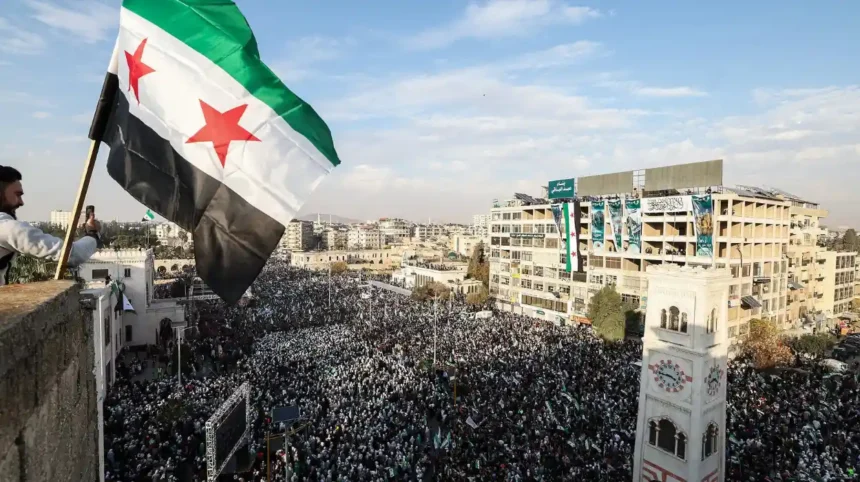
The Syrian regime collapsed, and the power of Bashar al-Assad came to an end, which lasted almost twenty years of the centralized rule. As of December 2025, the transitional government under the administration of the interim President Ahmed al-Sharaa will have reached its first year in office, where institutions are being rebuilt and the needs of a divided society are being demanded.
A transitional roadmap of five years was created in the Constitutional Declaration of March 2025. It made pledges to write a permanent constitution, create civil liberties assurances and create new governance systems to take the place of the models that were linked to the previous generation. In December 2025, the members of the Security Council who visited Damascus highlighted the progress in service reinstatement on the one hand, and flare-ups of sectarian violence, in particular, the Alawite and Druze communities in areas where the restored power vacuum re-emerged.
Transition milestones and international reactions
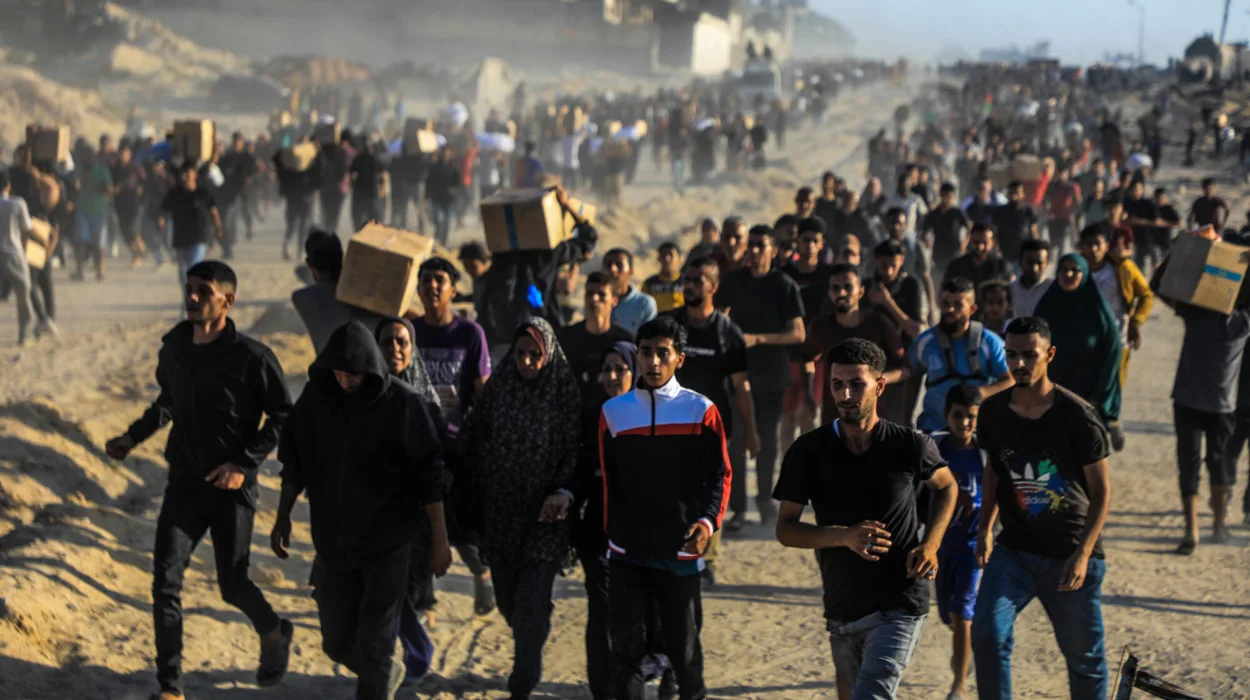
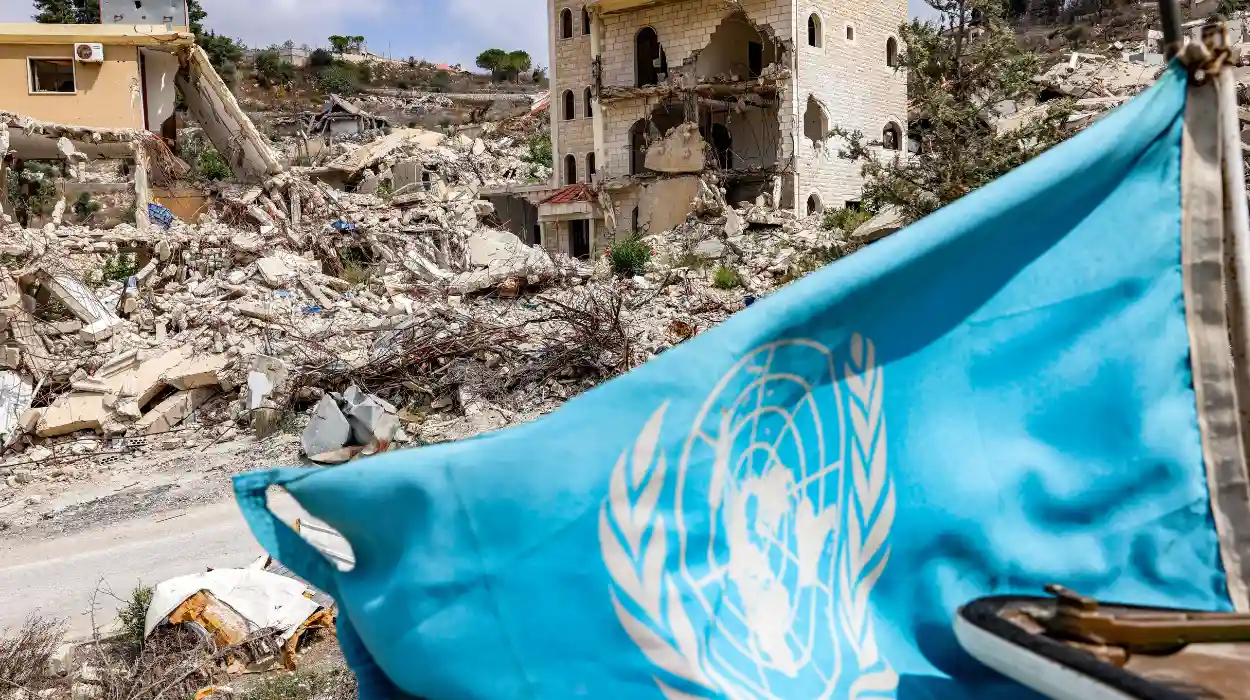
Over 1.2 million refugees had gone back by November 2025, mostly those who were Turkiyean. The internal returns reached over 2 million since late 2024, and it shows the renewed optimism but also the pressure on the local systems that were not ready to handle the rapid population growth. As UN Secretary-General Antonio Guterres said, the UN was firmly supporting this Syrian-led, Syrian-owned transition, which meant it would continue its assistance regardless of the unpredictability of its operations and politics.
There is a wide variation in the patterns of returns across provinces. There are places where reconstruction is premature and relief efforts are synchronized, and there are ones that are still volatile because of conflicts over territory, the division of armed groups or unstable governance conflicts. These imbalances define larger concerns regarding whether the recovery process will be stable and fast.
Humanitarian challenges defining the new era
The humanitarian crisis in Syria has been one of the worst in the world. In 2025, there will be 7.4 million internally displaced persons in the country and this stands as the highest active displacement in the world. About 70 percent of the population or 16.5 million people need humanitarian aid and over 90 percent of the population lives below the poverty threshold. In Food insecurity 14.5 million people are impacted with 1.3 million in severe shortages and this indicates the long-term economic meltdown that has been experienced before the transition.
According to the UNDP estimates, it may take another 2080 before the economies of these countries get back to the pre-conflict level, assuming the growth rates remain unchanged. It would take a minimum of six-fold acceleration in economic growth to accomplish recovery in a decade, an enormously high standard under current circumstances of widespread destruction of infrastructure and limited access to funds.
Winter intensifies risk
With the worsening of the winter, hundreds of thousands of people live in tents or very badly ruined houses. Aid agencies fear an increase in health crises and deteriorating nutritional deficits. UNHCR estimates that by 2025 there could be as many as 3 million refugees returning with the expectation of a heavy load over a system that is already running at half capacity biannually. This creates a dilemma that interim governments have to deal with in the process of ensuring security, governance and reconstruction.
Sectarian violence threatens emerging stability
By the second half of 2025, sectarian violence increased in areas of Sweida and coastal areas. These events displaced smaller communities with minorities and highlighted how unstable the post-Assad security situation was. The leaders of Transitional authorities tried to unite the hitherto conflicting rebel groups under the Ministry of Defense, ratifying the incorporation of the Syrian Democratic Forces on March 10, 2025. They are involved to normalize oil producing regions and ensure local rights, despite tensions regarding the control of territories and commanding resources.
The UN officials warned that Syria would not be able to endure another episode of unrest, considering the conflict spillovers in the neighboring states create security spillovers in the region. The disarmament programs are not implemented in time and many groups of people have weapons in their hands and one has to be convinced that this can lead to the eruption of localized conflict once again.
Justice and reconciliation dilemmas
The international calls to justice systems underscore the importance of having evidence based accountability and due process. The first year of the transition involved efforts to establish judicial control institutions, but the politics of fragmentation hindered the activities. One of the most tangible administrative measures of the government, which is the national electoral committee but was founded in June 2025, is still lagging behind political schedules in terms of its broader reconciliation.
UN engagement and evolving frameworks
The UN continues to play a leading role in observing both political developments with a special focus on the compliance with the resolutions of the Security Council 2254 and 2799. These frameworks provide expectations of inclusive governance, conflict resolution and political transparency. By mid 2025, coordination by Damascus formally ended the Whole of Syria cross-border model that had been developed in previous stages of the conflict and transferred the duties to national authorities under the supervision of the UN.
Envoy Geir Pedersen and UK Ambassador Tom Fletcher termed the situation as a historical crossroads, which saw the prospects of resuming civil participation and equal protection of rights. Nonetheless, they both emphasized that development would only be achieved through long-term investments by transitional leaders and involving all communities in Syria in the development.
Reconstruction and economic barriers
Development agencies have been insisting on long-term assistance in terms of funding, specific investment, and selective sanctions relief to speed up economic recovery. The Policy Center analysts indicate that regional diplomacy and power-sharing deals will have as big an impact as international finance on the rate of reconstruction, because Syria has a complicated political environment.
Regional diplomacy and international influence
In 2025, the interim reforms involved the creation of a Supreme Committee of Elections and 100 members of the transitional People’s Assembly were appointed. These measures are within a wider institutional framework that will be aimed at equipping the country against national elections when constitutional drafting is done. The surrounding states have been working in harmony to facilitate humanitarian ways of returning refugees, but most Syrians outside their country are still skeptical because of their insecurity and lack of economic prospects.
The presence of foreign involvement is still an issue in relation to sovereignty. The UN stalled the pressure to hold quick-track transitional elections citing that hurried political procedures can have a negative implication on dividing the people. According to the reports released by Human Rights Watch in the year 2025, the abuses are still evident, which means that the problems that shaped the local power relations several years ago remain relevant to the present.
Economic revival obstacles
The largest structural problem in the country is still economic recovery. The history of the four decades of development loss was packed in 14 years of war. UNDP scenarios have issued warnings that parity may only be recreated with a tenfold increase in growth within fifteen years and this may be difficult to achieve due to the economic stress in the world, low foreign investment and unstable internal situations.
The sectarian tensions scare away investors and the humanitarian dependency is likely to become institutionalized without a coordinated strategy of creating jobs, reviving industry, and reopening regional trade. These obstacles solidify the level of economic course-following related to political integration.
Emerging paths and unresolved risks
Syria after the Assad pivot defines a point of hope, confusion, and structural vulnerability. Even in winter, they are returning to the country as refugees, sectarian violence is putting early reforms to the test, and new structures of governance are being formed as the country is faced with chronic economic stagnation.
As UN partners deepen engagement and Syria advances toward constitutional deadlines, the question remains whether cautious optimism can withstand the weight of unresolved divisions. Will the consolidation of security reforms, return movements, and electoral preparations reveal the foundation of a stable transition, or expose deeper fractures still shaping Syria’s evolving future?