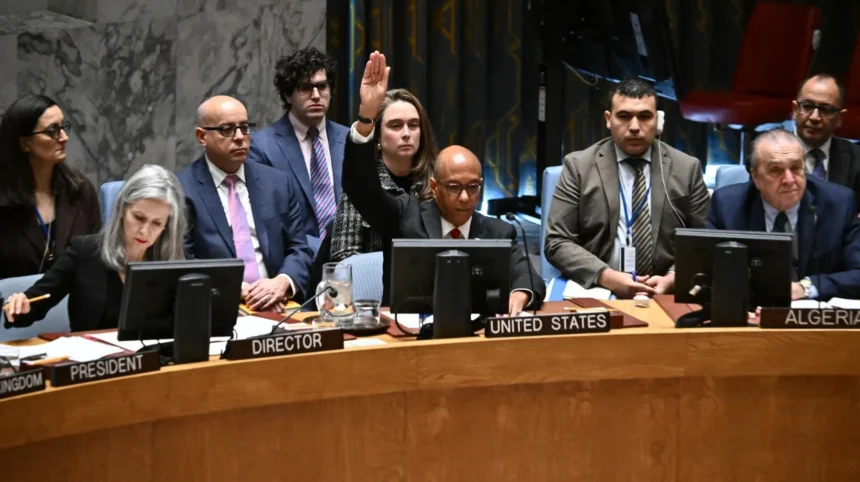
Resolution 2803, which was passed on November 17, 2025, the United Nations Security Council tried to intervene in one of the most significant ways since the hostilities in Gaza escalated in 2023-2024. The measure passed by a 13-vote majority and Russian and Chinese abstentions, which formalizes the extensive international support of the United States-led Comprehensive Plan to End the Gaza Conflict, a multi-stage undertaking pursued by President Donald Trump himself and his foreign policy team.
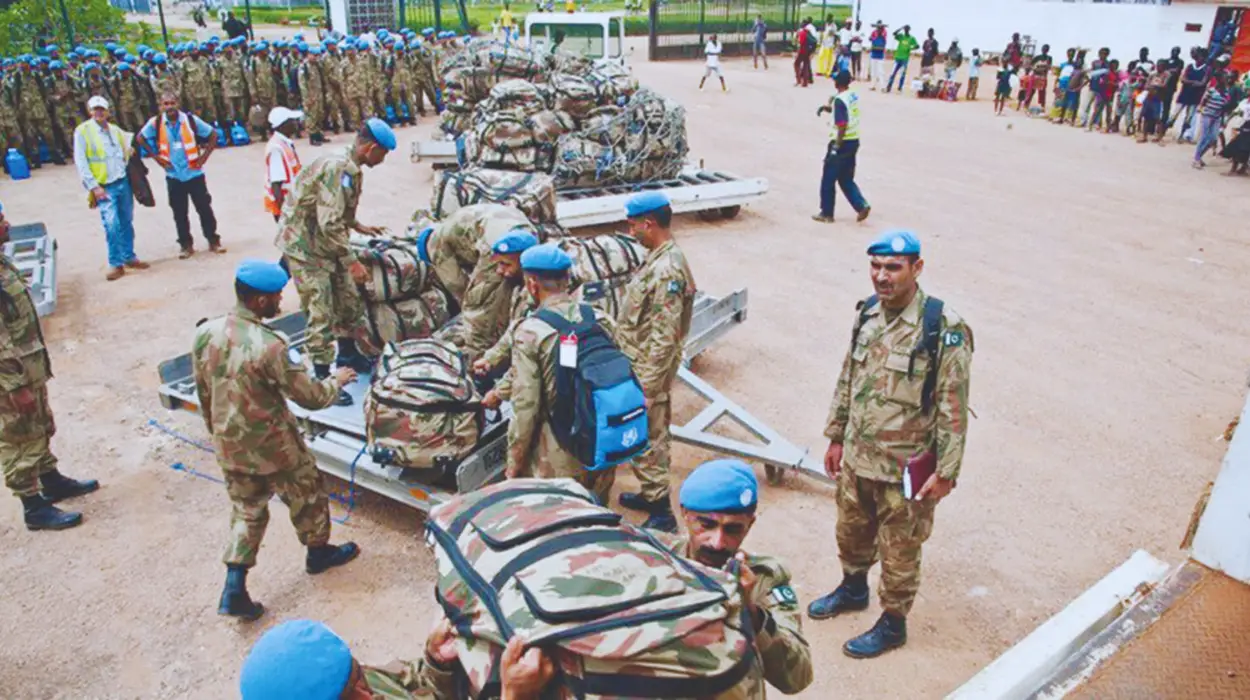
The resolution provides a temporary governance framework based on the Board of Peace, which is an international governing authority with the responsibility to oversee reconstruction operations, implement ceasefire arrangements as well as organize political reforms. In this arrangement, the Palestinian Committee will take over the day to day administrative roles, although it will be subservient to the Board. In parallel with directives of governance, Resolution 2803 approved the use of the International Stabilization Force (ISF), which was required to disarm the enclave and avoid the further rise.
These arrangements have a time frame until December 31, 2027, and renewal may be done on review by the Security Council. Interestingly, there is no direct recognition of Palestinian statehood; the political progress is associated with standards in governance reform, security situation, and labor stability.
Security and governance under the transitional framework
Although Resolution 2803 asserts that Israel “will not occupy or annex Gaza,” it In a way, Resolution 2803 states that Israel will not occupy or annex Gaza, it also gives the Israeli Defense Forces rights to continue their operation of the strategic corridors and the border areas in the transitional process. The Israeli forces still have the liberty to undertake security operations considered necessary to stop weapons shipment and militant reorganization, which forms a layered security environment with the ISF.
Oversight authority of the board of peace
The powers of the Board of Peace are in general executive powers that do not just limit to the conventional UN missions. It has the mandate to provide humanitarian access, put in place ceasefire arrangements and lead political reforms to stabilize governance in Gaza. This globalized system presents a new paradigm of control that is not parallel to the previous multilateral operations; this is a hybrid approach of diplomatic, military, and administrative power with the same mandate.
Operational challenges for the palestinian committee
The activities of the Palestinian Committee are carried out under a high level of pressure because of the economic pressure, the lack of infrastructure, and the existence of several security forces. As a condition to continue talks on self-determination, the committee has to exhibit good governance which will make its success pivotal on the long-term effectiveness of the resolution.
Political and legal implications of the resolution
The conditional framework of political development provided by Resolution 2803 is a major change in the context of diplomatic situations. A Security Council resolution is the first time to establish a roadmap to Palestinian political progression that is directly connected with governance reforms and security performance. According to supporters, this strategy is realistic and stability-oriented because of the post-conflict environment which is complex.
In its turn, skeptics contend that the resolution serves as a lawful sham that entrenches the outside power and water downs Palestinian agency. Human rights groups caution that the Board of Peace initiative poses the threat of legitimizing some version of international trusteeship which circumvents historical UN obligations to Palestinian sovereignty founded on the 1967 territorial model. This has added to criticism as there are no clear terms of dealing with long-term borders, rights of refugees, or political recognition.
Such conflicting interpretations highlight the law ambiguities that exist in Resolution 2803. Although it provides mechanisms that are meant to stabilize Gaza, the resolution also raises issues with regard to accountability, sovereignty and balance of power to come between the Palestinian institutions and the international organizations.
Humanitarian pressures and ongoing security risks
Though the resolution focuses on reconstruction and relief, this does not go as far as demanding substantive reforms of Israeli restrictions regarding movement, goods and humanitarian accessibility. The onus of enabling the aid is on the Board of Peace and not on Israel as such and this has created uncertainties in operations, which humanitarian agencies have already expressed their concern on the issue.
Mandates and limitations of the international stabilization force
The ISF is mandated with the responsibility of enforcing the demilitarization, the re-occurrence of armed groups and the protection of vital installations. Its success will require synergy between Israeli authorities, Palestinian administrators and regional players. Analysts warn that duplication of jurisdiction and incompatible priorities on security may be counterproductive to coordination especially in those locations where militant groups still exist.
Risks of renewed confrontation
Although there are ceasefire conditions, there is a high likelihood of more violence. Disruption of security occurs due to localized conflicts, the free circulation of weapons and various political resentment issues that are yet to be solved. According to international legal experts, it will be evident whether the ISF can act without increasing the tensions because clarity on the rules of engagement and protection of civilians will be created.
Diplomatic tensions and the global response
The response of the international community to Resolution 2803 is a trace of wider geopolitical divisions. Although Russia and China did not take a veto, they abstained because they feared that the resolution is overly biased in favor of the US and does not take into account some of the foundations of international law on occupation and self-determination. Their absenteeism is an indicator of warning, not rejection as such but a reminder of the years of debate on the place of the major powers in Middle Eastern diplomacy.
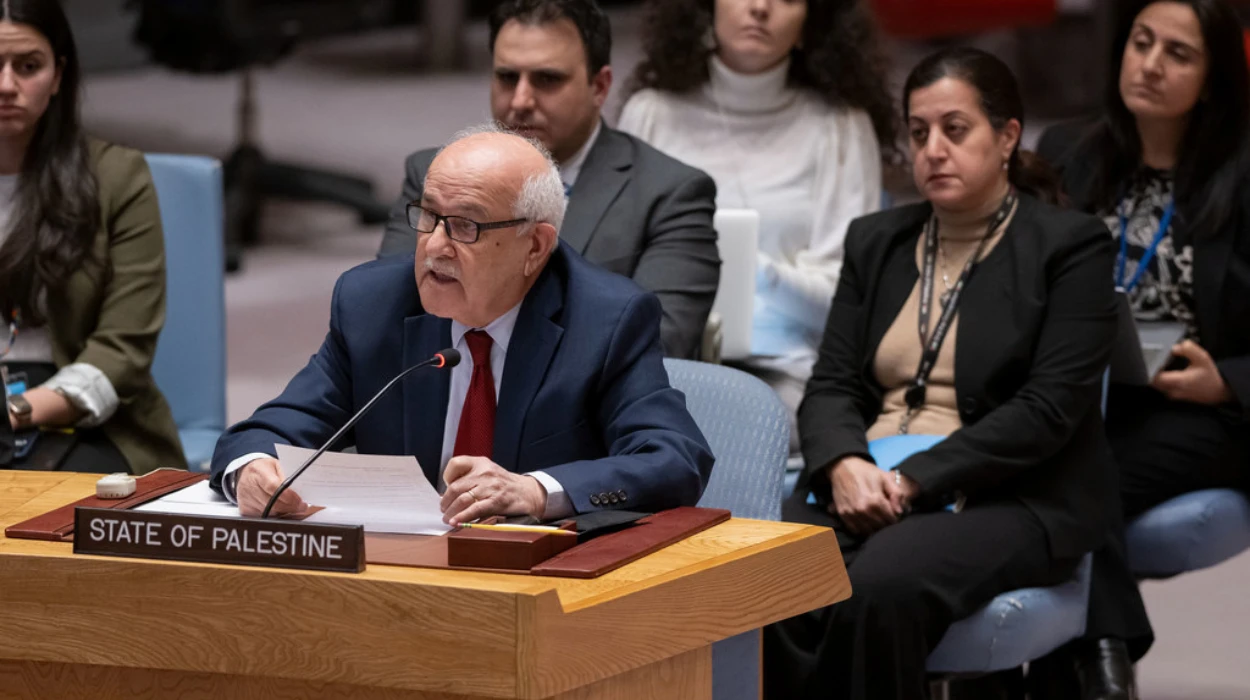
Simultaneously, the Palestinian Authority officially accepted the resolution labeling it as a chance to regain control and put down the arson. The secretary-general of the UN, Antonio Guterres, provided more moderate aid as he urged parties to convert the diplomatic structure into concrete development on the ground. The governments of the region, such as Egypt and Qatar, still act as mediators in parallel talks relating to border-related arrangements and humanitarian access.
Future prospects for Gaza peace and regional stability
The months after the adoption of the Resolution 2803 will expose the authenticity and sustainability of the new governance structure. The interaction between the international control, the local Palestinian institution, and the Israeli security agencies will decide whether the resolution will constitute a serious course to stability or just a transitory system that will forestall tougher political choices.
The success of the resolution in promoting Gaza peace, however, will depend on implementation, cooperation and reconciliation by the international community to meet legal obligations with the changing realities. This delicate balance between security requirements and freedom of self-determination will remain central to the future of state relations as political actors struggle to find a way to live amidst this transition, casting their long-term questions on how power, diplomacy, and accountability determine the future of peace in a highly conflict-ridden environment.