

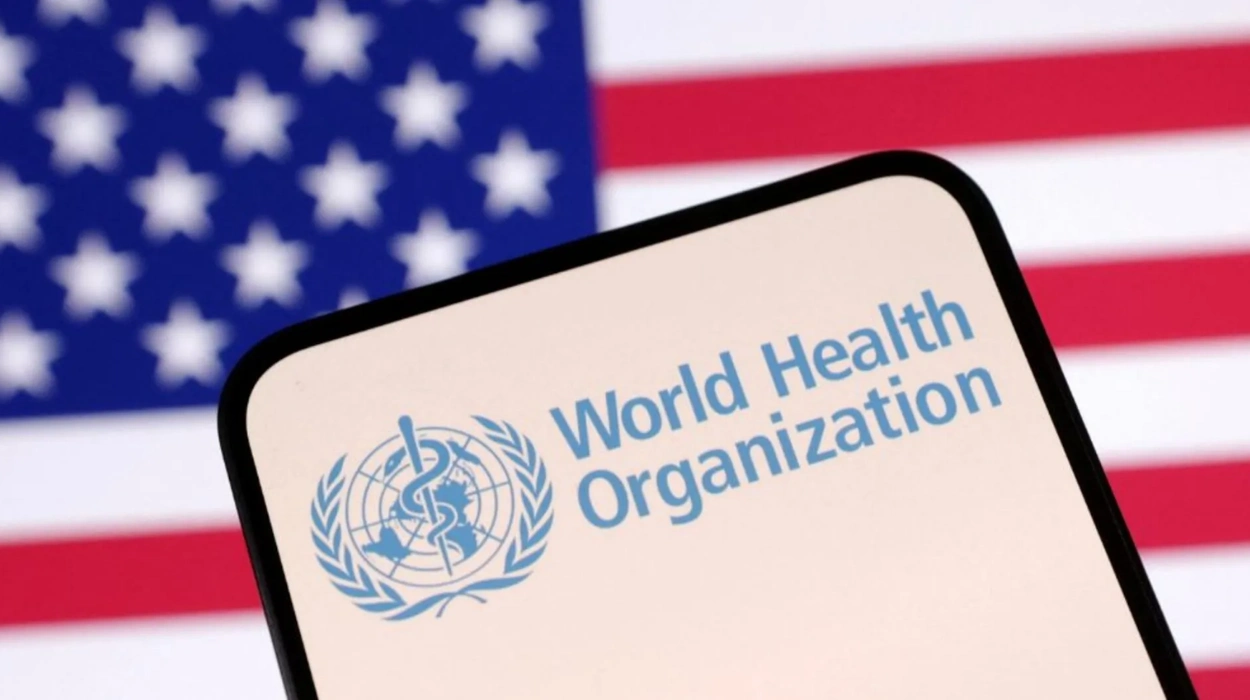

The US has officially stepped out of the World Health Organization (WHO), ending its almost 78-year-long affiliation with a health agency it helped birth. The announcement came via US Health Secretary Robert F. Kennedy Jr. and US Secretary of State Marco Rubio, but the real debate will center on whether no one should care what this means for America but what it means for our collective future as a globe still trying to fight pandemics, wars, and environmental health challenges.
Why did the US withdraw from WHO?
The Trump government has repeatedly attacked the WHO over its response to the COVID-19 pandemic. The USA has accused the medical organization of not taking rapid action, believing wrong information provided by China, and politicizing the health issue by considering travel restrictions imposed by Donald Trump’s government “racist.” Rubio and Kennedy, in the joint declaration of withdrawing membership, charged that
“the reason why we are withdrawing funding from the WHO is the failure of its responses during the COVID-19 pandemic.”
However, it is argued that yet again, it is also part of another political agenda, since “the withdrawal is seen as another step in Trump’s push to dismantle multilateral institutions in favor of unilateral action.” Furthermore, it is seen “as satisfying longstanding US grievances that it contributes more, especially in comparison with China, but gets less in return.”.
What does the WHO say about the withdrawal?
The Director General of WHO accepted this decision but rejected US accusations on his official Twitter handle. Tedros Adhanom Ghebreyesus said that they were
“complaints that are untrue”
but that both America and the world will become less safe because of its decision to withdraw. The Director General mentioned its contribution as one of its original member countries.
WHO also defends itself against criticism for the way it handled the COVID-19 health crisis, arguing that claims of being politicized and biased are false, emphasizing the fact that it is an independent body affiliated with the UN, working for all the countries of the world without any form of discrimination because all the states, a total of 194, are its members.
Is the US abandoning global health leadership?
This withdrawal is a major symbolic and practical loss for the WHO. The US has long been a major financial contributor and strategic partner. Losing that support weakens the agency’s ability to respond quickly to global emergencies.
Tedros has said the WHO has already been forced to make cuts due to the funding shortfall created by the US exit. This raises a critical question: who will fill the void left by the United States? Many experts fear that other powerful states, including China, may gain influence in global health decision-making, shifting the balance of power.
How does the US justify the financial claim?
President Trump called out what he said was an unfair financial burden on the US, saying America pays far more than any other country, including China, and receives unfair treatment in return. A financial argument has been one of the most recurrent themes in Trump’s foreign policy, reflecting a more general view that international institutions are rigged against the US.
But the WHO’s chief legal officer, Steven Solomon, pointed out that the founders of the WHO didn’t insert a withdrawal clause because
“what they wanted was a truly universal organization that would make the world safer.”
The US had written in a special provision providing for withdrawal if it gave one year’s notice and honored its financial obligations. However, the US was said to be in arrears on its payments for 2024 and 2025, casting in doubt the seriousness of its pledge to the agency.
What does the withdrawal mean for public health?
The WHO is often the coordinating body for health crises that cross borders, from pandemics to infectious disease outbreaks, and humanitarian disasters. The agency has deployed medical teams in crises such as Ebola, tuberculosis, and conflict-related emergencies.
With the US out, there are serious concerns about:
- Reduced funding and resources
- Weaker global coordination
- Greater influence from authoritarian regimes
- Less ability to respond quickly to future pandemics
Public health advocates argue that the only way to improve WHO is through engagement, not withdrawal. As one advocate wrote,
“Withdrawal is reckless and makes us all more vulnerable.”
Could the US return to WHO in the future?
Tedros expressed hope that the US would return to active participation in the future. UN spokesperson Stephane Dujarric also emphasized that the UN wants the US to be a full participant again, highlighting that health issues “know no border.”
However, the political reality is that the withdrawal reflects deeper tensions between the US and multilateral institutions. Whether the US returns depends on future administrations, geopolitical shifts, and how the world responds to the gap left by America.
What does this mean for global health cooperation?
The withdrawal signals a larger trend: the weakening of global institutions and the rise of unilateralism. If the US, a founding member and major funder, can leave, it sets a precedent that may encourage other countries to question the value of multilateral cooperation. In a world facing growing global threats—pandemics, climate change, war, and inequality—the weakening of the WHO could be one of the most consequential developments of the decade.