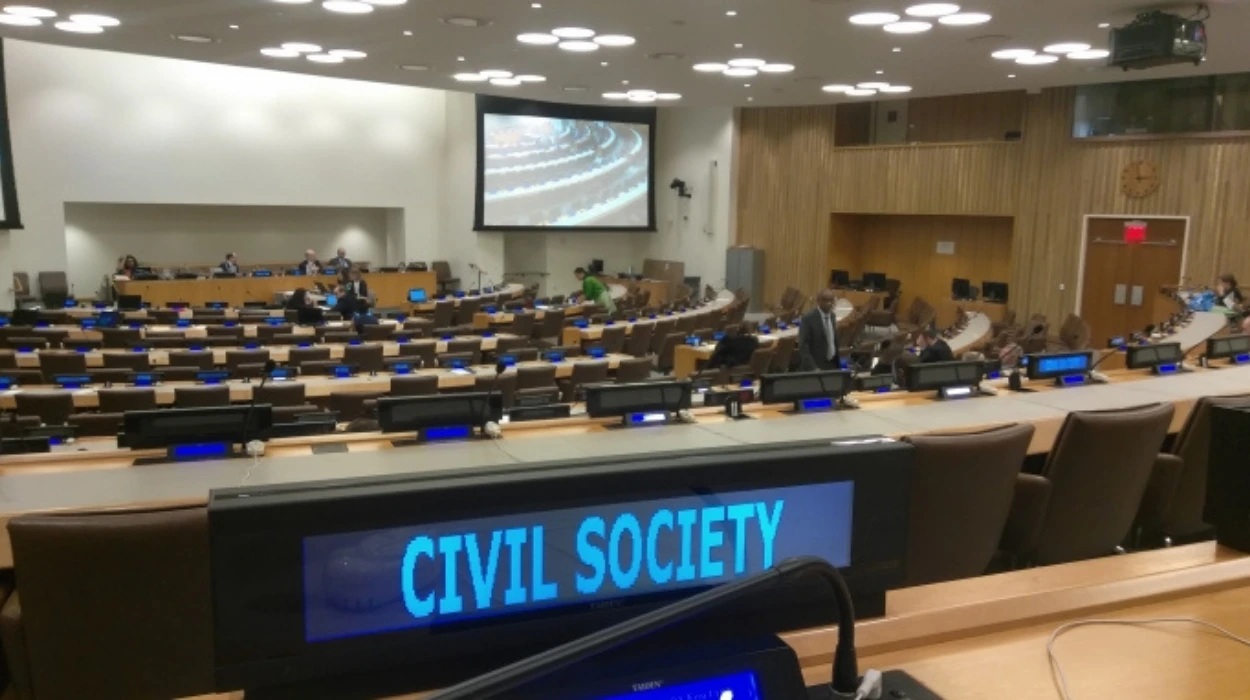
The UN General Assembly resolution on slavery reparations situates the transatlantic slave trade and related systems of forced labor not as isolated historical episodes but as foundational sources of enduring racial and socioeconomic inequality. Rather than prescribing a fixed compensation model, the text urges Member States to recognize the “historical wrongs” of slavery while designing multidimensional measures addressing both moral and material responsibility. UN assessments preceding the resolution indicate that the legacies of slavery have directly contributed to persistent gaps in income, wealth, health outcomes, and educational attainment for people of African descent across multiple regions. By codifying these insights into a global political statement, the 2026 resolution underscores that contemporary inequality cannot be fully understood without reference to the structural and economic legacies of slavery and its successors.
The resolution frames slavery reparations as a continuous process rather than a one-time transaction. It encourages States to implement measures that include formal apologies, truth-and-reconciliation initiatives, commemorative projects, educational reforms, and where appropriate, targeted financial compensation or social-investment programs. This approach reflects the principle that the moral responsibility of historical injustice extends beyond the original crime, influencing the systemic barriers faced by descendants of enslaved populations. UN human rights bodies supporting the resolution emphasize its flexibility, enabling diverse States to interpret reparations within their legal and historical contexts while upholding the fundamental principle that acknowledgment and redress are essential components of justice.
Linking legacies of slavery to structural inequality
The resolution’s primary analytical contribution is its explicit linkage of historical slavery to contemporary structural inequality. Human rights experts and UN special procedures highlight that systems of slavery, followed by segregation, colonial economic structures, and persistent racial profiling, generated durable patterns of disadvantage persisting into the 21st century. Earlier UN reports indicate that people of African descent disproportionately experience poverty, unemployment, inferior health outcomes, and restricted access to quality education and housing. By framing these disparities as direct legacies of slavery, the resolution positions them as operational features embedded within current policy environments rather than abstract historical consequences.
Contemporary mechanisms reproducing inequality
UN experts stress that reparations must address the mechanisms sustaining inequality today. Discriminatory practices in policing, housing markets, school funding, and labor markets represent contemporary extensions of the racialized logic underpinning slavery. The resolution encourages governments to view reparations as a multidimensional project encompassing legal accountability, social redistribution, and institutional reform. By targeting structural roots of inequality, the text reframes the debate from narrow monetary calculations to broader questions of power, resources, and opportunity allocation in societies shaped by centuries of exploitation.
Integrating historical analysis with policy solutions
The resolution bridges historical analysis with actionable policy, urging Member States to combine empirical research, historical documentation, and contemporary social indicators to inform reparative initiatives. This linkage emphasizes that acknowledging past harms alone is insufficient; effective reparations require identifying and dismantling structural barriers maintaining inequities for descendants of enslaved populations.
State support, reservations, and implementation challenges
Several UN Member States endorsing the resolution present it as overdue recognition of their historical involvement in slavery and exploitation. Governments across the Caribbean, Latin America, parts of Europe, and the African Union highlight the resolution’s role in establishing a multilateral platform for acknowledging historical responsibility and committing to remedial measures. Many of these States point to existing national initiatives, such as formal apologies, legacy studies, and targeted development programs for descendant communities, viewing the resolution as a vehicle to normalize and expand reparations frameworks globally.
At the same time, some Member States remain cautious or opposed, citing definitional, legal, and practical challenges in implementing reparations. Concerns include the fairness of compensation schemes, difficulties in attributing responsibility across centuries, and the potential politicization of historical liability debates. These governments interpret the resolution as a political and moral statement rather than a binding legal mandate, advocating for reparations to develop through national dialogue rather than international imposition. UN experts acknowledge the resolution’s breadth reflects divergent national positions, emphasizing that its effectiveness will depend on generating concrete, measurable reparative actions rather than symbolic commitments alone.
Civil?society expectations and the risk of tokenism
Civil society organizations, academic networks, and advocacy coalitions representing people of African descent generally hail the resolution as a milestone, while cautioning against superficial implementation. They argue that it validates decades of advocacy, from the 2001 World Conference against Racism to recent regional and national campaigns, establishing a normative baseline for accountability. These groups stress that acknowledgment of historical wrongs should translate into concrete initiatives, including independent reparations bodies, dedicated budget allocations, and measurable targets for reducing inequality.
Human rights advocates also warn that symbolic gestures risk being conflated with meaningful reform. Ceremonial apologies, commemorative plaques, or isolated financial payments may function as deflection rather than transformative action. The resolution implicitly addresses this risk by emphasizing “meaningful participation” of affected communities in designing and monitoring reparations measures. Experts contend that whether the framework achieves structural change depends on whether governments leverage reparations to redistribute power, reshape institutions, and redefine societal hierarchies, rather than merely reinforcing national narratives of progress.
Education, memory, and the long-term project of justice
Education and cultural remembrance form a central component of the resolution, framing memory work as integral to reparative justice. States are encouraged to integrate the histories of slavery, colonial exploitation, and resistance into school curricula, museums, and public memorials. UNESCO-affiliated experts argue that historical amnesia perpetuates contemporary racism, making its correction a necessary dimension of reparation. Support for archives, exhibitions, research, and public education campaigns centered on enslaved populations’ agency, rather than solely on their victimization, is presented as a critical step toward structural transformation.
The resolution also emphasizes institutional reform in areas historically discriminating against people of African descent, including policing, housing, and education systems. UN experts suggest that effective reparations should produce measurable reductions in disparities across income, health, education, and access to justice. By framing reparations as a long-term project, the resolution positions justice as evolving and participatory, requiring sustained political will and multi-generational engagement. The enduring question is whether the international community will harness this resolution to generate meaningful structural change or allow it to remain a symbolic affirmation, leaving the legacies of slavery unresolved in the lived experiences of millions worldwide.