Independent United Nations Watch
  • Articles
  • General Assembly
  • Human Rights Council
  • NGOs
  • Press Release
  • Reports
  • Security Council
  • UN Agencies
Reading: Middle East War and the Erosion of the Force of the Law
Share
Aa
Aa
Independent United Nations Watch
  • Security Council
  • UN Agencies
  • Human Rights Council
  • Articles
  • General Assembly
  • Human Rights Council
  • NGOs
  • Press Release
  • Reports
  • Security Council
  • UN Agencies
  • Advertise
© 2026 Independent United Nations Watch. All Rights Reserved.
Independent United Nations Watch > Blog > Articles > Middle East War and the Erosion of the Force of the Law
Articles

Middle East War and the Erosion of the Force of the Law

Last updated: 2026/04/03 at 10:05 PM
By Independent UNWatch 8 Min Read
Share
Middle East War and the Erosion of the Force of the Law
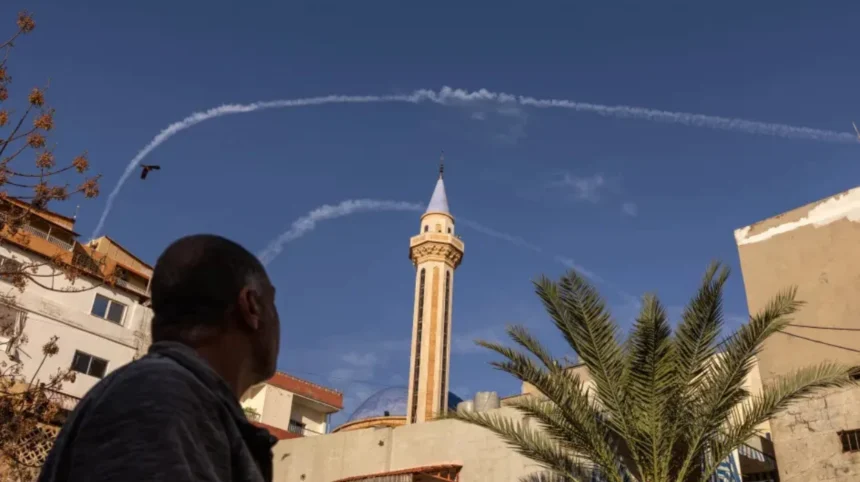
Credit: abio Bucciarelli/Middle East Images/AFP via Getty Images
SHARE

The Middle East war has emerged as a litmus test for the UN-Charter–based international order, as ongoing hostilities push the limits of law-compliant conduct in armed conflict. In Gaza, Lebanon, and surrounding regions, the humanitarian and infrastructural toll is immense, with tens of thousands of civilian casualties, millions displaced, and widespread destruction of hospitals, schools, water systems, and housing. UN-linked assessments describe the impact as “cataclysmic,” highlighting that communities are living under conditions that resemble chronic emergency rather than episodic conflict. Military offensives, including cross-border strikes and urban campaigns, continue at a pace that legal and humanitarian experts argue surpasses what international humanitarian law (IHL) was designed to accommodate, even in protracted crises.

Contents
From legal safeguards to military logicThe framing of legalityOperational pressures on legal normsCivilian suffering and the limits of protectionDiplomatic responses and accountability debatesThe uncertain future of war and law

UN Secretary-General António Guterres has repeatedly cautioned that the region risks letting the “law of force” override the “force of the law,” emphasizing a structural shift in the conduct of warfare. He stresses that large-scale aerial campaigns, drone operations, and ground offensives reflect a growing reliance on coercive military power over diplomacy and legal safeguards. According to Guterres, the UN Charter and IHL principles are not optional constraints but fundamental guides for all military and political decisions. The enduring question is whether this conflict will be remembered as a moment when those rules held firm, or as a precedent for their gradual erosion.

From legal safeguards to military logic

International law experts emphasize that the “force of the law” relies on three core pillars: the distinction between civilians and combatants, proportionality in the use of force, and the obligation to protect civilian infrastructure essential for survival. In the current Middle East war, these principles are being tested by tactics that blur these distinctions. Long-range drone campaigns, missile salvoes against urban centers, and repeated strikes on power grids, water treatment facilities, and hospitals challenge conventional understandings of proportionality. Human rights organizations and UN monitoring bodies argue that when these operations result in disproportionate civilian harm, even if the stated targets are military assets, they risk constituting serious breaches of IHL.

The framing of legality

Belligerent actors frame their operations as lawful self-defense, retaliation, or preventive measures, often citing the presence of enemy forces within civilian areas to justify complex targeting decisions. 

From this perspective, IHL accommodates a degree of collateral damage when attacks are aimed at legitimate military objectives. Proponents argue that the burden of proof should rest with those alleging violations rather than on states exercising their right to self-protection. However, external observers note that repeated attacks on densely populated regions and critical services suggest that military logic increasingly dictates what is legally permissible, challenging the notion that law remains the primary constraint on violence.

Operational pressures on legal norms

The erosion of the force of the law is further compounded by the realities of urban warfare and asymmetric conflict. Combat in densely populated areas makes compliance with distinction and proportionality challenging, and the sheer tempo of hostilities limits time for operational legal review. Analysts point out that even well-intentioned actors may inadvertently stretch legal norms, producing cumulative effects that undermine civilian protection and weaken the credibility of IHL as a practical constraint.

Civilian suffering and the limits of protection

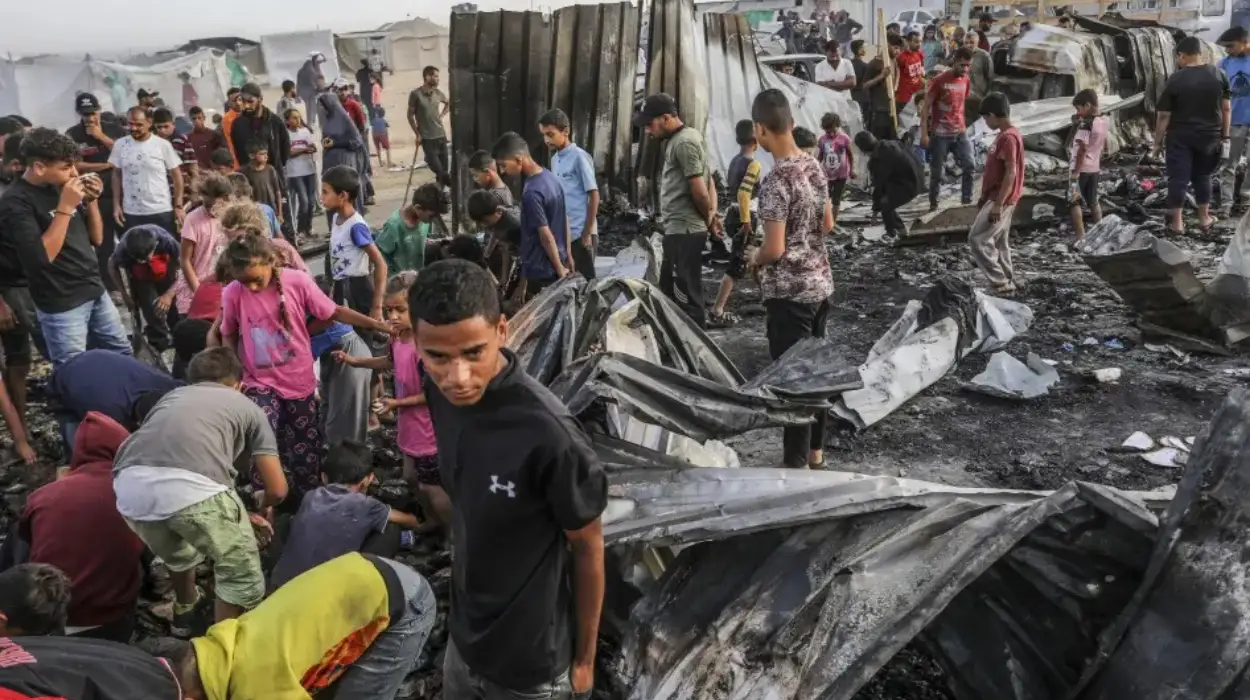
The most visible consequence of the erosion of the force of the law is the impact on civilians. Humanitarian field teams report that large segments of Gaza, parts of Lebanon, and adjacent areas lack reliable access to food, water, medical care, and safe shelter. Damage to infrastructure has made daily survival a constant negotiation, with families repeatedly relocating to avoid bombardments. The UN Office for the Coordination of Humanitarian Affairs warns that without a clear legal framework to constrain military escalation, the humanitarian situation may deteriorate further, compounding existing vulnerabilities.

Legal practitioners and aid organizations argue that current patterns of harm reflect both operational failures and broader normative shifts. IHL was designed to prevent precisely this scenario: a conflict in which civilian and combatant distinctions are blurred, and the protection of life is subordinated to operational goals. The UN Secretary-General’s warning about the triumph of the “law of force” over the “force of the law” underscores the risks of normalizing these conditions. The precedent being set in the Middle East could lower global standards for civilian protection, potentially reshaping how law is interpreted in future conflicts.

Diplomatic responses and accountability debates

International and regional actors have responded to Guterres’ warnings with mixed approaches, reflecting the tension between normative legal appeals and geopolitical realities. Some governments have endorsed the UN Chief’s message, emphasizing that adherence to international law is critical for preventing the erosion of the UN Charter-based order. They have urged concrete measures, such as targeted sanctions, arms restrictions, and support for UN-mediated ceasefire negotiations, to operationalize legal norms on the ground.

However, the UN’s capacity to enforce these principles is limited. Key actors in the Middle East conflict benefit from veto powers, strategic alliances, and regional security interests that diminish the effectiveness of purely legal or moral arguments. Human rights organizations stress that reversing the erosion of the force of the law requires accountability mechanisms, including independent investigations, documentation of potential violations, and preservation of evidence for future tribunals. Without serious attention to these measures, belligerent parties may conclude that legal constraints can be bypassed without consequence, entrenching the dominance of military necessity over law.

The uncertain future of war and law

The Middle East war represents a slow-moving test of whether the force of the law can withstand prolonged large-scale hostilities in densely populated regions. Guterres’ distinction between the “law of force” and the “force of the law” highlights the dilemma facing the international legal order: whether existing rules will continue to meaningfully constrain warfare or be gradually hollowed out by repeated claims of exceptional security necessity. 

The Secretary-General’s warnings are not calls for instant resolution but reminders that the conduct of this conflict will shape the legal and normative landscape of global warfare for decades. The ultimate challenge is whether the erosion observed today will be treated as a temporary deviation, correctable through renewed diplomacy and enforcement, or as evidence of a new era in which force increasingly dictates law, leaving civilian protection and normative constraints subordinate to operational imperatives.
You Might Also Like

UK-Led Sanctions Renewal: Countering Smuggling in Fractured Libya

EU’s 42% ODA Leverage: Enough to Counter Russia-Iran Axis?

Peter Due’s Mistrust Warning: UNMIK’s Role in Kosovo’s North?

Security Council Paralysis Hits Oil Chokepoint Amid Famine Risks

Share this Article
Facebook Twitter Email Print
Previous Article FIFA Hotel Cancellations in Dallas Signal Shift in World Cup Planning Dynamics Meta Title: FIFA Dallas Hotel Cuts Analysis Meta Description: FIFA's cancellation of Dallas hotel blocks ahead of 2026 World Cup raises questions on demand forecasts, economic impacts, and host city preparations. FIFA Hotel Cancellations in Dallas FIFA's recent decision to cancel hotel reservation blocks in Dallas and Arlington ahead of the 2026 World Cup underscores evolving demand projections for the tournament. These cancellations, announced in early April 2026, affect accommodations originally earmarked for staff, media, and operational needs. The move follows a pattern seen in other host cities, prompting scrutiny of FIFA's logistical strategy. Background on Reservation Strategy Initial Booking Scale FIFA secured tens of thousands of rooms across U.S. host cities starting in 2025, including substantial blocks in the Dallas-Fort Worth area. Arlington's AT&T Stadium, set to host nine matches—the most of any venue—drove significant allocations. These reservations aimed to ensure availability amid expected global influx. Purpose of Blocks The bookings targeted FIFA personnel, broadcasters, and VIPs, with contracts allowing penalty-free adjustments based on refined attendance data. Industry reports from late 2025 highlighted optimism, yet early 2026 revisions emerged as ticket sales data crystallized. Factors Driving Cancellations Demand Forecast Adjustments Revised projections indicate softer international attendance, leading FIFA to release over 38,000 rooms nationwide. In Dallas specifically, blocks were scaled back as domestic interest dominates sales. A FIFA spokesperson explained, “As attendance numbers become more concrete closer to the start of matches, FIFA adjusts hotel room bookings accordingly.” External Influences Geopolitical tensions and U.S. visa processing delays have deterred overseas fans since mid-2025. Bob Heere, a University of North Texas sports management professor, observed, “Recent American government policies have communicated a definite message globally. As a result, many individuals are wary of traveling to the United States.” High ticket prices further compound these barriers. Economic Implications for Dallas Local Hospitality Sector Dallas-Fort Worth hotels now regain inventory for open-market sales, potentially benefiting local tourism. However, the sudden shift disrupts revenue forecasts tied to World Cup hype. Arlington officials had banked on spill-over economic activity from nine matches. Broader Regional Impact Similar cuts in Atlanta (nearly 1,000 rooms) and Philadelphia (2,000 rooms) mirror Dallas trends, with 20-40% reductions from initial blocks. Late 2025 CoStar analysis noted weakening hotelier optimism as U.S.-centric demand emerged. North Texas stakeholders worry about stranded infrastructure investments. Stakeholder Perspectives FIFA's Operational Rationale FIFA maintains these actions align with contractual flexibility, emphasizing local sellouts despite shorter visitor stays. The organization points to strong U.S. fanbase as offsetting lower global turnout. No penalties apply, preserving fiscal prudence. Host City Reactions Local voices express mixed relief and concern. Ed Grose of the Greater Philadelphia Hotel Association noted similar releases returned rooms without FIFA penalties, a model applicable to Dallas. Dallas-area comments on platforms like Reddit highlight frustration over unfulfilled economic promises. Comparative Context Across Host Cities Scale of National Cancellations Nationwide, FIFA released thousands of rooms by March 2026, including over 2,000 in select markets per TASS reports. Mexico City saw 40% cuts from 2,000 rooms, underscoring hemispheric patterns. Lessons from 2025 Developments Throughout 2025, initial enthusiasm waned as visa backlogs grew, with State Department data showing doubled processing times for soccer fans. FIFA's mid-2025 room expansions gave way to contractions by year-end. Profit Prioritization Critique Contractual Leverage FIFA's no-penalty clauses grant unmatched flexibility, prioritizing organizational margins over host commitments. This structure, embedded since 2024 bids, allows demand-based pivots without local recourse. Economic Promise Versus Reality Host cities invested heavily based on FIFA's projections of multimillion-dollar boosts. Dallas pitched nine matches on tourism surges, yet cancellations signal overestimation. Critics argue this reveals a profit-first ethos, sidelining promised booms. Long-Term Tournament Planning Attendance Redistribution Released rooms could ease pressures in high-demand venues like Los Angeles or New York, optimizing logistics. FIFA anticipates robust U.S. turnout filling gaps left by internationals. Policy and Visa Ramifications Ongoing U.S. entry hurdles, intensified post-2025 elections, challenge FIFA's global event model. Streamlined processes remain elusive as of April 2026. Future Outlook for North Texas Arlington's match slate positions it centrally, yet hotel dynamics test preparedness. Local operators pivot to conventions, mitigating losses. FIFA's adjustments, while pragmatic, spotlight vulnerabilities in mega-event economics. As preparations advance into mid-2026, one wonders whether FIFA's recalibrations herald a leaner World Cup or expose deeper fractures in international fan engagement—prompting host cities to rethink reliance on global soccer's draw. Gaza Under Siege of Need: When Aid Access Fails to Match the Scale of Suffering
Next Article Multi?Actor Violence and the Erosion of Human Rights in Haiti Multi-Actor Violence and the Erosion of Human Rights in Haiti

Independent United Nations Watch (IUNW) is an international initiative launched by a number of former UN experts, figures and diplomats.

Quick Link

  • About Us
  • Cookies Policy
  • Ethics and Editorial Standards
  • Terms and Conditions
  • Privacy Policy
  • Contact Us

© 2026 Independent United Nations Watch. All Rights Reserved.

Welcome Back!

Sign in to your account

Lost your password?