Independent United Nations Watch
  • Articles
  • General Assembly
  • Human Rights Council
  • NGOs
  • Press Release
  • Reports
  • Security Council
  • UN Agencies
Reading: War?Driven Energy Shocks and the Strategic Case for Renewable?Energy Security
Share
Aa
Aa
Independent United Nations Watch
  • Security Council
  • UN Agencies
  • Human Rights Council
  • Articles
  • General Assembly
  • Human Rights Council
  • NGOs
  • Press Release
  • Reports
  • Security Council
  • UN Agencies
  • Advertise
© 2026 Independent United Nations Watch. All Rights Reserved.
Independent United Nations Watch > Blog > Articles > War?Driven Energy Shocks and the Strategic Case for Renewable?Energy Security
Articles

War?Driven Energy Shocks and the Strategic Case for Renewable?Energy Security

Last updated: 2026/04/03 at 10:13 PM
By Independent UNWatch 7 Min Read
Share
War?Driven Energy Shocks and the Strategic Case for Renewable?Energy Security
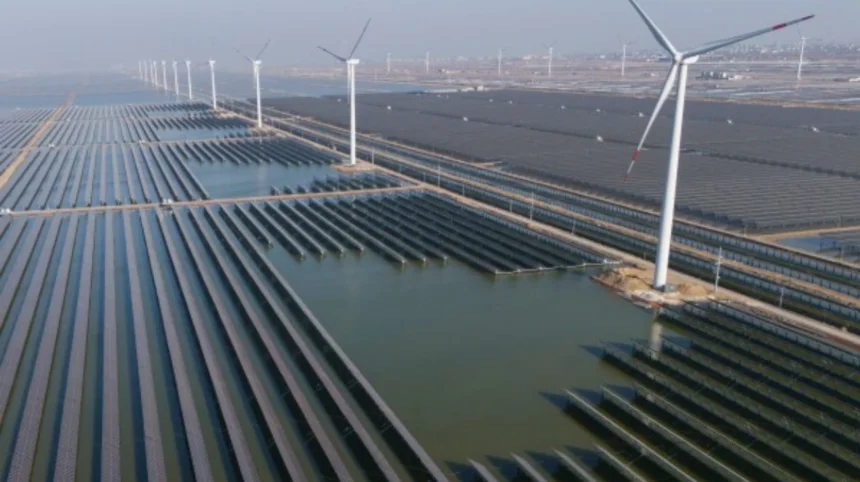
Credit: AP Photo/Ng Han Guan,File
SHARE

The succession of war?driven energy?price shocks since 2022 has reshaped how governments, businesses, and analysts define energy security. The Russian invasion of Ukraine exposed the vulnerabilities of fossil?fuel?dependent economies, with gas and oil flows weaponized to create rapid, double?digit price spikes, even without domestic infrastructure being physically affected. By 2025 and early 2026, renewed tensions in the Middle East and the Gulf amplified this volatility, pushing benchmark crude and regional gas prices higher as shipping?insurance costs and rerouting premiums climbed. These events underscore that energy security now extends beyond stockpiling reserves or securing long-term contracts; it is about managing systemic exposure to geopolitical risk embedded in global hydrocarbon supply chains.

Contents
Vulnerability of fossil?fuel?based systemsRenewable?energy security as a resilience strategyPolicy recalibrations and implementation challengesA new energy-security paradigm

UN-backed energy and climate experts are increasingly framing renewable-energy deployment as central to national-security strategy, not merely a climate-mitigation tool. By expanding wind, solar, and storage-supported generation domestically, countries can reduce dependence on long-distance fuel flows vulnerable to chokepoints, blockades, and political interference. A UN climate official observed in 2025 that “the recurrence of war-driven shocks illustrates that fossil-fuel volatility is structural, not anomalous.” In this context, pursuing renewable?energy security moves from a policy preference to a pragmatic risk-management strategy, mitigating both price and supply shocks while strengthening long-term resilience.

Vulnerability of fossil?fuel?based systems

Fossil?fuel infrastructures remain highly exposed to geopolitical disruptions. Pipelines, LNG terminals, and maritime transport routes are concentrated along a limited number of corridors, which can be politically manipulated or militarily targeted to exert maximum leverage. The partial cutoff of Russian gas to Europe in 2022 created a cascade of wholesale-gas price spikes, which quickly affected electricity markets, heating costs, and industrial production. Similar patterns appeared in 2025–2026, when Gulf tensions forced vessel rerouting, raised insurance premiums, and prompted emergency government measures to stabilize fuel costs.

For importing countries, these episodes revealed the social and economic dimensions of energy vulnerability. Rising fuel bills stress public budgets, crowd out health and education spending, and strain adaptation and climate-finance programs. UN analyses show that low- and middle-income states are disproportionately affected, as their limited fiscal flexibility leaves them exposed to sudden energy shocks. In these circumstances, renewable?energy security is not only an environmental imperative but also a financial and social stabilizer, providing insulation from the volatility inherent in fossil?fuel markets.

Renewable?energy security as a resilience strategy

Renewable?energy security hinges on the principle that domestically generated electricity can buffer economies from global commodity price shocks. Wind and solar plants draw on resources that are not subject to cartel behavior, export restrictions, or conflict-induced disruptions. While construction relies on global supply chains for panels, turbines, and batteries, the operational phase is largely dependent on domestic weather patterns and grid capacity. UN-linked modeling indicates that each additional gigawatt-hour of renewable generation, coupled with storage and grid modernization, reduces the magnitude of wholesale-price spikes during periods of fossil-fuel instability.

Empirical evidence supports this resilience effect. Markets with higher shares of wind and solar capacity experienced less severe retail-electricity price increases during the gas crises of 2022 and 2025–2026 than those dependent on imported fuels. Distributed-generation models—including rooftop solar, community wind, and mini-grids—further enhance system resilience by reducing dependence on centralized transmission and single-source fuel deliveries. From a security perspective, these attributes help reduce the single-point-of-failure logic that has historically plagued fossil-fuel-dependent infrastructures.

Policy recalibrations and implementation challenges

The growing recognition of renewable-energy security is influencing national policy frameworks and investment priorities. Governments have accelerated renewable deployment targets, upgraded grids, and expanded storage programs, explicitly linking energy diversification to security concerns. Regional energy-cooperation bodies are exploring cross-border grid interconnections and renewable-sharing agreements to buffer price volatility and reinforce mutual security. UN-backed guidance recommends integrating supply-security considerations into national climate strategies, making renewable deployment a dual-benefit measure for both energy security and climate mitigation.

However, implementation faces significant hurdles. Fossil-fuel subsidies, entrenched political resistance, and the inertia of established energy lobbies slow the transition. Some governments have used high fossil-fuel revenues to extend subsidies rather than invest in renewables, prioritizing short-term affordability over long-term resilience. Experts warn that these choices can deepen dependency on volatile fossil-fuel markets, undermining efforts to secure renewable-energy advantages. The UN climate leadership has emphasized that redirecting even a portion of fossil-fuel windfalls toward renewable infrastructure, grid modernization, and clean-technology innovation is essential for translating crisis awareness into enduring policy change.

A new energy-security paradigm

Repeated war-driven energy shocks are catalyzing a shift in the understanding of energy security. Where once reserves, pipelines, and import contracts dominated policy thinking, focus now increasingly centers on the resilience of domestically available, low-carbon resources and the flexibility of modern grids. Empirical data and scenario modeling support the view that renewables can reduce exposure to volatile global markets, yet political and economic inertia remains a barrier in many regions. The deeper question is whether the memory of recent crises will suffice to cement renewable?energy security as a foundational principle in energy planning, bridging the gap between technical feasibility, economic rationale, and strategic necessity.

The evolution of this paradigm illustrates that energy security is no longer a purely supply-oriented concept. It encompasses economic, social, and strategic dimensions, with renewable-energy security emerging as a tool for mitigating multi-layered risks. As governments weigh competing priorities, the integration of domestic renewable capacity offers a pathway to insulate populations from future shocks while also advancing decarbonization goals. The trajectory of this shift will shape how societies navigate the intersection of geopolitics, climate change, and the evolving architecture of global energy markets in the coming decade.
You Might Also Like

UK-Led Sanctions Renewal: Countering Smuggling in Fractured Libya

EU’s 42% ODA Leverage: Enough to Counter Russia-Iran Axis?

Peter Due’s Mistrust Warning: UNMIK’s Role in Kosovo’s North?

Security Council Paralysis Hits Oil Chokepoint Amid Famine Risks

Share this Article
Facebook Twitter Email Print
Previous Article Belarus at HRC: Crimes Against Humanity and the Exile Crisis Belarus at HRC: Crimes Against Humanity and the Exile Crisis
Next Article FIFA Hotel Cancellations in Dallas Signal Shift in World Cup Planning Dynamics Meta Title: FIFA Dallas Hotel Cuts Analysis Meta Description: FIFA's cancellation of Dallas hotel blocks ahead of 2026 World Cup raises questions on demand forecasts, economic impacts, and host city preparations. FIFA Hotel Cancellations in Dallas FIFA's recent decision to cancel hotel reservation blocks in Dallas and Arlington ahead of the 2026 World Cup underscores evolving demand projections for the tournament. These cancellations, announced in early April 2026, affect accommodations originally earmarked for staff, media, and operational needs. The move follows a pattern seen in other host cities, prompting scrutiny of FIFA's logistical strategy. Background on Reservation Strategy Initial Booking Scale FIFA secured tens of thousands of rooms across U.S. host cities starting in 2025, including substantial blocks in the Dallas-Fort Worth area. Arlington's AT&T Stadium, set to host nine matches—the most of any venue—drove significant allocations. These reservations aimed to ensure availability amid expected global influx. Purpose of Blocks The bookings targeted FIFA personnel, broadcasters, and VIPs, with contracts allowing penalty-free adjustments based on refined attendance data. Industry reports from late 2025 highlighted optimism, yet early 2026 revisions emerged as ticket sales data crystallized. Factors Driving Cancellations Demand Forecast Adjustments Revised projections indicate softer international attendance, leading FIFA to release over 38,000 rooms nationwide. In Dallas specifically, blocks were scaled back as domestic interest dominates sales. A FIFA spokesperson explained, “As attendance numbers become more concrete closer to the start of matches, FIFA adjusts hotel room bookings accordingly.” External Influences Geopolitical tensions and U.S. visa processing delays have deterred overseas fans since mid-2025. Bob Heere, a University of North Texas sports management professor, observed, “Recent American government policies have communicated a definite message globally. As a result, many individuals are wary of traveling to the United States.” High ticket prices further compound these barriers. Economic Implications for Dallas Local Hospitality Sector Dallas-Fort Worth hotels now regain inventory for open-market sales, potentially benefiting local tourism. However, the sudden shift disrupts revenue forecasts tied to World Cup hype. Arlington officials had banked on spill-over economic activity from nine matches. Broader Regional Impact Similar cuts in Atlanta (nearly 1,000 rooms) and Philadelphia (2,000 rooms) mirror Dallas trends, with 20-40% reductions from initial blocks. Late 2025 CoStar analysis noted weakening hotelier optimism as U.S.-centric demand emerged. North Texas stakeholders worry about stranded infrastructure investments. Stakeholder Perspectives FIFA's Operational Rationale FIFA maintains these actions align with contractual flexibility, emphasizing local sellouts despite shorter visitor stays. The organization points to strong U.S. fanbase as offsetting lower global turnout. No penalties apply, preserving fiscal prudence. Host City Reactions Local voices express mixed relief and concern. Ed Grose of the Greater Philadelphia Hotel Association noted similar releases returned rooms without FIFA penalties, a model applicable to Dallas. Dallas-area comments on platforms like Reddit highlight frustration over unfulfilled economic promises. Comparative Context Across Host Cities Scale of National Cancellations Nationwide, FIFA released thousands of rooms by March 2026, including over 2,000 in select markets per TASS reports. Mexico City saw 40% cuts from 2,000 rooms, underscoring hemispheric patterns. Lessons from 2025 Developments Throughout 2025, initial enthusiasm waned as visa backlogs grew, with State Department data showing doubled processing times for soccer fans. FIFA's mid-2025 room expansions gave way to contractions by year-end. Profit Prioritization Critique Contractual Leverage FIFA's no-penalty clauses grant unmatched flexibility, prioritizing organizational margins over host commitments. This structure, embedded since 2024 bids, allows demand-based pivots without local recourse. Economic Promise Versus Reality Host cities invested heavily based on FIFA's projections of multimillion-dollar boosts. Dallas pitched nine matches on tourism surges, yet cancellations signal overestimation. Critics argue this reveals a profit-first ethos, sidelining promised booms. Long-Term Tournament Planning Attendance Redistribution Released rooms could ease pressures in high-demand venues like Los Angeles or New York, optimizing logistics. FIFA anticipates robust U.S. turnout filling gaps left by internationals. Policy and Visa Ramifications Ongoing U.S. entry hurdles, intensified post-2025 elections, challenge FIFA's global event model. Streamlined processes remain elusive as of April 2026. Future Outlook for North Texas Arlington's match slate positions it centrally, yet hotel dynamics test preparedness. Local operators pivot to conventions, mitigating losses. FIFA's adjustments, while pragmatic, spotlight vulnerabilities in mega-event economics. As preparations advance into mid-2026, one wonders whether FIFA's recalibrations herald a leaner World Cup or expose deeper fractures in international fan engagement—prompting host cities to rethink reliance on global soccer's draw. Gaza Under Siege of Need: When Aid Access Fails to Match the Scale of Suffering

Independent United Nations Watch (IUNW) is an international initiative launched by a number of former UN experts, figures and diplomats.

Quick Link

  • About Us
  • Cookies Policy
  • Ethics and Editorial Standards
  • Terms and Conditions
  • Privacy Policy
  • Contact Us

© 2026 Independent United Nations Watch. All Rights Reserved.

Welcome Back!

Sign in to your account

Lost your password?