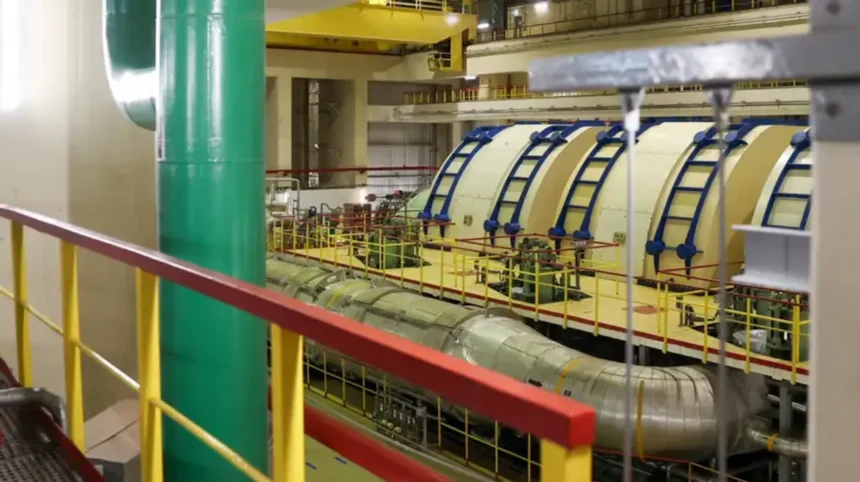
Inspections of Iran’s nuclear program are on track for restart following a high-profile interim deal struck between Tehran and Washington, though the details have not been settled yet. The International Atomic Energy Agency has announced that it will dispatch its inspection teams to Iran’s nuclear facilities soon, despite the ongoing process of negotiating details concerning when, where, and how the inspections will be conducted. The significance of the statement lies in the fact that it marks the end of an impasse and gives way to some degree of optimism in regards to the ability of international observers to gain access to Iran’s nuclear facilities once again.
Inspection Return Takes Shape
IAEA Director General Rafael Grossi indicated that inspections in Iran would continue based on the interim agreement, but he stressed that the arrangement still needs to be finalized. According to reports from Vienna and Tokyo, Grossi said that the agency is currently negotiating with Iran regarding the “modalities” of the resumed inspections. While the language used by Grossi indicates progress in the ongoing negotiations, it also underscores the fragile nature of the agreement. From the language used by Grossi, it can be seen that the agreement ensures that the resumption of IAEA inspections is guaranteed, but it does not specify the exact timetable of inspections.
“The inspections will indeed take place,”
Rafael Grossi said, signaling confidence that the return of inspectors is no longer a question of if, but when. He also said the agency is still discussing “dates, procedures, places” with Iran, underscoring that the operational details are not yet final.
Grossi also sought to lower expectations about timing by suggesting that whether inspections begin “the day after tomorrow, in a week, or in ten days” is less important than the fact that they are being arranged. That framing suggests the IAEA wants the agreement to be judged by substance rather than speed, while avoiding a public deadline that could become a new point of contention.
What the Interim Deal Means
The interim understanding between the United States and Iran is being presented as part of a wider effort to stabilize the crisis after war-related damage to nuclear facilities. According to the reporting, the inspection regime is one of the central components of the arrangement and is meant to ensure oversight of nuclear material facilities “in every respect.” That is a significant phrase, because it implies broad access and not just symbolic monitoring.
The reports also suggest that nuclear inspections relate to monitoring of the material facilities and inspection of the sensitive stockpiles, including highly enriched uranium. It is important as the counting of the stockpile is probably the most significant task of the IAEA in any nuclear controversy. Without the oversight of the stockpiles, there will be very soon serious concerns about whether the nuclear program is still purely peaceful, if it is being expanded or is close to achieving the so-called breakout capability. In practice, the interim agreement is not just a temporary halt in negotiations. It is a step in restoring the verification regime which was severely damaged due to prolonged disagreements between parties.
Why the Talks Matter
The return of inspectors is especially significant because the IAEA had been unable to fully assess the state of some of Iran’s damaged nuclear sites after recent attacks. Reuters previously reported that the agency had inspected all 13 declared nuclear facilities in Iran that were not bombed, but could not continue verification activities at the sites that were hit. That left major questions unresolved about damage, containment, and inventory.
There is a wider strategic angle to consider here as well. Verification does not play a secondary role in the case of Iran, but it is the very means through which diplomacy gains credibility. The presence of inspections allows us to understand better the current state of things, that is to say, to learn which capabilities were preserved, which were dismantled, and which are left in reserve. And in the absence of such inspections, speculation replaces the missing information, while speculation tends to escalate any crisis situation. That is why the new statement should not only be interpreted as a purely technical one. It shows that all parties realize the political danger of keeping the verification process suspended.
Grossi’s Position
Grossi has been consistent in pressing Iran to restore access. Earlier this year, he warned that the standoff over inspections could not continue indefinitely, and he has repeatedly framed inspection access as essential to the agency’s ability to do its job. His current remarks show continuity with that position, but also a more optimistic assessment that the deadlock is easing.
However, the tone adopted by the IAEA head in the new report seems to be a balance between these two factors. First, he must make the international community feel that the safeguarding process is going to resume without any doubts. On the other hand, he does not need to present the development as a fact when its practical implementation is still not certain. This is why his remarks paid such special attention to modalities rather than to reaching an agreement per se. Particularly interesting is his comment about carrying out inspections “in every respect” in nuclear material facilities. This shows a very high bar set for Iranian cooperation.
“In every respect,” Grossi said of the supervision that is expected under the arrangement, a phrase that suggests the IAEA is seeking broad and substantive access rather than partial visibility.
Iran and the Verification Question
Iran’s public posture in the available reporting is less detailed, which is part of why the “modalities” issue remains unresolved. That silence does not necessarily mean rejection, but it does suggest that Tehran is still weighing how much access it is willing to allow and under what conditions. In nuclear diplomacy, those details often determine whether an agreement works or merely exists on paper.
The fundamental open question revolves around the access to all sites relevant for the inspection, particularly those that have been bombed. This has been an issue of particular sensitivity since access to these sites goes beyond merely verifying their present status but also requires looking into their past and future. For Iran, this poses certain political and security challenges that go far beyond the nuclear dossier alone. The interim agreement could then be more than anything else a matter of political handling. While accepting the need for inspections in principle, Iran may seek to ease its pressure and retain the flexibility in negotiations on the conditions. The IAEA, on the other hand, needs to ensure that such access is not delayed and narrowed indefinitely.
The War Shadow
The inspection issue cannot be separated from the damage caused by the recent conflict. Reuters reported that the return of inspectors is linked to an end-of-war framework involving the United States and Iran, and that the IAEA had been prevented from fully working at bombed facilities. That war shadow is what makes the current development so consequential.
In nuclear emergencies, damage done to sites generates a dangerous combination of ambiguity and urgency. Such damage might result in destruction of equipment, dispersion of materials, and difficulties with calculations, at the same time fueling suspicions about how anything was moved prior to or following the bombing. That is why the role of the IAEA is not only organizational but also the only international tool for establishing an objective base line. The ambiguous status of bombed sites accounts for the fact why the arrival of the agency is viewed as such an important step forward. Even if the inspection begins with restricted access, it still helps start building the chain of verification destroyed during the war.
Stakes for Washington and Tehran
For Washington, the inspection issue is a test of whether the interim deal can deliver measurable constraints and oversight. A political announcement without inspection access would have limited value, especially given the sensitivity of Iran’s nuclear advances. The United States therefore has an interest in making sure the IAEA return is real, broad, and sustainable.
For Tehran, agreeing to inspections may help demonstrate that it is willing to engage diplomatically while also seeking to avoid further escalation. But Iran will likely want to preserve its leverage by controlling the pace and scope of access. That tension is at the core of nearly every Iran nuclear negotiation: verification is necessary for trust, but intrusive verification is exactly what Iran often resists.
This is why the current agreement should be understood as an opening rather than a settlement. It reduces immediate uncertainty, but it does not answer the larger political dispute over Iran’s nuclear future. The inspectors’ return will matter most if it leads to sustained monitoring, not just a one-time visit.