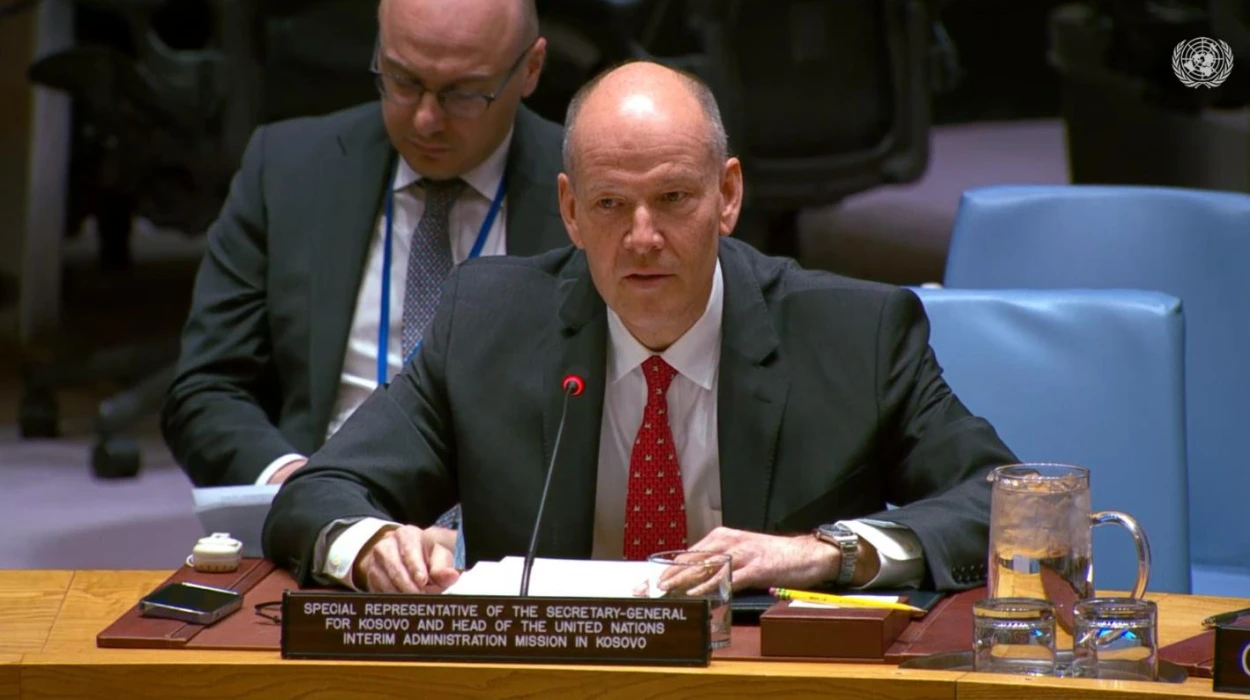
The NGO Committee shift within the United Nations Economic and Social Council has introduced a decisive change in how civil society organizations engage with the multilateral system. The recent election of states including China, Cuba, Nicaragua, Saudi Arabia, and Sudan has created a majority bloc widely viewed as skeptical of independent civil society oversight. This development carries immediate procedural consequences because the committee controls accreditation decisions that determine which organizations gain consultative status at the UN.
The significance of this shift lies not merely in representation but in institutional leverage. Accreditation is the gateway to participation in UN debates, access to diplomats, and the ability to submit reports. By reshaping the composition of the committee, the balance between state sovereignty and independent scrutiny has tilted in a direction that raises concerns among rights advocates and policy analysts.
Committee composition and its operational consequences
The NGO Committee operates as a gatekeeper, and its internal voting dynamics directly affect thousands of organizations annually. With an authoritarian-leaning majority, the interpretation of procedural rules becomes more restrictive, especially for groups working on politically sensitive issues.
Accreditation processes under tighter scrutiny
The committee’s procedures allow members to question applications repeatedly, effectively delaying decisions indefinitely. Under the new composition, these mechanisms are expected to be used more frequently against organizations critical of state policies, particularly those addressing human rights violations or governance failures.
This procedural leverage does not require outright rejection to be effective. Repeated deferrals can stall an organization’s access for years, reducing its ability to influence international discourse. Such patterns were already visible in 2025, when deferral rates for independent organizations rose significantly in politically sensitive cases.
Selective inclusion and narrative shaping
At the same time, the NGO Committee shift enables a parallel dynamic: the facilitation of access for organizations aligned with state narratives. Government-linked or state-friendly entities may face fewer procedural hurdles, allowing them to occupy space within UN forums that might otherwise be filled by independent actors.
This asymmetry alters the informational ecosystem of the UN. When access becomes uneven, the diversity of perspectives narrows, and deliberations risk reflecting state-centric narratives rather than a broader spectrum of societal input.
2025 precedents and the consolidation of trends
The current shift did not emerge in isolation but builds on developments observed throughout 2025. Elections to various UN bodies increasingly reflected geopolitical alignments rather than strict adherence to normative criteria such as those outlined in United Nations General Assembly Resolution 60/251.
Human rights council dynamics as a precursor
In 2025, elections to the United Nations Human Rights Council saw states with contested human rights records secure positions despite formal requirements emphasizing high standards of compliance. These outcomes signaled a broader shift in multilateral governance, where bloc voting and strategic alliances outweighed normative benchmarks.
The NGO Committee shift reflects a continuation of this trajectory. It suggests that procedural bodies, often less visible than headline institutions, are becoming arenas where geopolitical competition shapes institutional outcomes.
Democratic abstentions and strategic calculations
A notable feature of these developments has been the role of democratic states. In several cases, countries such as the United Kingdom and France opted for abstention or consensus rather than opposition. This approach reflects a broader strategic calculation, balancing human rights advocacy with diplomatic considerations in other areas, including trade and security cooperation.
However, such decisions carry institutional consequences. By allowing uncontested slates or avoiding confrontation, democracies indirectly facilitate shifts in governance structures that may later constrain their own policy objectives.
Civil society implications in a constrained environment
The immediate impact of the NGO Committee shift is most visible in its effect on civil society actors. Access to the UN provides not only visibility but also a degree of protection and legitimacy, particularly for organizations operating in restrictive domestic environments.
Reduced access for independent advocacy groups
Organizations focusing on sensitive issues, such as minority rights or political repression, are likely to face increased scrutiny. This includes groups working on topics linked to regions like Xinjiang or political dissent in various states. The heightened procedural barriers may discourage applications or redirect efforts toward alternative forums.
The cumulative effect is a narrowing of the space for independent advocacy within the UN system. Over time, this could reduce the diversity of inputs that inform policymaking and weaken the role of civil society as a counterbalance to state power.
Adaptation strategies and parallel platforms
In response, many organizations have already begun to diversify their engagement strategies. Regional bodies, such as the Inter-American Commission on Human Rights, have become alternative venues for advocacy. Additionally, informal networks and digital platforms are increasingly used to bypass traditional gatekeeping mechanisms.
While these adaptations provide partial mitigation, they do not fully replicate the influence of UN consultative status. The NGO Committee shift therefore represents not just a procedural change but a structural challenge to the global advocacy ecosystem.
Institutional legitimacy and long-term risks
The broader implications of the NGO Committee shift extend beyond individual organizations to the legitimacy of the UN system itself. Multilateral institutions derive authority from their perceived neutrality and inclusiveness, both of which are affected by changes in access dynamics.
Perceptions of bias and credibility erosion
If accreditation decisions are widely perceived as politically motivated, confidence in the UN’s impartiality may erode. This is particularly relevant in contexts where the organization is expected to mediate conflicts or monitor human rights conditions. Reduced trust in its processes can limit its effectiveness and weaken its normative authority.
The challenge is compounded by the visibility of these shifts. As more stakeholders become aware of accreditation controversies, the reputational impact on the UN could intensify, especially among civil society networks and smaller states that rely on multilateral forums for representation.
Reform constraints within bloc politics
Efforts to reform the NGO Committee face structural obstacles. Decisions within ECOSOC are shaped by regional group dynamics and reciprocal voting arrangements, making consensus on reform difficult. Proposals to introduce stricter eligibility criteria or independent review mechanisms have historically encountered resistance from states prioritizing sovereignty and non-interference.
This creates a feedback loop where institutional inertia reinforces existing dynamics. Without significant political will, the trajectory set by the NGO Committee shift is likely to persist, shaping access patterns for years to come.
Strategic implications for multilateral governance
The NGO Committee shift underscores a deeper transformation in how multilateral institutions function in an era of geopolitical competition. Rather than overt confrontation, influence is often exercised through procedural control and agenda-setting mechanisms.
Balancing sovereignty and accountability
At the core of the debate is the tension between state sovereignty and the role of independent oversight. While states have legitimate interests in managing their international representation, the exclusion of critical voices can undermine the UN’s ability to fulfill its mandate as a platform for inclusive dialogue.
This balance has always been contested, but the current shift suggests a recalibration in favor of state-centric governance. The long-term implications will depend on how other stakeholders respond, including whether alternative mechanisms emerge to compensate for reduced access.
The evolving role of civil society in global governance
Civil society remains a critical component of international policymaking, providing expertise, monitoring compliance, and amplifying marginalized voices. The NGO Committee shift challenges this role but does not eliminate it. Instead, it forces a reconfiguration of strategies and alliances.
As organizations adapt, the question becomes whether new forms of engagement can achieve comparable influence or whether the centrality of the UN as a global forum will gradually diminish in favor of more fragmented, decentralized networks.