The scale of EU’s 42% ODA leverage has transformed the European Union into the central financial pillar of the global multilateral system. Representing only a small fraction of the global population, EU member states have consistently provided the largest share of Official Development Assistance, sustaining core United Nations operations across peacekeeping, humanitarian relief, and development programming. By 2025, this financial commitment had stabilized at tens of billions annually, even as domestic fiscal pressures within Europe intensified following electoral cycles and inflationary constraints.
This financial architecture has not only enabled operational continuity but has also positioned the EU as a stabilizing force in an increasingly fragmented geopolitical environment. Contributions covering approximately a quarter of UN agency funding illustrate how deeply embedded European resources are within the system. The result is a structure where the EU does not merely support multilateralism but actively underwrites its survival at a time when competing power blocs are testing institutional limits.
Scale and continuity of development assistance
The durability of EU funding streams has been critical in maintaining global humanitarian operations. In 2025, coordinated European contributions sustained major UN-led responses in Ukraine, Gaza, Sudan, and Yemen, ensuring that aid delivery mechanisms remained functional despite rising demand. These financial flows extended beyond emergency relief into long-term development programming, reinforcing governance frameworks and economic resilience in fragile states.
At the same time, climate finance commitments—reaching tens of billions annually—have expanded the EU’s influence into non-traditional security domains. By linking development assistance to climate adaptation and resilience, the EU has broadened the scope of multilateral engagement, positioning itself as a key actor in addressing structural drivers of instability.
Integration with peacekeeping and operational support
Financial contributions have been complemented by operational involvement, with European personnel deployed across multiple UN peacekeeping missions. These deployments, while smaller in scale compared to financial inputs, provide critical expertise and logistical support in complex environments such as Lebanon and parts of Africa. The integration of funding and operational presence enhances the EU’s credibility as a comprehensive partner rather than a purely financial donor.
This dual approach has allowed the EU to shape not only the scale but also the direction of UN activities. By aligning financial priorities with strategic objectives, European policymakers have ensured that aid flows reinforce broader security and governance goals, particularly in regions vulnerable to external influence.
Russia-Iran axis and the erosion of multilateral norms
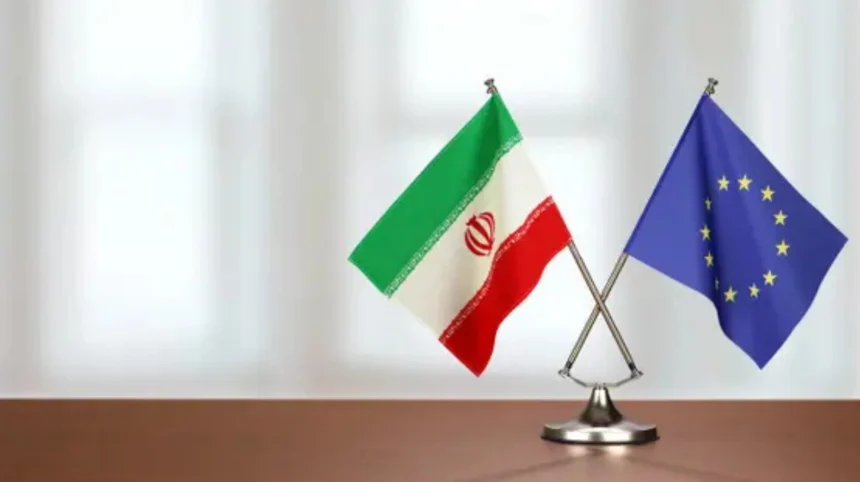
The emergence of a more coordinated Russia-Iran alignment has introduced a significant challenge to the effectiveness of EU’s 42% ODA leverage. Throughout 2025 and into 2026, the deepening strategic relationship between Moscow and Tehran has manifested in military cooperation, proxy engagements, and coordinated political positioning within international forums. This alignment has complicated efforts to maintain a rules-based order, particularly within the United Nations Security Council, where veto dynamics have constrained collective action.
The impact of this axis extends beyond direct conflict zones. By leveraging proxy networks and hybrid tactics, Russia and Iran have increased the cost and complexity of UN operations, forcing the EU to allocate additional resources to maintain stability in affected regions. This dynamic underscores a fundamental tension: while financial dominance provides influence, it does not guarantee control over outcomes in a contested geopolitical landscape.
Military and proxy coordination in 2025
Developments during 2025 highlighted the operational depth of the Russia-Iran partnership. Reports indicated expanded cooperation in drone technology, missile systems, and logistical support for proxy groups operating in the Middle East and beyond. These activities have disrupted regional stability, particularly in maritime corridors and conflict zones where UN missions are active.
The resulting instability has placed additional strain on multilateral mechanisms. Increased attacks on infrastructure and peacekeeping personnel have required enhanced security measures, driving up operational costs and complicating mission planning. In this environment, EU funding has become both more essential and more stretched, as resources are diverted to address escalating threats.
Diplomatic friction within UN structures
The political dimension of the Russia-Iran axis has been equally consequential. Repeated vetoes in the Security Council have limited the UN’s ability to respond decisively to crises in Ukraine, Syria, and other regions. This gridlock has forced the EU to rely more heavily on alternative mechanisms, including General Assembly resolutions and ad hoc coalitions, to advance its objectives.
While these approaches have achieved partial successes, they lack the enforcement power of Security Council mandates. This limitation highlights the constraints of financial leverage in the absence of unified political backing. Even substantial funding cannot fully compensate for institutional paralysis when major powers are actively contesting the system.
Effectiveness and limits of EU financial leverage
The effectiveness of EU’s 42% ODA leverage lies in its ability to sustain operations and shape agendas, but its limitations are increasingly visible in a more polarized international environment. Financial resources can enable action, but they cannot substitute for political consensus or strategic coherence among major actors.
Influence in fragile and contested regions
In regions such as the Sahel and parts of sub-Saharan Africa, EU-funded programs have played a critical role in countering instability. By supporting governance reforms, security sector training, and economic development initiatives, European assistance has helped mitigate the influence of external actors, including Russia-linked private military networks and Iran-backed groups.
However, these efforts face persistent challenges. Local governance deficits, corruption, and competing external influences often dilute the impact of aid. While EU funding can stabilize conditions temporarily, achieving long-term resilience requires structural reforms that extend beyond financial inputs.
Constraints imposed by geopolitical competition
Geopolitical competition has exposed the limits of financial leverage as a standalone tool. The Russia-Iran axis has demonstrated an ability to operate effectively with comparatively fewer resources by focusing on strategic interventions and asymmetric tactics. This contrast highlights a key vulnerability in the EU approach: reliance on scale rather than agility.
Moreover, the politicization of aid has complicated its deployment. In some contexts, recipient states perceive EU funding as tied to political conditions, creating resistance and opening space for alternative partnerships. This dynamic reduces the EU’s ability to translate financial dominance into decisive strategic influence.
Reform and adaptation in a shifting global order
Recognizing these challenges, European policymakers have begun to explore reforms aimed at enhancing the effectiveness of EU’s 42% ODA leverage. These efforts focus on integrating financial tools with broader strategic initiatives, including sanctions, diplomatic engagement, and technological cooperation.
Strengthening multilateral mechanisms
Efforts to reform UN structures have gained momentum, with European leaders advocating for changes that would reduce the impact of veto power and improve decision-making efficiency. While progress has been limited, these initiatives reflect a growing recognition that financial contributions alone cannot sustain multilateralism without institutional adaptation.
At the same time, the EU has increased its engagement with regional organizations, including the African Union, to build more resilient and locally anchored security frameworks. By aligning ODA with regional priorities, the EU aims to enhance the legitimacy and effectiveness of its interventions.
Expanding hybrid and technological responses
The integration of technological tools into development and security strategies represents another avenue of adaptation. In 2025, the EU expanded its use of digital platforms to monitor disinformation, track financial flows, and enhance coordination with UN agencies. These measures have improved situational awareness and enabled more targeted interventions.
Sanctions and asset freezes have also been used in conjunction with ODA to create a more comprehensive response to geopolitical challenges. By combining financial assistance with punitive measures against destabilizing actors, the EU seeks to increase the overall impact of its strategy.
Strategic outlook for EU’s global role
The trajectory of EU’s 42% ODA leverage will depend on how effectively it can evolve in response to shifting geopolitical realities. The financial scale of European contributions ensures continued relevance, but maintaining influence will require a more integrated approach that combines funding with strategic, political, and technological tools.
As the Russia-Iran axis continues to test the boundaries of the international system, the EU faces a complex balancing act. It must sustain its role as the primary financial supporter of multilateralism while adapting to a landscape where financial power alone is insufficient to shape outcomes.
The interplay between resources, strategy, and political will is likely to define the next phase of global governance. Whether the EU can translate its financial dominance into durable influence remains an open question, one that will shape not only the future of the United Nations but also the broader architecture of international cooperation in an increasingly contested world.