The UK-led sanctions renewal under United Nations Security Council Resolution 2819 marks a continuation of international efforts to contain illicit petroleum flows from Libya, a country where political fragmentation has turned oil into both a strategic asset and a destabilizing force. Adopted in April 2026, the resolution extends enforcement mechanisms until August 2027, reinforcing authorities that allow member states to intercept vessels suspected of transporting illegally exported oil. The United Kingdom, acting as penholder, has framed the renewal as a necessary step to maintain pressure on networks that continue to exploit Libya’s divided governance landscape.
This extension reflects the persistence of structural instability that has defined Libya’s post-2011 trajectory. Despite intermittent diplomatic efforts and UN-backed political roadmaps, the country remains split between competing administrations and militia networks, each seeking to leverage oil revenues to sustain influence. By 2025, the resurgence of smuggling particularly in refined products such as diesel highlighted the adaptability of illicit networks and the limitations of earlier enforcement frameworks.
Continuity and adaptation from earlier resolutions
Resolution 2819 builds on the foundation established by earlier measures, particularly Resolution 2146 (2014), which first authorized high-seas inspections of suspect vessels. While the core enforcement tools remain unchanged, the updated framework incorporates lessons from recent years, including the need to address refined fuel smuggling alongside crude oil exports. This evolution underscores the dynamic nature of Libya’s illicit economy, where smugglers have diversified methods to circumvent controls.
The renewal also extends the mandate of the Panel of Experts, ensuring continued monitoring of compliance across sanctions regimes. This institutional continuity is critical in maintaining oversight, particularly as smuggling networks become more sophisticated and increasingly intertwined with broader criminal and political structures.
Resolution 2819 and operational enforcement mechanisms
The operational significance of the UK-led sanctions renewal lies in its ability to sustain a legal and logistical framework for maritime interdiction. By authorizing inspections in international waters, the resolution enables coordinated action among member states, regional organizations, and naval forces operating in the Mediterranean.
Maritime inspections and deterrence capacity
The authority to board and inspect vessels remains the cornerstone of the sanctions regime. In 2025, several interdictions were conducted under similar mandates, demonstrating the practical utility of this mechanism. These operations not only disrupt individual smuggling attempts but also signal a broader deterrent effect, raising the risks associated with illicit trade.
However, enforcement challenges persist. Smugglers have increasingly relied on complex shipping arrangements, including ship-to-ship transfers and the use of flags of convenience, to obscure the origin and destination of cargoes. While inspections can intercept some shipments, the scale of the problem requires sustained coordination and intelligence-sharing among participating states.
Panel of experts and compliance monitoring
The extended mandate of the Panel of Experts provides a critical analytical function, documenting violations and identifying emerging trends. Reports from 2025 highlighted a significant increase in diesel smuggling, prompting the inclusion of refined products within the scope of sanctions criteria. This adaptation reflects a more nuanced understanding of how illicit networks operate across different segments of the oil supply chain.
The panel also plays a role in tracking financial flows, linking smuggling activities to militia financing and broader patterns of corruption. By mapping these connections, the UN system can better target individuals and entities that facilitate or benefit from illicit trade, enhancing the overall effectiveness of the sanctions regime.
Libya’s political fragmentation and oil-driven conflict dynamics
The persistence of smuggling is inseparable from Libya’s political fragmentation, where rival authorities compete for control over oil infrastructure and revenue streams. The UK-led sanctions renewal operates within this context, attempting to mitigate the economic drivers of conflict without directly resolving the underlying political divisions.
Competing authorities and resource control
Libya’s oil sector remains divided between institutions aligned with different political factions, including the Tripoli-based government and eastern authorities. Control over oil fields, export terminals, and distribution networks is contested, creating opportunities for smuggling as actors seek alternative revenue sources outside official channels.
In 2025, disruptions to production caused by militia clashes further exacerbated these dynamics. Temporary shutdowns of key ????? facilities diverted flows into informal markets, where smuggled fuel could be sold at discounted rates, undermining state revenues and reinforcing parallel economies.
Revenue diversion and militia financing
Illicit oil exports have become a significant source of funding for armed groups, enabling them to sustain operations and resist integration into formal state structures. Estimates suggest that billions of dollars in potential revenue have been lost to smuggling since 2014, weakening the fiscal capacity of the Libyan state.
This financial dimension complicates peacebuilding efforts. As long as armed groups can access independent revenue streams, incentives for political compromise remain limited. The sanctions regime aims to disrupt these flows, but its effectiveness depends on the ability to enforce compliance consistently across maritime and financial domains.
Regional implications and international coordination challenges
The impact of Libya’s smuggling networks extends beyond its borders, affecting regional security and economic stability across the Mediterranean. The UK-led sanctions renewal therefore carries implications for a broader set of actors, including European states and neighboring countries.
Mediterranean security and trafficking networks
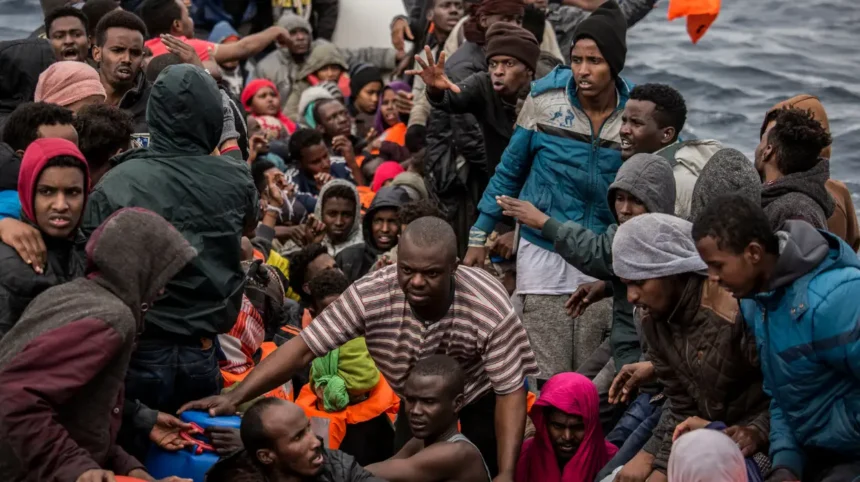
Illicit oil trade is often linked to other forms of transnational crime, including arms trafficking and irregular migration. In 2025, European naval operations reported multiple cases where vessels suspected of smuggling ????? were also connected to human trafficking routes. This convergence of criminal activities amplifies the security challenges faced by regional actors.
European Union initiatives, alongside NATO-linked maritime operations, have sought to address these interconnected threats. The sanctions framework provides a legal basis for such efforts, enabling coordinated action that extends beyond national jurisdictions.
External actors and proxy dynamics
Libya’s conflict remains influenced by external actors, including regional and global powers that support different factions. The persistence of smuggling networks reflects not only local dynamics but also the broader geopolitical contestation that shapes Libya’s trajectory.
Reports from 2025 indicated continued violations of the arms embargo, with foreign-supplied equipment reaching militia groups through illicit channels. These dynamics underscore the limitations of sanctions when external support networks remain active, complicating enforcement and undermining the credibility of international measures.
Evolution of sanctions and integration with political processes
The UK-led sanctions renewal is part of a broader effort to align economic measures with political and diplomatic initiatives aimed at stabilizing Libya. This integration is essential for ensuring that sanctions contribute to, rather than hinder, long-term peacebuilding.
Asset management and economic safeguards
One notable aspect of the renewed framework is the emphasis on safeguarding Libya’s sovereign assets. Provisions allowing limited access to frozen funds under strict oversight reflect an attempt to balance economic stabilization with the need to prevent misuse. These measures respond to criticisms that prolonged asset freezes have constrained public services and exacerbated economic hardship.
By enabling controlled use of funds for reconstruction and humanitarian purposes, the sanctions regime seeks to support the Libyan population while maintaining pressure on illicit networks.
Linkages to electoral and governance frameworks
Sanctions are also linked to ongoing political processes, including efforts to organize national elections and unify state institutions. The effectiveness of these initiatives depends on reducing the financial incentives for fragmentation, a goal that aligns with the objectives of the sanctions regime.
However, progress remains uncertain. As factions prepare for potential electoral contests, competition for resources may intensify, increasing the risk of further smuggling and conflict. The sanctions framework provides tools to address these challenges, but its success will depend on sustained international engagement and local political will.
Strategic outlook for Libya’s sanctions regime
The trajectory of the UK-led sanctions renewal highlights both the resilience and the limitations of international efforts to manage Libya’s ????? economy. By extending enforcement mechanisms and adapting to emerging smuggling patterns, the UN Security Council has reinforced its commitment to addressing illicit trade. Yet the persistence of political fragmentation and external interference continues to test the effectiveness of these measures.
The evolving interplay between sanctions, enforcement, and political processes will shape Libya’s path in the coming years. Whether the current framework can transition from containment to transformation remains uncertain, particularly as smuggling networks adapt and geopolitical interests converge. The question that emerges is not only how to stop illicit flows, but how to create a system in which the incentives for such flows diminish, a challenge that sits at the heart of Libya’s unresolved crisis.