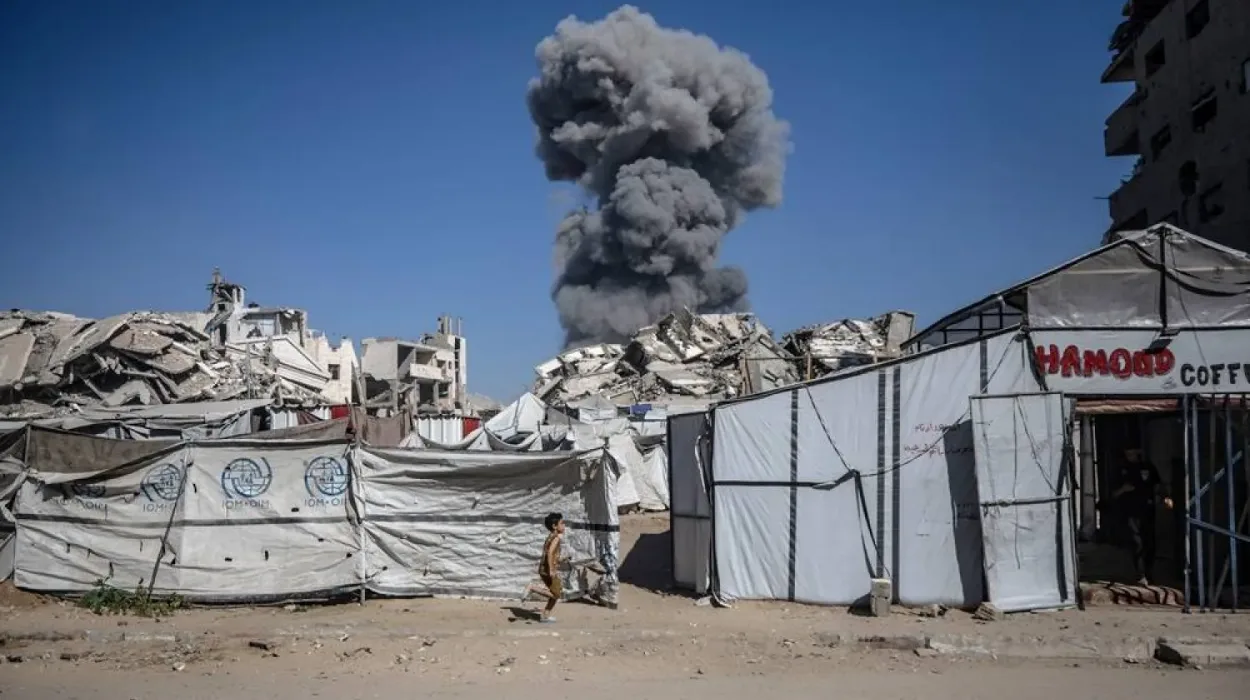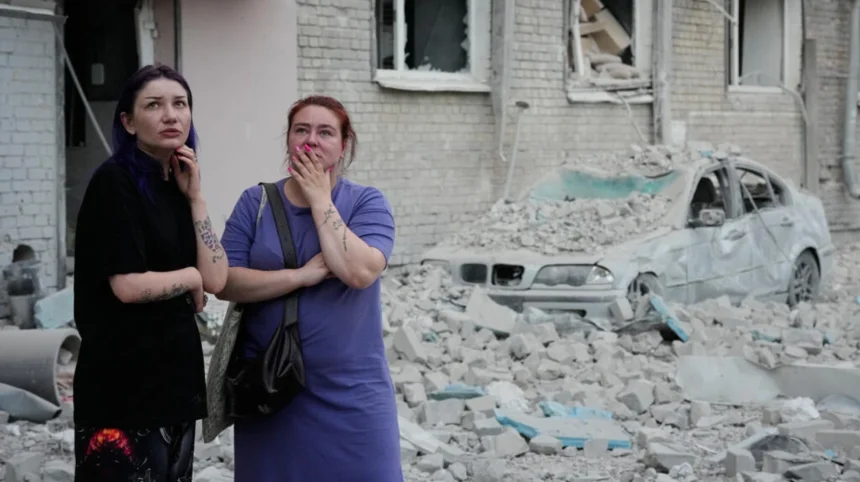
The United Nations’ latest assessment has delivered one of the starkest warnings yet about the human cost of Russia’s war in Ukraine: June 2026 was the deadliest month for Ukrainian civilians in four years. UN-linked reporting indicates that at least 265 civilians were killed and 1,816 injured in June, while other coverage summarizing the same UN findings placed the toll even higher, at more than 293 dead and 1,990 wounded. The precise count may vary slightly depending on the reporting window or update cycle, but the trend is unmistakable: civilian losses surged sharply, and June became the worst month since April 2022.
It is not merely one more sad statistic in a protracted war. Rather, it is a sign of an upping of the ante. The numbers in June indicate that civilians have been subjected to a greater number of Russian strikes with a higher body count, to the point where they have reached a “deadliest since four years ago” level, according to UN spokespersons. This phrase is significant because it is indicative not only of the number of casualties, but also of the fact that the war has taken on a new and more deadly turn.
A month that redefined the civilian toll
The most crucial fact is precisely the increase in the number of civilian casualties. According to the UN Human Rights Monitoring Mission in Ukraine, there were 265 civilian casualties and 1,816 injuries in June. In a summary of the same UN report, there are more than 293 civilian casualties and 1,990 injured. The discrepancies between these two numbers do not detract from the main finding but indicate that the number of people killed could keep increasing during the collection and verification of data. The uniqueness of the casualty statistics in June lies not only in the high numbers themselves but in the fact that they are higher than in any month in the last four years. UN officials stated that civilian casualties in Ukraine had reached the highest monthly number since April 2022. This information is critical because the mentioned April 2022 happened during the initial stages of the full-scale invasion of Russia when attacks, displacement of civilians, and their suffering reached the peak.
The casualty numbers are also a reminder that civilian harm is not limited to battlefield contact. The UN has linked the rise in deaths and injuries to Russian strikes across the country, indicating that the damage has spread well beyond the immediate combat zone. In practical terms, this means homes, apartment blocks, public infrastructure, and everyday civilian spaces have become part of the war’s target landscape.
Why June was different
June’s toll appears to have been driven by an escalation in Russian long-range attacks, especially missile and drone strikes. UN reporting from earlier in the year had already warned that civilians were facing more frequent and more dispersed attacks, with strikes reaching into regions far from the front. The pattern described by monitors is important because it explains why casualty numbers rose so sharply even if the front lines themselves did not move dramatically.
It was observed by the UN that no part of the country remained untouched. Civilian casualties were recorded in at least 16 regions in addition to the capital city Kyiv, thus showing that the damage was widespread. This kind of distributed violence poses a humanitarian crisis different from local combat since air defenses, shelter facilities, emergency capacity and healthcare services are strained simultaneously. The monthly report issued by the UN further revealed that there was a tenfold increase in the number of missile and loitering attacks by Russia on Ukraine compared to June 2024. It is important to mention here that the month of June 2026 was not an isolated event but rather a part of the increasing trend in aerial strikes.
The UN’s warning
UN officials did not present the June figures as mere data. They treated them as evidence of a worsening humanitarian crisis. In a Security Council session earlier in the period, top UN officials warned that the war in Ukraine had become deadlier than at any point since the start of the Russian Federation’s full-scale invasion in 2022. They urged an immediate ceasefire and a return to diplomacy.
One of the most direct statements came from UN Human Rights Monitoring Mission reporting, which said the trend remained deeply concerning.
“The situation is alarming and continues to worsen,”
said UN officials in effect, as later summaries stressed that the civilian toll was still rising into July. The broader message from the UN was clear: the human cost is no longer merely high, but accelerating.
That warning is strengthened by the sequence of monthly records. May 2026 had already been described as the deadliest month in four years before June overtook it. So June did not just confirm a bad trend; it deepened it. The progression from May to June suggests a sustained campaign rather than a one-off event, which is why the UN framed the development as a severe and continuing threat to civilians.
What the numbers suggest
Numbers alone do not capture the full meaning of the June casualty toll, but they do reveal several important patterns. First, the casualty count shows a sharp rise in civilian vulnerability. Second, the geographic spread of attacks indicates that the danger is not confined to one battlefield corridor. Third, the repeated monthly increases suggest that protective measures have not kept pace with the intensity of strikes.
It is helpful when looking at the data to distinguish between deaths and injuries. Death is the more obvious of the two, but injuries may carry far greater weight over time for the affected families, medical facilities, and public health infrastructure. A month in which there are over 1,800 injured civilians is a month in which those injuries create ongoing demands on emergency medicine, trauma care, physical therapy programs, and psychological counseling. Combine this with over 200 deaths, and the humanitarian impact builds rapidly. There is also political significance to these numbers in June. Data on civilian casualties is typically used to gauge whether the nature of the conflict is becoming increasingly indiscriminate or harmful to non-combatants. UN records of civilian casualties do not operate in a vacuum; they are part of a trend that carries potential implications for future diplomacy and law.
Kyiv and the wider country
The capital of Kyiv has been a focal point for the war’s civil casualties, and the events of June have proven to be no exception. As per the UN reports, a significant attack on Kyiv has taken place recently, which, according to the report, is the largest attack since almost a year ago. This particular incident also forms part of the increasing trend of nighttime strikes, with a high number of drones and missiles. However, that is not all. Another very disturbing fact about the data from June is that civilians have been victims in many regions. This clearly indicates a situation where the civilians could potentially be at risk in regions beyond the cities.
That uncertainty has consequences. Families face constant decisions about shelter, evacuation, school attendance, work, and medical access. Infrastructure managers must decide how to harden systems against repeated hits. Aid organizations must stretch limited resources across more locations. And the psychological impact of repeated strikes reaches far beyond the immediate victims.
The wider war trajectory
June’s death toll should also be read in the context of the broader trajectory of the war in 2025 and 2026. The UN had already warned in 2025 that civilian casualties were reaching three-year highs, with June 2025 recording 232 dead and 1,343 injured. Then May 2026 became the worst month in four years before June surpassed it. That sequence shows a sustained worsening over time.
This matters because it suggests the civilian crisis is not stabilizing. Instead, the data point to a war that is becoming more punishing for noncombatants. Whether due to greater strike frequency, improved reach of weapons, changes in tactics, or exhaustion of defensive capacity, the practical outcome is the same: more civilians are being killed and hurt in more places.
Humanitarian and diplomatic stakes
The humanitarian consequences of this situation are clear enough – more people killed, wounded, displaced, and exposed to additional stress in the nation that is under severe pressure at this time. However, the diplomatic significance is equally important in this case. The appeal from the United Nations for a ceasefire and the resumption of negotiations is an indication of the international community’s increasing concern about the impact of the conflict on civilian population, which appears to be unbearable. Thus, the figures for the month of June increase pressure on governments and international organizations to provide not only condemnation but also assistance.
Civilian deaths tend to be the most accurate way of determining the degree to which a war is contained. For Ukraine, however, June seems to be showing signs of a reversal of that containment process. More civilians in Ukraine are being attacked, exposed, and killed than have been for many years. This information makes the UN statement true in both an objective and an ethical sense: the conflict is becoming deadlier for those not involved in it. “Enough is enough” was the Council members’ phrase used in the UN Security Council discussion, but the numbers coming out of June are proof that the suffering continues for the civilians in Ukraine.