New York City’s plan for a meeting between a senior city official and Iran’s U.N. ambassador became a sharp political and diplomatic flashpoint after federal officials intervened and stopped it from happening. The episode has now evolved into a broader story about local foreign engagement, federal authority, and the sensitivity of any contact involving Iran during a period of high tension between Washington and Tehran.
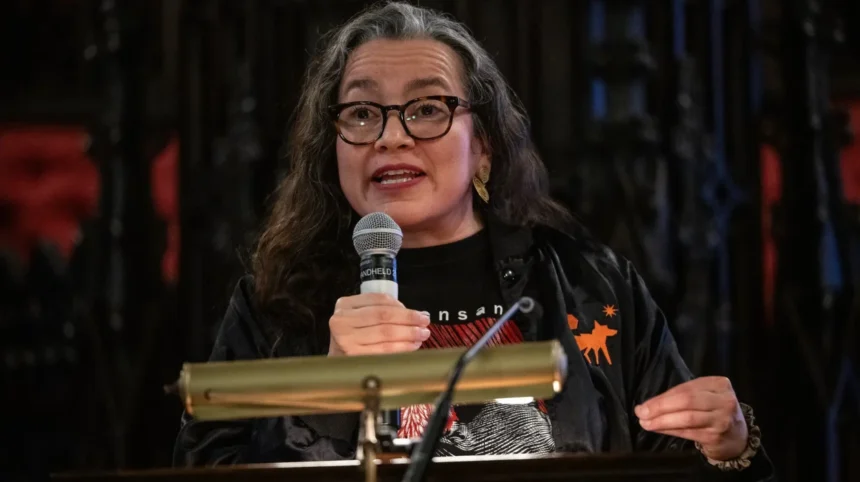
The core facts are simple, but their political significance is much broader. Based on press accounts, the meeting was supposed to take place between Ana María Archila, the international affairs commissioner for New York City, and Amir-Saeid Iravani, the permanent representative of Iran to the UN, at Two United Nations Plaza in Manhattan. The meeting was called off after the State Department intervened to advise City Hall that the arrangement would not be acceptable. The office of Mayor Zohran Mamdani later confirmed that the meeting “did not and will not take place.” But the consequences were far from over.
How The Meeting Emerged
While the meeting seemed rather innocuous from the outside, the context made it much more significant. Archila was responsible for handling international affairs in the mayor’s office, while Iravani served as an Iranian diplomat working for the United Nations, which made the encounter rather politically charged. Furthermore, the venue chosen for the meeting contributed to its significance as well. The United Nations Plaza No. 2 lies in the heart of the diplomatic quarter of Manhattan, a place where interactions between people and missions receive even more attention than usual. What made this case a news item was not merely the attempt of a city representative to reach out to a foreign diplomat. The fact that the meeting was to involve representatives from Iran made the entire case much more complicated as Iran continues to remain one of the most challenging countries in the field of foreign policy for the American government.
The reporting suggests that the meeting was never fully normalized inside City Hall either. Mayor Mamdani said the proposal involved his commissioner, but the broader question around internal authorization and communication became central once the story surfaced. The issue was no longer only whether the meeting would happen; it was whether the right people knew about it in advance and whether the city had crossed a line in foreign engagement.
Federal Intervention And Political Meaning
The most consequential part of the story is the State Department’s intervention. According to the accounts that have circulated, federal officials contacted the Mamdani administration and made clear that the meeting should not proceed. That intervention reflects a longstanding reality in U.S. foreign policy: when the matter concerns a country like Iran, Washington expects control over the diplomacy, even when the actors involved are subnational officials rather than national ones.
This is what made the cancellation more than an inconvenience. It turned into a test of limits. Municipal governments often deal with officials from other countries on matters of trade, cultural and educational exchanges, climate change, and investments. However, Iran is exceptional. An interaction with Iran’s diplomats will very soon turn political, and the federal government always tries to watch out for its diplomatic strategy. Here, the intervention of the State Department indicated that the meeting could not take place for a reason.
However, this move by the federal government made it possible for partisanship to creep into the situation as well. While critics saw the proposed meeting as reckless and inappropriate, those who supported it or remained neutral saw it as a mistake in procedure that had been magnified due to the topic. The relevance of the story stems from this controversy. An office for foreign affairs at the municipal level can function under its jurisdictional mandate, but once it enters into contact with a sensitive state like Iran, it becomes a matter of national policy, not just city politics.
What City Hall Said
City Hall’s public posture was careful but important. Mayor Zohran Mamdani’s office confirmed that the meeting would not take place, which helped close the immediate question of whether the city intended to proceed despite federal objection. The office’s response suggested an effort to contain the damage rather than escalate it.
The most quoted line from the reporting was the office’s direct confirmation: “This meeting did not and will not take place,” said the Mayor’s Office for International Affairs. That statement matters because it shows City Hall’s attempt to draw a hard line under the matter once the federal objection became known.
Still, the confirmation did not resolve all the questions. It left open whether the meeting had been scheduled without proper internal notification, whether the commissioner acted independently or with informal backing, and whether the administration understood the diplomatic risk before the issue became public. For a mayor who is likely to face scrutiny over management discipline and foreign-policy awareness, those questions matter as much as the canceled meeting itself.
Why Iran Changes The Story
The reaction would have been far less severe if the meeting included a trade official from an allied country. The mere presence of Iran makes a huge difference. The relationship between the U.S. and Iran has been characterized for many years by sanctions, threats, nuclear deal talks, and continued military confrontation. Under such circumstances, any kind of interaction carries the potential to cause political alarm. This is why the event was covered in such a way that it became part of the broader dispute between the Trump administration and City Hall. Not only was the federal government interfering with the meeting, but it was demonstrating its ability to control the parameters of diplomacy.
The broader diplomatic context also helps explain the intensity of the response. Media coverage pointed to heightened tensions between the United States and Iran, which made even a brief meeting between a city commissioner and Iran’s U.N. envoy politically loaded. In that environment, federal officials tend to move quickly to avoid any appearance that a local government is conducting shadow diplomacy.
What The Reporting Reveals
These points can be summarized in terms of three lessons from the reporting of the incident. First, the fact that there was a meeting worth scheduling indicates that this was not a speculative incident but one grounded in reality. Second, the involvement of the federal authorities at the preparatory stage indicates that the situation was important enough for Washington to put a stop to it.
Third, the cancellation of the meeting was confirmed by the mayor’s office, indicating that the administration preferred to endure embarrassment than justify the meeting. Another significant aspect of the reporting of the incident is its interpretation by different media sources, where the mainstream press presented the story based on the factual information on the scheduling and cancellation of the meeting, while more opinion-driven or politically affiliated media stressed the aspects of incompetence, secrecy, or ideological nature. This distinction is especially valuable for writing a fair analysis of the case.
Another key point is that the incident raises governance questions beyond foreign policy. City foreign-affairs offices often work in gray areas, balancing diplomacy, economic outreach, and public messaging. But this case suggests that the internal controls around sensitive international contacts may not have been strong enough, or at least not visible enough, to prevent a federal backlash. For a city administration, that can be just as damaging as the diplomatic issue itself.
Possible Consequences Ahead
The immediate consequence is reputational. The Mamdani administration now has to deal with criticism that it either misjudged the optics or failed to properly coordinate a sensitive diplomatic contact. Even if the meeting never happened, the appearance of poor judgment can linger. In politics, especially at the city level, process failures often become public trust failures.
The longer-term consequence could involve clearer procedures for any future interaction with foreign diplomats. City Hall may need more explicit internal review before any meeting involving countries under heavy U.S. scrutiny. That would not be unusual. In many governments, especially in large international cities like New York, foreign-affairs offices operate with informal flexibility until an incident forces tighter discipline.
There is also a larger political question about how much autonomy cities should have in international engagement. New York regularly markets itself as a global city, and its officials often seek contact with foreign missions, international institutions, and overseas partners. But autonomy has limits when national security and federal diplomacy are in play. This episode is a reminder that a city’s global ambitions can collide with Washington’s foreign-policy red lines very quickly.
It is significant because it involves both municipal politics and diplomacy at a level. It cannot be regarded as merely a scheduling problem. It is an issue that affects the whole country, since it is linked both to domestic policy and to foreign relations. It is this combination that accounts for its quick coverage and its possible future significance as a political issue. Moreover, it indicates how sensitive the country is to any diplomatic contacts with Iran, regardless of whether they are conducted by the federal state or by a municipality. In practice, the decision made by the authorities reasserted the fact that diplomacy belonged exclusively to the latter. Politically, it placed City Hall in a position of defending itself against accusations.