A United Nations fact-finding mission has concluded that atrocities committed by Sudan’s Rapid Support Forces in Darfur amount to genocide, a finding that deepens one of the world’s gravest and most underreported conflicts. The assessment is especially significant because it moves the RSF’s actions from the language of battlefield abuse into the far more serious territory of genocidal intent, with investigators pointing to mass killings, systematic abductions of women and girls, and gang rapes as part of a coordinated campaign. The report has sharpened international concern over Darfur, where civilians have repeatedly borne the brunt of a war that has shattered homes, displaced families, and created conditions of terror in city after city.
Not only does the relevance of the finding carry its own weight; the timing of the discovery has relevance as well. Since there is active fighting going on, and since humanitarian access has been difficult for the investigators to achieve, the UN warning is as much a caution about crimes yet to be committed as it is a condemnation of those that have already occurred. There has been a specific warning that El Obeid could become the site of another atrocity should immediate protection be not provided, thus making clear that the crimes were not limited to one particular place.
What the UN mission found
The core of the report was made up of a series of accusations that have been alleged to be genocidal when considered together. The mass murder of civilians, the abduction of women and girls, and gang rapes carried out by the RSF forces in Darfur, especially in and around El Fasher were reported as having been done in a systematic manner by the mission team. In addition, the atrocities committed by the RSF forces were reported in a manner different from being random acts of violence carried out by the forces in the course of warfare. The evidence provided by the mission has been put together from accounts provided by survivors, witnesses, and other sources that could be documented by the investigative team in the course of conducting the investigations.
From the public release of the findings of the investigation, it can be concluded that the investigators also took into account the patterns of violence and its extent in arriving at the conclusions. This is important because the concept of genocide cannot be determined by death tolls alone.
The reported focus on El Fasher is particularly important. The city has become a symbol of the war’s brutality, and the violence there appears to have formed part of the basis for the genocide determination. The UN also drew attention to El Obeid, warning that it must not become another place where mass atrocities unfold unchecked. That warning adds urgency to the report because it shows the mission is not only looking backward at already committed crimes, but forward at the possibility of further civilian catastrophe.
Why the genocide label matters
The difference between war crimes, crimes against humanity, and genocide is not merely semantic. Each category carries distinct legal and political consequences. A genocide finding places the strongest possible moral and legal condemnation on the RSF’s conduct and increases pressure on states, international institutions, and courts to act. It also raises the stakes for any future negotiations, because alleged perpetrators may face not only political isolation but criminal accountability.
In using such phrases as “hallmarks of genocide” and “markers of genocide,” and then making the determination of genocide later on in the report, it is clear that this is a legal judgment about the nature of the violence, in that the violence is not accidental, but intentional with the aim to destroy at least partly the specific group in question in Darfur. Such a determination is uncommon in official reports within international law and that is why it will have serious consequences for Sudan.
However, it is doubtful whether this legal categorization will have any value for Sudanese civilians because what they are concerned about is the results. Will this determination make any difference in practice? In the context of the war, where accountability has never been timely, it is possible that the genocide categorization will not be enough unless there are attempts to protect civilians and prosecute violators.
Civilian suffering in Darfur
The Darfur region has been one of the worst places for the civil war in Sudan, and what the UN has discovered shows that there has been more harm to civilians than just the casualties caused by the conflict. What is described in the report of the mission and other media reports is that there have been many cases where women and young girls have been abducted and raped, which is both a form of terror and a strategy of breaking down the society. The mass killings show that the strategy is more than just warfare, and that it involves attacks against civilians. This is important, since rape has often served more than a form of sexual violence in wars. In some cases, such as the case with Sudan, it is used as a means to humiliate, intimidate and displace people. With placing the crimes in the category of genocide, the UN is in essence saying that these two forms of violence are being used as part of a wider destructive strategy.
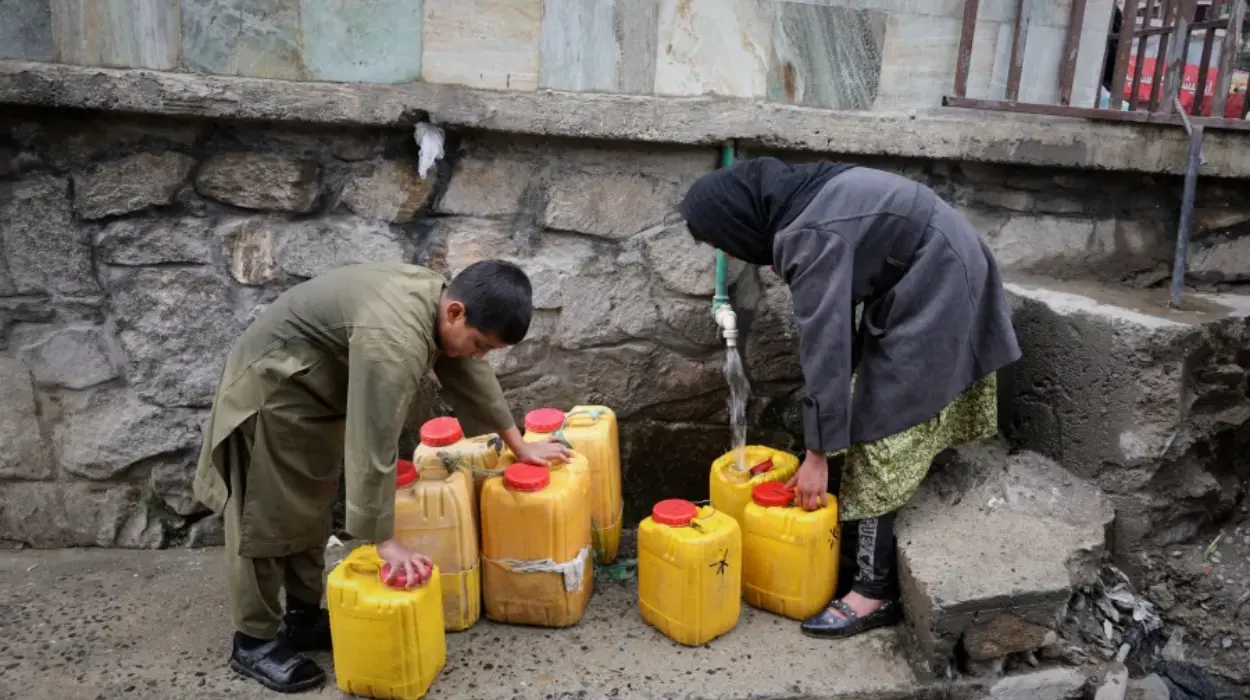
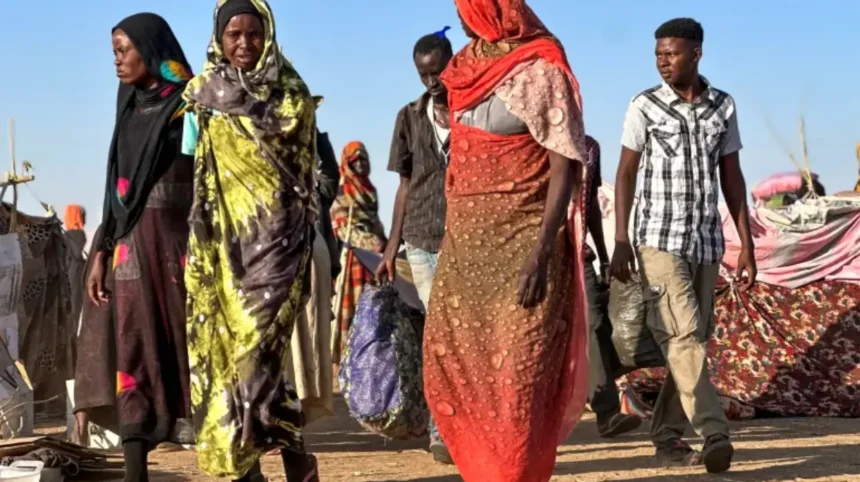
The humanitarian fallout is already severe. Entire communities have been uprooted, and the conflict has intensified fears of famine, displacement, and the collapse of basic protection systems. The Darfur region, already scarred by earlier rounds of violence in Sudan’s troubled history, is once again facing a crisis in which civilians are trapped between armed actors and weak enforcement mechanisms. The result is a conflict that is not only violent but structurally predatory.
Global reaction and accountability pressure
This finding by the United Nations will increase pressure on the international justice institutions and regional organizations. Reports show that the International Criminal Court is increasingly under pressure as there are indications of some possible advances in linking atrocities in Darfur with responsibilities of leaders. This is very important as atrocity crimes seldom occur without chain of command and evidence thereof is important to distinguish the difference between symbolic and substantive justice. The African Union has resumed its efforts to mediate the conflict.
There is contradiction between the goals of mediation which involve cessation of violence and creation of environment for negotiations and making sure that efforts of peacekeeping do not come at the cost of justice. The importance of this report lies in the fact that it brings up both these issues.
The UN has urged immediate action to protect civilians and preserve evidence. That is a critical point because the window for meaningful accountability closes quickly in active war zones. Witnesses are displaced, physical evidence is destroyed, and crime scenes disappear under new rounds of violence. If the world waits too long, the legal findings may remain powerful on paper but weak in practice.
The challenge of proving intent
Genocide cases pose particular challenges since intent is one of the essential criteria. One needs to prove not only the existence of mass killings and rape but also that these crimes were committed with the intent to kill or exterminate the group in question partly or entirely on the grounds of ethnicity, nationality, race or religion. That is why the finding made by the UN mission becomes especially important, as it means that in light of the information available, the behavior pattern of RSF in Darfur amounted to it. At the same time, it becomes obvious why the conclusions in the report will become subject to controversy: in such conflicts, armed groups and their supporters frequently negate the claims made by the international community regarding the abuse or describe it as a mere propaganda.
However, the value of the UN investigation lies precisely in its well-structured process of evidence gathering and analysis. The document is not an abstract or slogan; it is intended to provide a formal legal and factual finding.
At the same time, a genocide finding does not replace a court judgment. It is a strong international conclusion, but it still must be followed by evidence preservation, prosecutorial work, and judicial processes. That is why the next stage matters so much. Without sustained pressure, the report risks joining a long list of warnings that were accurate but not transformative.