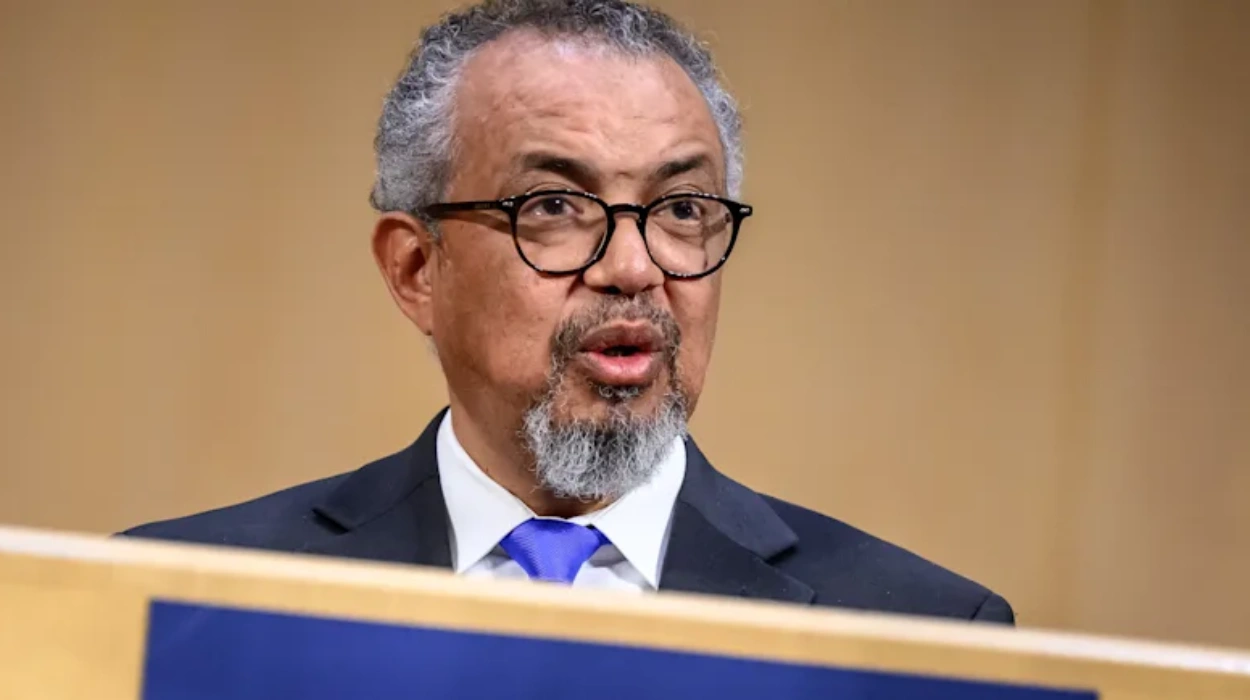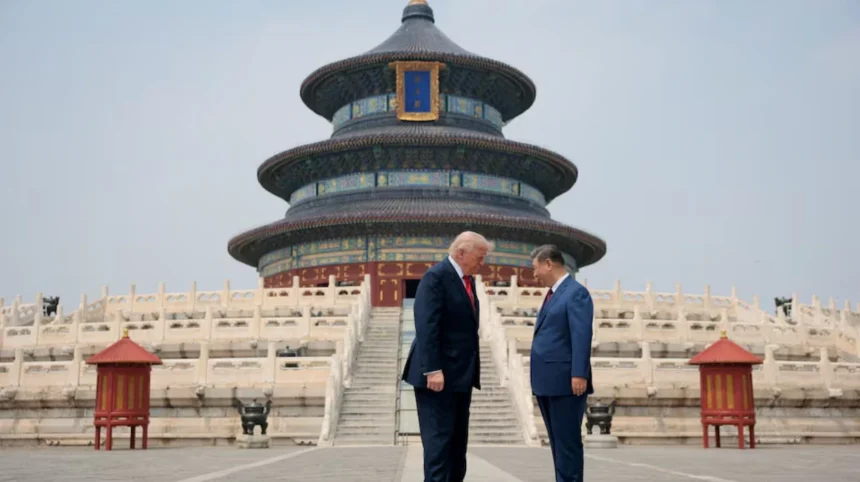
The most recent summit between U.S. President Donald Trump and Chinese President Xi Jinping has been characterized by the United Nations as a positive move towards reducing the tension, but it fell short of making any progress in the highly charged relations between the two largest economies in the world. Addressing a gathering in Tokyo on Wednesday, UN Secretary-General Antonio Guterres stated that while the summit in Beijing
“may have reduced tensions, but it did not make any breakthrough.”
In addition, he highlighted the significance of President Xi’s upcoming visit to the U.S., which he referred to as having “enormous importance.”
The summit followed a period marked by increased rhetoric, fractured trade relations, and growing tensions regarding technology, security, and Taiwan. Commentators argue that the summit was more symbolic than tangible in terms of results, as both parties seem to be signaling their intention to stabilize relations without solving any underlying structural problems. The remarks made by the secretary-general of the United Nations during a very crowded press conference further demonstrate a worldwide consensus that the summit between President Trump and President Xi Jinping is necessary but not sufficient.
How the Trump–Xi summit unfolded in Beijing
The Beijing segment of the summit lasted several days in mid-May 2026, during which time US President Donald Trump made an unusual state visit to China and held lengthy discussions with President Xi Jinping at the Great Hall of the People and other notable locations. News coverage focused on the blend of spectacle, security, and backroom negotiations as both presidents attempted to reset their relationship following a period of tariff battles, export control disputes, and naval confrontations in the South China Sea.
According to the reports, topics such as trade, technology, the role of Iran in the region, maritime security, and North Korea were covered by both presidents, who described the dialogue as being “constructive” and “serious.” Yet, the official statements fell far short of any major breakthroughs in their discussions. According to one American official, “meaningful progress” was made in some areas, specifically regarding Iran and potential business ventures, yet it was also clear that
“we are not at the finish line.”
On the other hand, the Chinese side stressed the importance of stability and patience in negotiations, stressing the point that President Xi Jinping demanded protection of China’s national sovereignty and core interests in regard to Taiwan and the wider Indo-Pacific area.
UN chief’s assessment: “No breakthrough” but easing tensions
António Guterres’s remarks in Tokyo brought a sober external lens to the summit’s outcome. Speaking to journalists after the meeting in Beijing, he said,
“There may be a believe [sic] that tensions are easing, but no major breakthrough was achieved,”
and he added that the lack of a substantive breakthrough made the next stage of diplomacy even more consequential.
The choice of the words “no breakthrough” from Guterres was an intentional departure from the more optimistic message coming from other national leaders and the media. By emphasizing that there have been no developments except for the fact that tensions have just “eased,” the UN leader meant to convey that the causes of the rivalry between the two countries have not been sorted out yet. The statement made by Guterres that the next leg of the journey would be “of enormous importance” was a way of telling both governments that the world was paying attention.
These remarks by the secretary general were also consistent with a longstanding fear in the UN that conflicts between the great powers would interfere with international cooperation on matters such as climate change, debt crisis management, and even pandemics. In past speeches, Guterres has often warned against the possibility of a “new Cold War,” and his most recent comments regarding the Trump-Xi meeting can be seen in this context, with a mixture of hope and caution regarding what has really been accomplished.
What “no breakthrough” actually means in practice
In saying there was “no breakthrough,” Guterres was identifying a series of specific truths that had become apparent following the conclusion of the summit. For one thing, the delicate ceasefire in the trade war that had prevented the situation from deteriorating even further by way of increased tariffs imposed by both Washington and Beijing was still intact but failed to be expanded upon in any meaningful way at the Beijing talks. Reports have it that the ceasefire will come to an end later on in 2026, and without a new arrangement in place, both parties stand to find themselves under increasing pressure.
Second, no significant agreement was reached regarding technology or industry access, despite the fact that both governments had definite agendas on these issues coming into the summit. Washington has been working for some time to limit China’s access to state-of-the-art semiconductors and associated production machinery, while Beijing has been trying to eliminate or at least reduce export restrictions that it sees as discriminatory. The failure to make any headway on these matters indicates that the technological aspect of the competition is one of the most difficult issues in the bilateral relationship.
Thirdly, the summit failed to make any headway on matters related to security, despite the fact that security-related issues like Iran, North Korea, and maritime security were addressed. According to some U.S. representatives, there were “productive” discussions on the topic of Iran’s regional policies and possible avenues for cooperation, but there has been no new joint initiative from either side since then. In this case, the summit seems to have reaffirmed the existing trend of limited cooperation in certain areas, alongside major differences in managing regional hot spots.
The looming Xi Jinping visit to Washington
One of the most consequential outcomes of the summit, in fact, may be the timing and structure of the next encounter. During or shortly after the Beijing meetings, President Trump formally invited President Xi to visit Washington for a reciprocal state visit, scheduled tentatively for September 24, 2026. That proposed date places the visit in the middle of a politically sensitive period in the United States, with the November 2026 midterm elections looming and domestic debates over trade, immigration and national security heating up.
In addition to this, the proposed meeting is taking place at a time when China itself is facing certain difficulties in terms of its economy and geopolitics, with slowing economic growth, pressures in the property sector, and the need for advanced technology and foreign markets. Xi Jinping’s upcoming visit to Washington will certainly carry risks but may also have significant rewards – if he manages to make even some small progress in areas such as trade, tariffs, and technology, he will be able to say that he succeeded in his diplomatic mission.
The significance of the “enormous importance” that Guterres attaches to the visit to Washington is not just a rhetorical figure in this case. This is indicative of a general realization by diplomats that the next meeting between Trump and Xi may either lead to stabilization of the situation or reveal just how much each side can give in. If the trade ceasefire ends without any alternative, if there is an escalation of disagreements regarding exports, or even if there are new incidents regarding Taiwan and the South China Sea, then the visit in September may turn into another place for confrontation.
What each side is saying—and what they are leaving unsaid
The public statements by both sides, however, demonstrate a delicate balance of words. On the American side, President Trump and his aides have stressed that the Beijing meeting had been “productive” and progress had been achieved on some issues, specifically those related to Iran and potential commercial deals. The significance of the visit was emphasized by the Trump administration in terms of symbolism, such as the fact that Xi Jinping extended an invitation to China, and that both presidents came out to the media in an orchestrated manner and that the meeting was framed as the end of a long stalemate and resumption of dialogue on the highest level.
It should be noted, however, that despite the positive narrative, the officials from the White House have also said,
“We are not at the finish line,”
stressing that expectations should be kept low. The administration reportedly considers whether to put more pressure on China regarding trade concessions and market access before the Chinese leader comes to Washington.
On the Chinese side, President Xi and his close associates have underscored the need for stability and the protection of vital national interests, including those related to Taiwan and territorial integrity. Chinese state-run media outlets have described the summit as a “constructive move” towards handling the relationship but have also pointed out that “the US should not test China’s red lines.” According to an interesting quote allegedly circulated among Chinese party members, President Xi’s message was understood as a warning that Beijing will not “back down” on the issue of sovereignty, even though it may be willing to make compromises on trade and technology.
This difference in narratives is illustrative of the situation. While the US speaks of progress and pathways, China refers to red lines and core interests. Both countries acknowledge the dangers of an all-out conflict, but neither seems willing to make the necessary concessions to change the course of their rivalry.
Broader implications for global geopolitics
It should be noted that the remark by the UN Secretary General that no breakthrough was made at the Trump-Xi summit implies much more than just an assessment of what happened in Washington and Beijing. To the US allies, the result of the summit indicates that the current US government is still attempting to maintain its balancing act between confrontation/containment and limited engagement. While Europeans and Asians can feel relieved about the easing of tensions, they will certainly notice the lack of any strategy for dealing with these tensions in the future.
The risks for developing economies are just as significant. Most developing nations find themselves sandwiched between the two behemoths, attempting to keep their doors open to both Western trade, investment, and technology as well as Chinese commerce, infrastructure projects, and financial support. Should the existing trade ceasefire come to an end without an immediate successor, it would be possible to see fresh outbreaks of tariff unpredictability, disruption in supply chains, and hesitation when making investments. The IMF and other international institutions have already issued warnings about the possible negative impacts of such tension on economic outlooks around the world.
For the United Nations itself, the summit outcome underscores a persistent structural challenge: the organization’s ability to manage global crises depends on cooperation between the permanent members of the Security Council, yet the United States and China remain deeply at odds on a range of issues. Guterres’s remarks may be read as a quiet plea for both capitals to use the Washington visit not only to manage their bilateral rivalry but also to preserve the space for collective action on issues such as climate change, peacekeeping and humanitarian response.