The most recent Ebola outbreak in the DRC has become a serious public health problem in a short while, prompting the World Health Organization to caution that the pace and severity of the outbreak should be worrying. It was just an isolated case that is now becoming an international issue due to a rapid increase in suspected infections and deaths.
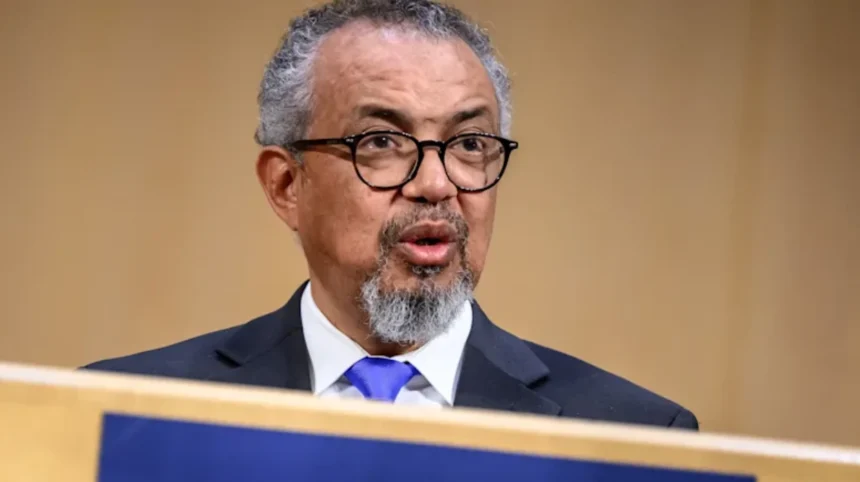
Director-General of the WHO, Dr. Tedros Adhanom Ghebreyesus, described his concern as “deep,” an adjective that conveys the fast rate at which events have developed to an urgent level. His concern was triggered by reports from Congolese authorities on 130 deaths suspected to have been caused by the disease and 513 other cases, indicating rapid growth of the epidemic.
Rising case load raises urgency
The current situation has been reported from eastern parts of Congo, mainly from Ituri province where the health authorities have identified that there is a rapid transmission of infections taking place. The initial numbers were very small compared to the later figures released which showed a massive increase in both confirmed cases and fatalities.
Not only is it important to note the large number of patients, over 500, and the large number of suspected deaths, over 130, but also the sudden increase in their number. When dealing with outbreaks, quick increases in numbers within a relatively short period may indicate that the transmission chain is yet operative and that the virus has probably spread outside the original cluster.
What makes matters worse is the fact that the figures in question are still suspected. When there is an Ebola emergency, suspected and probable patients are taken into account very early, before they are lab-confirmed, due to the time needed for the process.
Why WHO is worried
WHO’s concern is not simply about the count itself but about the pattern. A rapidly rising outbreak in a country that has faced Ebola repeatedly can overwhelm local health systems, delay isolation of patients, and make contact tracing more difficult. That is why the phrase “deeply concerned” carries so much weight in this context.
The outbreak has been described by the organization as a serious situation which needs to be addressed immediately. It has been noted that with a disease such as Ebola, time plays a critical role because the sooner the infected people are isolated, the more probable it is that the spread will not continue further.
Another issue that raises some concern is the possible spread to other health zones and healthcare professionals. Once there is a possibility of spreading the disease through healthcare professionals, then hospitals become centers of infection because of the contact that occurs between the healthcare professional and his or her colleagues and patients.
What the figures mean
The figures in the news coverage highlight a very unstable situation regarding the outbreak. The number of suspected cases has risen to over 500, while deaths have gone up to over 130, which is alarming even at this early stage of verification. This clearly shows that the disease burden is quite high, with a possible high fatality rate, but this cannot be known for sure since no exact mortality figures can be arrived at yet.
The figures should be read dynamically, as well. In any Ebola epidemics, case numbers will continue to increase on a daily basis, as the investigation of cases is ongoing, as suspected cases are eliminated and contacts identified. The case numbers seen at this moment, therefore, do not represent a final figure for this wave. On top of this, the actual number of cases might also exceed those which have been reported until now.
It is significant that the pattern of development observed in this outbreak indicates the presence of community-based transmissions. This is generally interpreted as meaning that the infection in question has become an epidemic, as it has spread beyond an isolated incident, becoming community-based or person-to-person through contacts in family units, health care settings, and funerals.
Congo’s recurring Ebola challenge
It is also not news that Ebola has occurred several times in the Democratic Republic of Congo. The 2018-2020 epidemic that claimed the lives of about 2,300 people was one of such epidemics. In addition, there is the history to consider since it is possible that some of the measures put in place by the previous governments have helped in preparing the ground for the fight against the disease.
Nevertheless, even after all that history, the Democratic Republic of Congo still has many challenges in its effort to prevent another outbreak. Some of the factors such as remoteness, regions affected by conflicts, cross-border movement and lack of health services contribute to the risk of Ebola spreading without being noticed.
This latest flare-up is particularly concerning because it appears to have accelerated quickly after first being reported over the weekend. That kind of early growth often indicates either delayed detection or silent transmission before official recognition. In practical terms, the outbreak may have been underway longer than the public initially realized.
The virus and the response
Ebola virus infection can only happen through close contact with body fluids from an infected person or contaminated objects. Therefore, patient isolation and proper burials must be done early. The virus causes fever, fatigue, nausea, diarrhea, and in some severe cases, internal or external bleeding. It may take time for the outbreak to be detected as the symptoms may appear similar to other diseases.
When such an outbreak occurs, public health workers usually isolate the suspect patients, trace contacts, test samples, and educate the population regarding symptoms and possible transmission. However, in places where there is inadequate infrastructure such as poor road networks or lack of communications, it will be hard to implement these strategies effectively. This explains why community education may be stressed equally as medical response by WHO.
The outbreak’s location in eastern Congo adds another layer of difficulty. The region is more remote than major urban centers, but it is also highly connected through local movement, trade, and health-seeking behavior. That means outbreaks can remain hidden in one area for days or weeks before they are recognized in another.
International concern grows
The wording from WHO and the scale of the reported figures have drawn global attention because Ebola is one of the most feared outbreak diseases. Even when outbreaks remain geographically limited, the combination of high fatality risk, rapid transmission among close contacts, and the possibility of cross-border spread makes international agencies watch closely.
Some reports say WHO has treated the situation with emergency-level seriousness, reinforcing the idea that the organization sees this as more than a routine national outbreak. That response is important because it can accelerate supplies, expert deployment, surveillance support, and coordination with the Congolese government. In outbreak response, early reinforcement often determines whether the event stays contained or grows into a larger regional crisis.
The concern is also amplified by the speed of modern information flow. Once suspected death tolls rise rapidly, the international response becomes more visible, and pressure mounts on authorities to demonstrate that they have the outbreak under control. In that environment, accurate reporting and transparent case tracking become essential to maintaining public trust.
What to watch next
The most important measures to watch out for over the next few days are whether the number of cases will keep increasing, whether the infection has been recorded in new health zones, and if contact tracing has started to indicate a slowdown in the spread of the infection. Stabilization of the figures would mean that measures are starting to bear fruit; but if they keep climbing, then there might be a need to escalate WHO’s and Congo’s emergency response efforts.
Another measure to observe is whether the number of fatalities will increase at the same rate as cases. High numbers of fatalities at the beginning of an epidemic usually indicate late presentation or poor access to treatment services. Other measures include whether healthcare providers have also fallen victim to the infection, indicating insufficient protection measures in the facilities.
For now, the broad message from WHO is clear: the outbreak is moving too fast for comfort, and containment will require sustained urgency. The combination of more than 500 suspected cases, more than 130 suspected deaths, and a rapidly changing situation explains why the WHO chief has expressed such strong concern. In an Ebola emergency, speed can decide everything.
This outbreak is still unfolding, but the early figures already show a serious escalation. The numbers, the location, and the WHO response all point to a public health event that could worsen quickly if transmission is not brought under control. The challenge now is not only counting cases, but stopping the chain of spread before it becomes much harder to break.