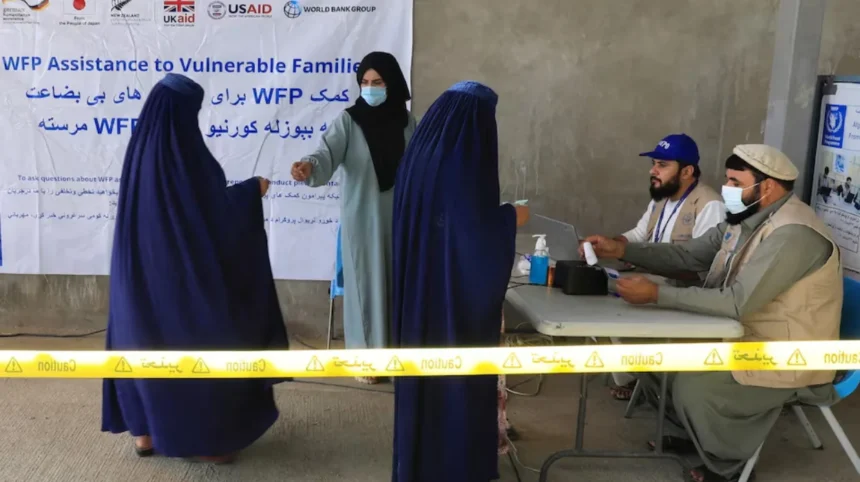
Five years after the Taliban’s return to power in Kabul, the United Nations has issued one of its most direct warnings yet on the fate of Afghan women: do not cut funding for women’s programs. On Friday, 14 August 2026, UN officials appealed to international donors to maintain—and where possible increase—financial support for initiatives that keep women and girls alive, educated, and connected to basic services in a country where rights have been systematically dismantled. The message was unambiguous: further aid reductions would deepen suffering in what UN agencies now describe as the world’s most severe women’s rights crisis.
This plea comes amid celebrations of the Taliban’s 2021 seizure of power, which took place during events organized by the Taliban in Kabul involving new graffiti and a cricket match where women and girls have been banned from participating. In light of such activities, Susan Ferguson, the special representative of UN Women in Afghanistan, told journalists in Geneva that the reduction of aid would mean “walking away from Afghan women and girls.” The situation on the ground is worsening due to the severe reduction in donor funding.
The funding cliff: numbers behind the crisis
The picture painted by the UN on finances is grim. Only 25 percent of the UN’s $1.7 billion humanitarian response to Afghanistan was available by mid-August 2026. Almost three-quarters of the women-led organizations surveyed in Afghanistan cut funding in 2025, while two-thirds had less than six months of operation funding left, according to Ferguson. The impacts are already evident. Over half of 74 women’s organizations surveyed in April believe they are highly likely to stop or close operations in the coming year due to lack of funding. They represent the last resort for many women who face violence, economic marginalization, and medical emergencies, especially in far-flung provinces where international organizations do not operate. With their closure, entire communities lose access to skills training, legal services, maternal healthcare, and safe places in a place run by the Taliban.
Humanitarian officials warn that the ripple effects will be deadly. Bruno Lemarquis, the UN Humanitarian Coordinator for Afghanistan, cautioned that funding gaps could force health centre closures,
“leaving thousands of mothers and newborns vulnerable to preventable complications and death”.
The UN World Food Programme has separately warned that devastating funding cuts will disrupt food deliveries at a time when a hunger crisis is affecting an estimated 14 million Afghans.
“The world’s most severe women’s rights crisis”
The call for funding by the UN comes at a time when several existing policies and laws have affected the lives of women in Afghanistan. According to a report by the UN, the de-facto governing Taliban regime has made more than 100 decrees regarding the rights of women since August 2021 in issues such as education, jobs, travel, health care, and justice. This has undone two decades of gains made and made discrimination against women prevalent as never before.
Education remains the most visible symbol of this rollback. As of 2026, an estimated 2.4 million girls are excluded from secondary education, with Afghanistan now the only country in the world to formally prohibit access to education for girls and women beyond the primary level. UNESCO has called the ban a
“grave violation of their fundamental human right to learn”
and warned that it risks
“condemning Afghanistan to decades of lost potential, deepening poverty, and irreversible harm”.
Beyond schools and universities, women have been pushed out of public life. Barred from most paid work and increasingly restricted in movement, many now depend entirely on male relatives for basic needs. UN Women data shows that half of Afghan women interviewed leave home only once or twice a month, and more report feeling unsafe without a male guardian. The psychological toll is severe: seven in 10 women describe their mental health as “bad” or “very bad”, a figure that officials link directly to isolation, loss of livelihoods, and constant uncertainty.
Ferguson summarized the situation in blunt terms, calling it an “unparalleled crisis of women’s and girls’ rights” that is
“at risk of being forgotten by the world”.
She argued that cutting funding now would not only deepen immediate suffering but also signal that the international community is prepared to normalize the erasure of half the population.
Diplomatic pressure and global divisions
While this financial request was made, the UN is putting increased diplomatic pressure on the Taliban. In particular, the UN saw a collective statement from 56 countries, including the US, UK, France, Germany, Japan, Lebanon, and United Arab Emirates, urging the Taliban to reconsider their oppressive policies towards women and girls. While calling the regime’s “systematic oppression of women and girls a defining characteristic of the current regime,” the coalition asked the Taliban to restore access to education, work, and public life. However, the statement itself highlighted the divisions of the world that are still in place. Regional and global powers such as Pakistan, Iran, Russia, China, and India were not among those who signed the statement, thus showing different strategies and approaches to dealing with the new Taliban government. For instance, Russia is currently the only state to have recognized Taliban rule, while China has increased its cooperation with the country, making economic deals related to Afghan oil, copper, and lithium.
Life under “gender apartheid”
“Gender apartheid” is the term used by human rights activists and former government officials to define the system put in place by the Taliban regime as an instrument of exclusion of women from society. The Taliban regime introduced a regulation in March 2026, allowing the beating of a wife by her husband as long as she does not suffer from broken bones or any other permanent injury. There has also been a regulation that makes it more difficult for women to file for divorce, with the removal of the minimum age limit that was previously 16 years.
For activists who remain inside Afghanistan, the constraints are suffocating. Bou Seraj, one of the few women activists who stayed in Kabul after the Taliban’s return, told CNN:
“I cannot continue working this way because I haven’t helped any Afghan women who needed me. I am unable to do so because I am not allowed.”
She added that speaking out carries heavy risks:
“If anyone speaks out, we are deemed wrong. We are not supposed to express this, yet it is precisely what has occurred.”
Her words reflect a broader reality in which advocacy itself has become dangerous, and many organizations operate in silence to avoid reprisals.
The humanitarian spiral: hunger, health, and displacement
However, the human rights crisis is emerging along with an increasing humanitarian crisis. Total humanitarian funds for Afghanistan have been reduced by nearly 70% compared to 2022, while the United States, once the biggest contributor, is not even in the top five anymore. According to UN Women, 10.7 million Afghan women and girls depend on humanitarian aid, which makes them vulnerable to withdrawal of aid by donors. Children suffer alongside their mothers. The latest report from Save the Children states that one in 10 Afghan children suffers from acute malnutrition, with more cases of wasting – the most severe type of acute malnutrition – being recorded. UNICEF expects more than 11 million children to need humanitarian assistance this year, but 600 health care facilities have been shut down because of the lack of funds. Some remote areas have just one NGO serving as a health care facility for thousands of people.
Natural disasters have compounded the strain. Deadly earthquakes and floods have damaged infrastructure and displaced families, while border confrontations with Iran and Pakistan have added layers of insecurity. Although deaths from “terrorism” have fallen since the Taliban took power, lawlessness persists in parts of the country, and groups such as ISIS?K and al?Qaeda remain active. The economy offers little buffer: with most public spending once dependent on foreign aid, the withdrawal of funds has crippled services and eliminated many formal jobs, pushing households into informal trade and survival strategies.
What the UN is trying to sustain
Despite the constraints, UN agencies are working to keep critical services alive. UN Women is bolstering livelihoods, safeguarding access to lifesaving services, and supporting nearly 200 women?led civil society organizations that provide everything from legal aid to vocational training. UNESCO is focusing on improving education quality where possible and offering community?based livelihood and vocational skills training to women excluded from formal work.
The UN’s sexual and reproductive health agency, UNFPA, is supporting midwife training and Family Health Houses that deliver maternal and reproductive care in hard?to?reach areas. UNICEF continues to provide vaccinations, build schools where feasible, and respond to emergencies such as flash floods that disproportionately affect women and children. These programs are not substitutes for full rights, but they are often the difference between life and death for families cut off from formal systems.
The stakes of the donor decision
In the end, the UN message to donors comes down to making choices. Continued funding of women’s initiatives will not undo Taliban rulings but can sustain vital programs, protect the most vulnerable, and maintain at least an infrastructure of rights until political circumstances shift. Reduced funding, on the other hand, may help to ensure the closure of health facilities, schools, and women’s organizations as well as to deepen poverty and make the exclusion of women from public affairs a permanent reality. In terms of making the moral and pragmatic choice, Ferguson put the question clearly.
According to her, the collapse of the women’s organizations will send a message that the international community does not mind the “erasure” of Afghan women from public affairs. From the point of view of Ferguson, maintaining funding in such circumstances is not only an ethical choice but also an indication that the world will not ignore the crisis caused by itself. As donors assess their budgets in relation to other crises around the world, the UN message becomes clear: do not settle accounts at the cost of Afghan women. All statistics, stories, and even the obvious decay seen in the country lead to the same conclusions. In these circumstances, any cut in funding will not be a budgetary decision but a real one, with fatal consequences for many people.