Two years since the International Court of Justice ruled that the presence of Israel in the occupied Palestinian territory is illegal, the United Nations is sounding the alarm that the situation in the West Bank continues to deteriorate and that the trend seems to be escalating. The latest move by the human rights office of the UN comes at a particularly political time: a significant legal ruling that was supposed to define the nature of the occupation has, according to the UN, done little to prevent its continued growth.
UN Human Rights Office spokesperson Ravina Shamdasani captured the tone of the warning bluntly, saying
“The violence by settlers and widening annexation of Palestinian territory in the West Bank is only getting worse,”
as the office pressed for stronger action from states that have leverage over Israel. The message is not framed as a routine human rights update; it is a complaint that international law has been clearly articulated, yet enforcement remains weak while facts on the ground continue to shift.
The legal backdrop
The present UN alert must therefore be understood within the context of the International Court of Justice’s advisory opinion issued in July 2024, where the world court ruled that the continued occupation of the occupied Palestinian territories by Israel is illegal and must cease as soon as possible. This ruling also noted that Israeli settlements in the West Bank and East Jerusalem, as well as the regime in place there, is an affront to international law and that Israeli policies and practices constitute “annexation” of significant portions of the land along with discrimination against the Palestinian people. The legal opinion gives the Palestinian side and much of the UN system ammunition in asserting that settlement growth is not simply a political disagreement but a violation of international law. But it is precisely the strength of this ruling that makes it so limited: while having considerable legal and moral authority, it has no enforcement power.
Settler violence rising
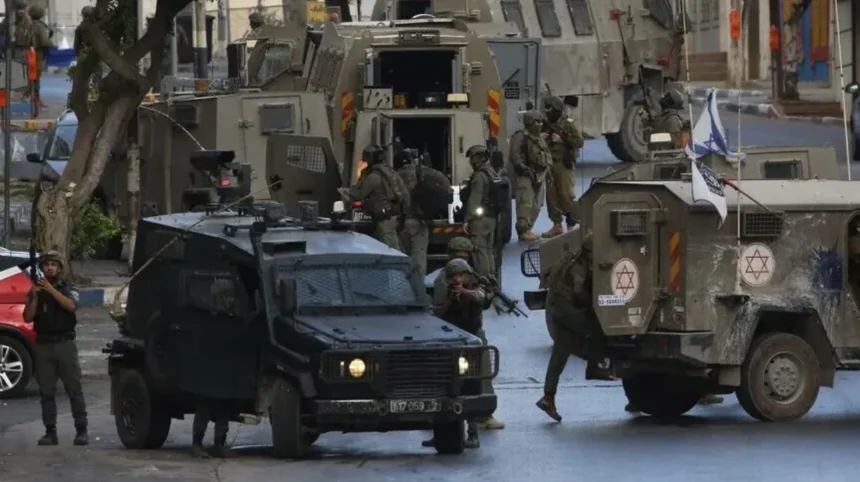
The UN’s current concern is rooted in the scale and frequency of attacks attributed to Israeli settlers and, in some cases, Israeli security forces. OHCHR has said violence in the West Bank has intensified sharply since 7 October 2023, with killings, injuries, displacement, property damage, and intimidation becoming more systematic. In one of the clearest figures cited by the UN, it said Israeli forces and settlers killed 1,053 Palestinians in the West Bank including East Jerusalem by 2 February 2026.
The Office has also pointed out the frequency of settler attacks. Between January and June 2025, there were 757 attacks by settlers resulting in injuries or damages to Palestinians’ property, which is 13 per cent higher than in the same period of time in 2024. Further, June 2025 witnessed the largest number of injuries suffered by Palestinians during one month in over two decades, which is another indication that the violent cycle is not only going on but is escalating.
This information is significant because the figures illustrate what has been reported by Palestinian communities, relief organizations and human rights activists for several months now – growing vulnerability and decreasing mobility and overall safety of everyday life in rural and peri-urban areas. When UN reports that the attacks “are only getting worse,” it does so based on measurable increase rather than just an impression of the conflict.
Displacement and annexation
In addition to violent acts, UN is also concerned about annexation of territories via control and displacement. As per the statement made by OHCHR, 4,037 Palestinians had been displaced due to settler attacks in the West Bank since 7 October 2023, and six communities of the northern Jordan Valley have been forcibly displaced owing to similar circumstances. Furthermore, as many as 30,000 Palestinians had been left forcibly displaced in the northern part of the West Bank amidst Israel’s “Iron Wall” operation.media The issue of annexation is significant because it moves the focus of discussion from the individual violent act to the process of territorial changes. When UN talks about “widening annexation,” it means increasing the number of settlements and restrictive conditions, which make the life of the Palestinians extremely difficult and hard to undo.
This is why the UN has repeatedly linked settler violence to forced transfer. It argues that attacks are not random; they are part of a broader coercive environment that pushes Palestinians off land, especially in Area C, the Jordan Valley, and other strategic parts of the occupied West Bank. In that framing, violence, settlement policy, and displacement are not separate phenomena but mutually reinforcing elements of the same project.
UN’s sharper language
The language used by senior UN officials has become increasingly severe. In January 2026, a UN report warned of what it called the “systematic asphyxiation” of Palestinian rights in the occupied West Bank, reflecting the view that restrictions, settlements, and violence are combining to choke Palestinian political and social life. The office has also said the West Bank is experiencing discriminatory legal regimes and policies that undermine equality and self-determination.
OHCHR, in a statement made in July 2025, stated that the increased level of settler violence, which was condoned, encouraged and participated in some cases by Israeli security forces, has contributed to the coercive environment in the occupied West Bank. This language is significant because it holds responsible not only the rogue settlers but also the systems that allow them to carry out violence, implying that the acts of violence are not under control and in some cases are even enabled by state actors.
UN statements issued both before and after the statement made by OHCHR are in agreement with such a view. UN human rights officials have claimed that settlement activity and operational changes make the existence of a contiguous Palestinian state threatened, while the June 2026 statement from UN experts stated that settler violence has reached unprecedented levels with 13 Palestinians killed and close to 500 injured in five months.
What the UN wants
The UN’s ask is no longer limited to expressions of concern. Shamdasani said
“third states must act urgently and in unison to put a stop to the continuing killing and dispossession of the Palestinian people and to end the occupation.”
That is a direct call for governments with leverage over Israel to move beyond statements and use diplomatic, legal, or economic pressure.
OHCHR has also urged Israel to end violence, policies, and practices against Palestinians in the occupied West Bank, stop settlement expansion, and halt the forcible transfer of Palestinians. In its 2026 and 2025 statements, the office argued that accountability is essential and that the current pattern of impunity is allowing attacks to continue.media.
This is where the UN’s position becomes not just descriptive but prescriptive. The office is saying the legal framework is already in place — the ICJ has ruled, the settlements are unlawful, and annexation by force is prohibited — but without meaningful action by states and accountability mechanisms, the occupation’s facts on the ground will continue to outrun the law.
There is political sensitivity in the timing of this warning as it is delivered two years to the date since the decision of the ICJ. In terms of its objective in clarifying matters legally and having policy implications, the UN says that the reverse has occurred in the West Bank. Settlement activities continue unabated, the attacks by settlers increase and displacement has worsened. For Palestinians, the problem is urgent and concrete. Violation of the rights of Palestinians includes violence against land access, farming, mobility and housing. For diplomats, the question raised by the warning is if international law can change the facts on the ground in the case of a long-term occupation where the costs of noncompliance are low.
For Israel, the UN line is sharply critical because it rejects the idea that settlements are a peripheral issue. Instead, it treats them as the mechanism through which annexation is advancing. That is why the UN’s latest language matters; it is not just condemning individual incidents, but arguing that the structure of control itself is producing an escalating human rights emergency.