Beijing’s latest move at the United Nations has sharpened the long-running South China Sea dispute into a fresh test of regional order. After the Philippines presented its case this week to the UN Commission on the Limits of the Continental Shelf (CLCS) for extended seabed rights off western Palawan, China’s mission to the UN issued a blunt rebuttal on Thursday, accusing Manila of “flagrantly infringing” on Chinese sovereignty and “undermining regional peace.”
Beijing asked the CLCS comprising of 21 members not to take the filing into account on the grounds that the submission contravenes China’s sovereignty, sovereign rights, and jurisdiction in the disputed waters. The oral presentation by the Philippines at CLCS in Tuesday and Wednesday occurred as the 10-year anniversary of the arbitral award made in 2016 approaches, where the nine-dash line claims by China were dismissed by the decision that ruled in favor of key maritime entitlements of the Philippines, which have been termed by China as “illegal, null and void.” For Manila, the filing is a legal and scientific act under UNCLOS; however, for Beijing, it is a political act aimed at reviving the decision.
The legal mechanics: what Manila is asking the UN to do
The Filipino government is not requesting the CLCS to delineate boundaries or resolve disputes over the sovereignty of any of the islands. Rather, it wants the commission to recognize the existence of the natural prolongation of the Philippines’ continental shelf beyond its EEZ such that it may have ECS rights under Article 76 of UNCLOS. As a result, the Philippines would be allowed to exercise sovereign rights over the exploration and exploitation of the resources of the seabed beyond the 200 nautical mile EEZ, even up to 350 nautical miles if the geology dictates it.
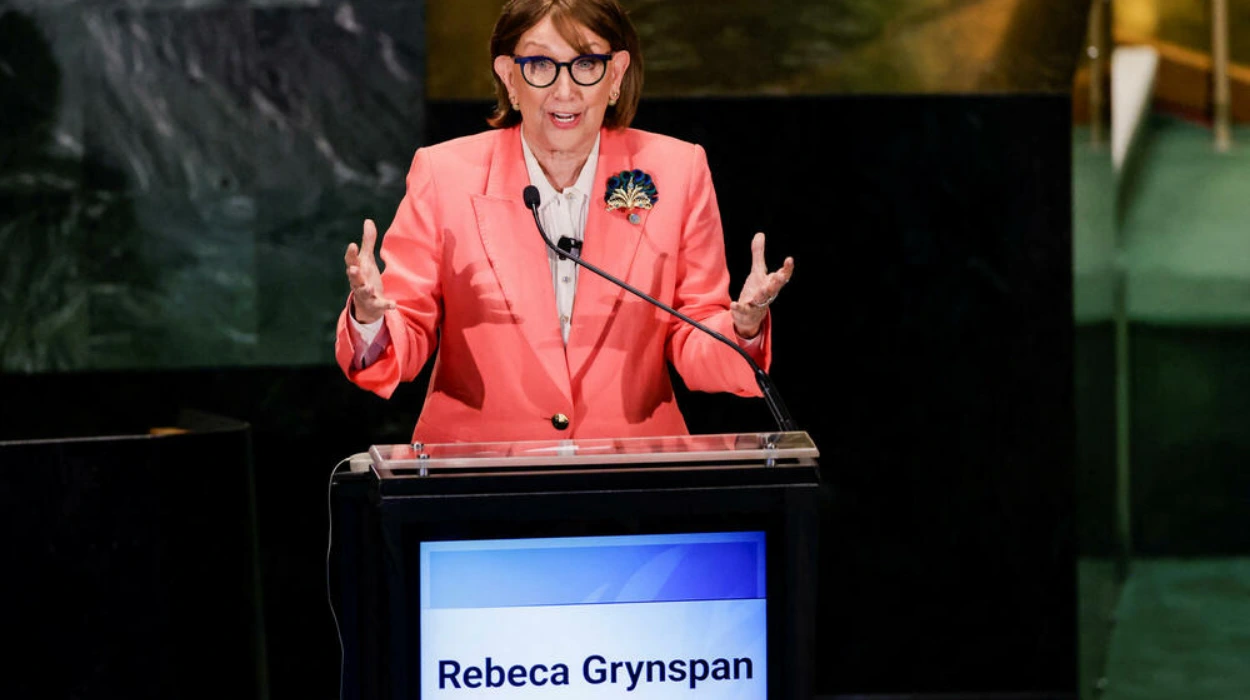
The Department of Foreign Affairs of the Philippines justified the presentation of the claim as an “obligation to ensure a peaceful South China Sea through adherence to the rule of law,” which is necessary for sustaining livelihoods, maritime commerce, marine biological diversity, and cooperation among coastal states. Led by Ambassador Enrique Manalo, the Philippines’ Permanent Representative to the United Nations, the delegation pointed out that the CLCS must take into account the decisions of the relevant UNCLOS tribunal, including the 2016 award.
This is Manila’s second ECS bid. In 2009, it filed a partial submission for the Philippine Rise (formerly Benham Rise), which the CLCS recognized in 2012, adding 135,506 square kilometers of seabed to Philippine jurisdiction. The current West Palawan submission, prepared over 15 years by the National Mapping and Resource Information Authority and an inter-agency technical working group, follows the same legal pathway.
Beijing’s counter-argument: sovereignty, procedure, and the 2016 award
China’s position is uncompromising. In its diplomatic note to UN Secretary-General Antonio Guterres, Beijing stated that “[The Philippine claims] have seriously infringed China’s sovereignty, sovereign rights and jurisdiction in the South China Sea.” It went further, asserting that
“China has indisputable sovereignty over Nanhai Zhudao [the South China Sea islands] and the adjacent waters, and enjoys sovereign rights and jurisdiction over the relevant waters as well as the seabed and subsoil thereof.”
On that basis, it
“seriously requests the commission not to consider the submission by the Philippines.”
In addition, Beijing challenged the legality behind Manila’s claim. In the letter, the Chinese mission dismissed Manila’s effort to employ the ECS document as “a pretext for exaggerating” the 2016 ruling in favor of the Philippines on South China Sea arbitration, in which the tribunal decided to invalidate the historic rights claim of China within the nine-dash line in the sea. The Chinese government officials have always referred to the South China Sea arbitration as “illegal, null and void,” and asserted that the CLCS cannot do anything concerning the dispute without the agreement of all parties involved in the case.
Foreign Ministry spokesperson Lin Jian had already announced this position, saying that Manila’s submission
“is a blatant infringement on China’s sovereign rights and jurisdiction, breaches international law, including the [UNCLOS], and disregards the Declaration on the Conduct of Parties in the South China Sea.”
Historical roots: how the dispute evolved
The Philippines-China dispute over the South China Sea stretches back decades, but its modern legal and diplomatic contours crystallized in the early 2010s. Tensions escalated after incidents around Scarborough Shoal in 2012, when Philippine and Chinese vessels faced off, and China subsequently established de facto control over the feature. In January 2013, Manila announced it would challenge Chinese claims through arbitration under UNCLOS, saying diplomatic efforts had failed.
Beijing refused to participate, arguing the tribunal lacked jurisdiction over sovereignty and maritime delimitation. In July 2016, the Permanent Court of Arbitration in The Hague issued a landmark award, ruling that China’s nine-dash line historic rights claim had no legal basis under UNCLOS, and that many features in the Spratlys do not generate 200-nautical-mile EEZs. The tribunal also found that China had violated Philippine sovereign rights by interfering with fishing and oil exploration and caused severe environmental harm.
China rejected the ruling outright. Chinese officials have since maintained that “China has ‘indisputable sovereignty over the South China Sea islands and adjacent waters, which has abundant historical and legal grounds,’” as then-foreign ministry spokesman Hong Lei put it in 2013. That historical narrative—anchored in maps, ancient voyages, and administrative records—underpins Beijing’s claim to almost all islands and rock features in the sea, even as it overlaps with claims by the Philippines, Vietnam, Malaysia, and Brunei.
Stakes on the water: resources, law, and leverage
The economic implications are enormous. The South China Sea is believed to have at least 11 billion barrels of oil and 190 trillion cubic feet of natural gas reserves, as well as highly lucrative fisheries that feed millions of people in Southeast Asia. The decision on ECS will not affect control over the islands, but it will settle who is entitled to control the resources on the seabed and subsoil in certain areas, making it a very valuable legal trophy for Manila. At the same time, China’s interests go beyond just economic concerns.
Recognizing the ECS decisions based on the logic of the 2016 ruling will only undermine the legality of the Chinese nine-dash line and narrow its freedom of action in its “own” waters. This is the reason why Beijing combines legal arguments with procedural ones and claims that the CLCS cannot operate under conditions when delimitation is in dispute.
Regional dynamics add another layer. Vietnam and Malaysia have also objected to Manila’s West Palawan submission, citing overlapping claims. Malaysia’s mission to the UN has rejected the Philippine filing as inconsistent with international law and its own sovereignty over Sabah. These cross-claimant objections give Beijing additional procedural cover to argue the CLCS should not proceed.
On-the-water tensions: why the legal fight matters now
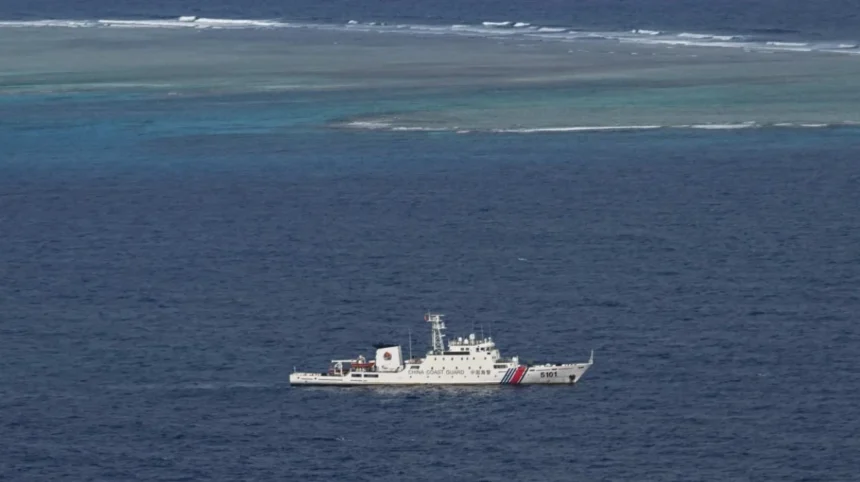
The legal battle at the UN unfolds against a backdrop of frequent maritime confrontations. Since 2024, the Philippines and China have seen repeated incidents around Second Thomas Shoal and Scarborough Shoal, including water-cannon use, dangerous maneuvers, and collisions between coast guard and militia vessels. These episodes raise the risk of miscalculation, especially as Manila has strengthened defense ties with the United States and other partners.
In March 2024, U.S. Defense Secretary Lloyd Austin confirmed that the U.S.–Philippines Mutual Defense Treaty covers armed forces, public vessels, and aircraft in the South China Sea, signaling that attacks on Philippine assets could trigger treaty obligations. That commitment raises the stakes for every encounter, turning routine law-enforcement style actions into potential flashpoints with alliance implications.
Manila’s ECS push is also part of a broader effort to normalize the 2016 award’s findings in multilateral settings. By urging the CLCS to consider UNCLOS tribunal decisions, the Philippines is seeking to embed the award’s logic—particularly that many Spratly features do not generate EEZs—into the technical process of continental shelf delineation. For Beijing, that is precisely the problem: it views the award as a political instrument, not a legal foundation, and resists any process that treats it as authoritative.
What the CLCS can—and cannot—do
CLCS is a technical committee, not a court of law. It examines the scientific and legal arguments to make recommendations on the extent of continental shelves for which the state may make claims to the seabed and subsoil. CLCS does not adjudicate sovereign claims or demarcate boundaries in the maritime zone between countries. Its rules of procedure also warn against accepting submissions in areas of dispute, provided there is consent from all involved parties. This is the crux of China’s strategy. Using objections and invoking the “disputed waters” provision, Beijing seeks to prevent any consideration whatsoever. Yet, through its submission, Manila ensures that the matter remains on the table at the UN forum.
The human and environmental dimension
However, beyond geopolitical concerns, the conflict impacts people’s livelihoods and ecosystems. For instance, in the Philippines, the country has related the issue of ECS with food security, trading, and marine biodiversity, asserting that having legal clarity is essential in ensuring sustainable use and conservation of the West Philippine Sea. In the meantime, the Department of Environment and Natural Resources in the Philippines has embarked on producing educational e-books targeting children, in which a sea turtle by the name of Pawi has been used to illustrate the significance of the West Philippine Sea and the ruling of 2016 in an easy-to-understand way.
As stated by the Environment Secretary of the Philippines, Juan Miguel Cuna,
“With the help of Pawi, kids can realize that protecting the West Philippine Sea means protecting our food security, livelihood, biodiversity and cultural heritage.”
Where this could go next
The initial problem then becomes whether the CLCS will entertain the submission made by the Philippines concerning its West Palawan claim. Given the objections raised by China and Malaysia among other countries, the body might choose to defer, seek clarifications or limit itself to portions of the claim that are non-controversial. Regardless of the fate of the process, the Philippines can still use multilateral forums to keep the issue alive, considering that UNCLOS is highly relevant in such bodies. The danger for China is that despite procedural wins in the body, the fact remains that more countries are using UNCLOS and the 2016 ruling to challenge the nine-dash line in terms of legality.