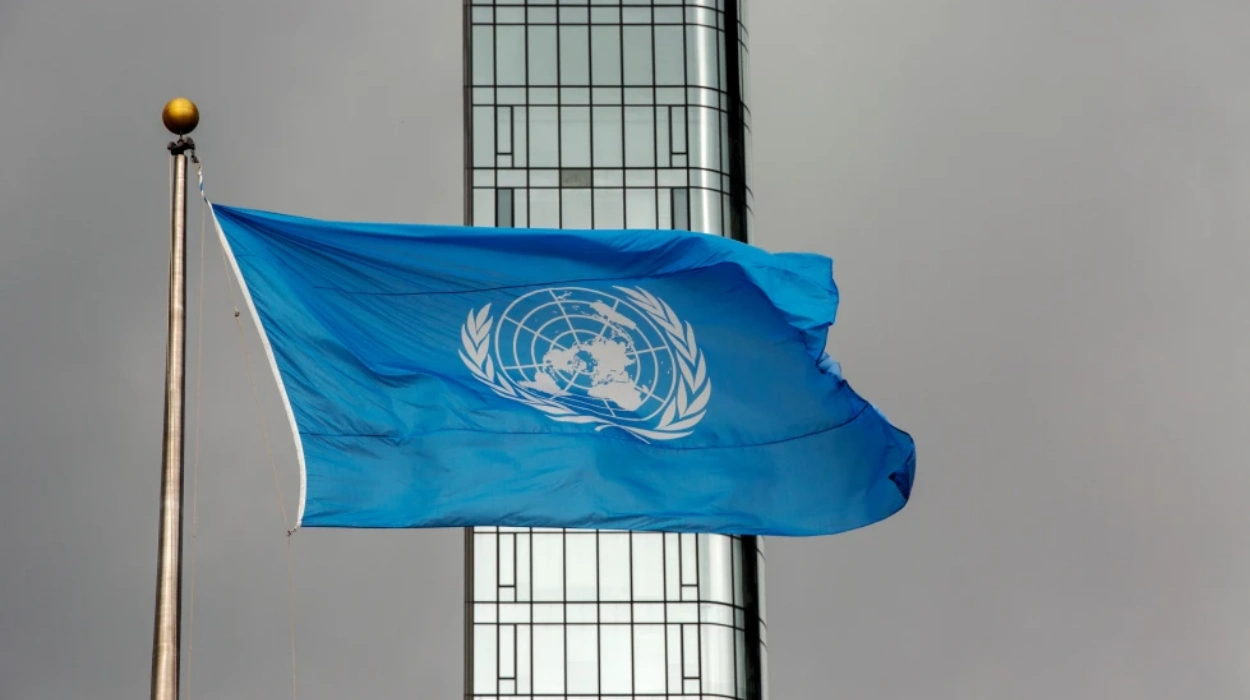
The United Nations Committee on the Elimination of Racial Discrimination (CERD) has made its boldest pronouncement ever concerning reparations for the transatlantic slave trade and colonialism and their aftermaths, saying that states bound by the 1965 anti-racism treaty have an international law obligation to adopt reparatory policies for the descendants of Africa. The document, titled General Recommendation No. 40, was released on 31 August 2026, and shifts reparations from being a question of moral responsibility rooted in history to being an obligation arising from an international convention.
This is according to a
“paradigm shift from historical responsibility to a present-day legal obligation,”
said members of the committee. For more than ten years, CERD has been scrutinizing 182 countries in terms of their implementation of the International Convention on the Elimination of All Forms of Racial Discrimination (ICERD).
General Recommendation No. 40 elevates that work into a global framework that ties the legacy of racialised chattel slavery and colonial extraction directly to contemporary structural racism, insisting that “confronting historical injustice can not be separated from the fight against present-day racial discrimination.” In doing so, the committee provides advocates, courts and policymakers with a detailed interpretive roadmap that can be used to justify everything from truth commissions and curriculum reform to targeted investment programs and, in some cases, direct financial compensation.
The legal foundation: ICERD as a living instrument
CERD argues on the basis of the “living instrument” nature of ICERD, which obligates states parties to interpret the obligations in view of the existing reality, including the ongoing racial inequalities resulting from slavery and colonialism. The committee emphasizes that although the Atlantic slave trade may have been in accordance with the internal law of states at the time, the current obligations of treaties require states to take into account the impact of the slave trade and to fight against the ongoing criminal justice, housing, health, education and employment discrimination against people of African descent.
As a CERD committee member and a Liberian human rights lawyer, Pela Boker-Wilson, explains, the recommendation is meant to turn the discussion away from the historical responsibility to international legal obligations. In her opinion,
“the text moves the discussion from a simple historical responsibility to a present day legal obligation”.
This approach is significant as it avoids one of the primary legal arguments against reparations, which is based on the inability of states to face responsibility for the acts that were performed within the boundaries of the law. Therefore, CERD does not consider any legal issues related to the criminal and civil liability of states and addresses the question of the current violation of treaty obligations aimed at eliminating racial discrimination and ensuring equality before the law. Thus, the approach taken by the committee makes it possible for the states to be responsible for the fulfillment of treaty obligations and reparations to be an integral part of the procedure.
What “comprehensive reparatory measures” actually mean
At the heart of General Recommendation No. 40 is an expansive definition of reparatory justice that goes well beyond cash payments. The committee states unequivocally that
“states parties must implement comprehensive reparatory measures for people of African descent, covering all aspects of remedies.”
Those measures are described as a combination of “monetary, non-monetary and structural” actions designed to restore dignity, ensure justice and advance substantive equality.
Monetary reparations would include compensating the community directly through financial payments as well as investing in education, housing, healthcare, and economic development where racial disparities are most severe. The recommendation also takes into account “unjustly accumulated wealth” and unequal global economic relations as a result of slave-based extraction and exploitation over centuries. This implies that the issue of reparations needs to be addressed not only within the national level but also on an international scale regarding financial and trading policies that contribute to inequalities and injustices. Non-monetary measures include restitution, rehabilitation, satisfaction and guarantees of non-repetition. Restitution would imply the return of the cultural property, possible land-based solutions and other measures of returning what was taken or destroyed.
Rehabilitation would comprise the provision of psychological and social support for addressing inter-generational trauma of slavery and its consequences. Satisfaction would consist of apologies, admission of responsibility, and commemorating measures such as establishing museums, monuments and days of commemorating the victims and resistance movement. The Committee also emphasises the significance of “guarantees of non-repetition” which refers to legal and institutional changes preventing racial discrimination from happening again.
Structural reforms are perhaps the most politically sensitive but also the most transformative element. CERD insists that states must take
“active measures that are geared towards restoring the dignity, the justice and equality that people of African descent deserve.”
This includes dismantling structural racism in law and policy, revising criminal justice practices that disproportionately target Black communities, and closing racial gaps in wealth, income, health outcomes and incarceration rates. The recommendation effectively treats anti-Black structural racism as a continuing violation of ICERD that can only be remedied through sustained, systemic change rather than one-off gestures.
Truth, research and education as reparatory obligations
Truth-telling, research, and education form the basis of reparatory justice as emphasized by General Recommendation No. 40. According to the committee, there is a need to
“investigate and disclose the full truth about transatlantic chattel slavery”.
This goes past academic research into areas such as public education, archiving, curriculum at schools, cultural activities and other related aspects that ensure the true dimensions of the magnitude of the slave trade and its connection to modern racism is well understood.
These may include setting up national truth commissions on slavery and colonialism, funding research independently and including this period of history in all the school syllabuses. There is also an implication of providing resources to build museums, exhibitions and digitization of all the archive materials in the interest of the general public, especially where the countries concerned were instrumental in organizing, financing and benefiting from the slave trade. It is thus clear that through this recommendation, the committee is putting the responsibility on the shoulders of governments to provide truth and education about the past rather than leave it as an option.
The scale of the harm: figures that contextualise the claim
While General Recommendation No. 40 is primarily a legal and policy document, its moral and political force is amplified by the sheer scale of the demographic and economic disruption it seeks to address. Background sources and related UN materials highlight that at least 12.5 million Africans were forcibly transported and sold between the 15th and 19th centuries, in what CERD describes as the
“largest forced displacement in history.”
The Slave Voyages, a well-known database among historians, estimates that during 1501-1866, about 12.5 million people were shipped on slave ships, of whom 10.7 million survived the voyage to reach the Americas and Caribbean shores. The economic figures also shed light on the scale of the problem. In 2023, The Brattle Group, while preparing an analysis on behalf of the University of the West Indies and the American Society of International Law, estimated that the potential reparations for the transatlantic chattel slavery in the Americas and Caribbean could be anything from $100 trillion to $131 trillion, depending on the approach used. While these numbers are not put forward by CERD as a bill, they certainly highlight the claim by the committee that the slave trade has altered global wealth distribution in such a way that African descendants are at a loss because of it.
From UN resolutions to treaty-based obligations
General Recommendation No. 40 was introduced in a period of significant activity within the UN framework with regard to bringing reparatory justice to the international agenda. In March 2026, the UN General Assembly adopted a historic resolution identifying the transatlantic slave trade as
“the most serious crime against humanity”,
although there were objections from the US and some European nations. The resolution urged member countries to enter into an
“inclusive and genuine dialogue on reparatory justice”
that would include apologizing, restoring, compensating, rehabilitating, satisfying, guaranteeing non-repetition and law and program reform in addressing systemic racism.
CERD’s new recommendation builds on that political momentum by grounding similar demands in the specific legal obligations of ICERD. Where General Assembly resolutions are politically significant but not directly enforceable, treaty-body interpretations like General
Recommendation No. 40 can be invoked in domestic litigation, parliamentary debates and administrative proceedings as authoritative guidance on what compliance with ICERD requires. This dual-track strategy—combining high-level political declarations with detailed treaty-based guidance—aims to make it harder for governments to dismiss reparations as merely symbolic or optional.
Why this matters for global racial justice
For policymakers, and civil society organizations, General Recommendation No. 40 acts both as a diagnostic tool and as a policy agenda. First, it provides a consistent story that draws the connection between historical violations of human rights and present injustices using the legal framework established under a relevant international treaty, and which can be put into practice domestically. Secondly, it offers a shared language such as restitution, rehabilitation, satisfaction, and guarantees of non-repetition that can form the basis for debates that have historically been fragmented between different countries and thematic concerns. Of great significance here is the committee’s statement that reparatory justice has to be “comprehensive” and “transformative,” not just symbolic or restricted to compensation schemes. This is because the recommendation is challenging governments to go beyond a one-off payment or an apology and to think of how laws, institutions, and economic systems can be changed so that the pattern of racial oppression does not reoccur.
As states begin to respond—whether through legislation, litigation, policy reform or diplomatic engagement—the impact of CERD’s new guidance will depend on how effectively advocates can translate its legal language into concrete demands and measurable outcomes. For now, the document stands as the most detailed and authoritative statement yet from a UN treaty body that reparations for slavery and colonialism are not optional moral gestures but binding legal obligations under international anti-discrimination law.