The forcible entry and temporary seizure of UNRWA’s Qalandia Vocational Training Center in occupied East Jerusalem has escalated into a high-stakes dispute over the inviolability of UN premises, the future of Palestinian refugee services in the city, and the legal boundaries of Israeli authority over UN property. UNRWA now says more than $5 million in UN assets at the center are at risk after Israeli forces withdrew, citing damage and signs of looting. The episode, unfolding over four days in late August 2026, has drawn sharp condemnations from UN leadership and underscored how a single facility—long a vocational lifeline for hundreds of Palestinians—has become a symbolic and operational frontline in the wider struggle over Jerusalem’s status and the role of UNRWA in the occupied territories.
The Raid and Its Immediate Aftermath
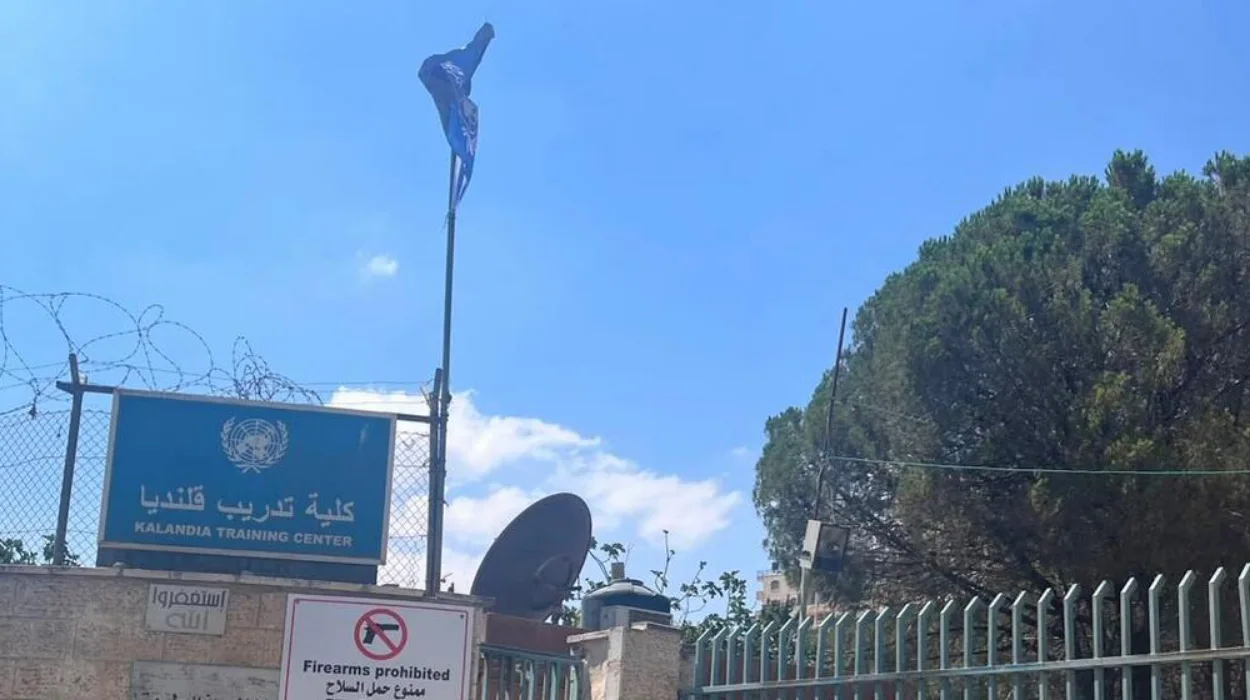
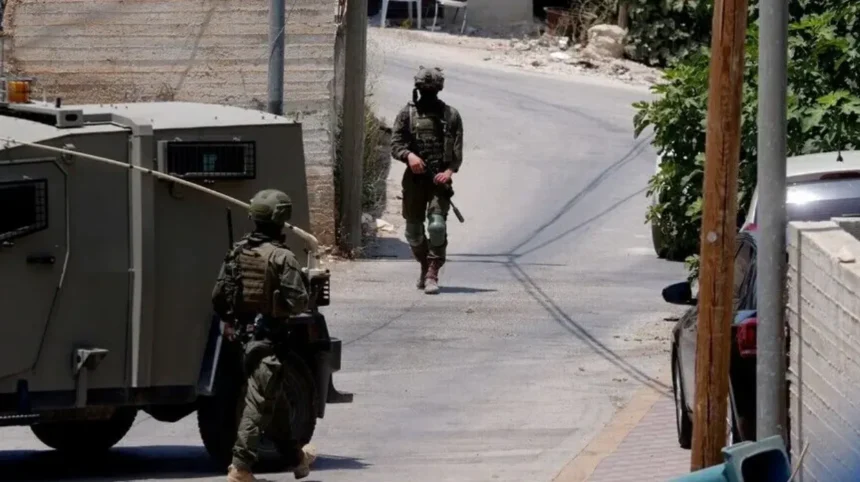
On Tuesday, 25 August 2026, Israeli security forces, municipal personnel, and an elected official entered the Qalandia (Kalandia) Vocational Training Center, located in the Kafr Aqab area of East Jerusalem, and removed UNRWA personnel from the site. At least four armored vehicles and more than 50 Israeli security personnel participated in this operation. It started at 10:00 local time with UNRWA having approximately 20 people inside the center. The Israeli forces put the Israeli flag in the courtyard of the center and stayed there for several days before withdrawing from the center on Friday, 28 August 2026.
After the Israeli forces withdrew from the center, UNRWA reported damages to UN assets and looting of the center. This incident puts at risk more than $5 million of UN assets. It is important to note that the center has dozens of vocational training workshops, classrooms, dormitories, administrative buildings, as well as tools and equipment for the hands-on trainings, all representing considerable investments in the facility made by UNRWA and international organizations.
What Is at Stake: Assets, Programs and Legal Protections
The Qalandia complex is much more than just a building – it is a vocational education hub that UNRWA claims educates some 340 Palestinians annually from the occupied West Bank. The Qalandia complex has existed since 1952 and has been for many years one of UNRWA’s premier institutions in the Jerusalem area, as well as being, according to UNRWA officials, one of their final remaining such institutions in East Jerusalem. UNRWA West Bank Director Roland Friedrich told the authors that UNRWA, along with international partners, had made substantial investments recently in the training facilities at the complex.
He framed the seizure as Israel taking
“the last major facility remaining for UNRWA in East Jerusalem in a blatant violation of international law.”
The agency has reaffirmed its commitment to fully resuming educational activities at the center, even as it assesses the damage and the status of its assets.
Legally, UNRWA stresses that the center is a UN facility protected by the privileges and immunities afforded to the organization under international law and that
“its inviolability must be fully respected.”
UNRWA also notes that in October 2025 the International Court of Justice affirmed Israel’s obligation to respect the inviolability of UN premises, including UNRWA facilities, and not to interfere with the agency’s property and assets.english.ahram.
Statements That Define the Crisis
The raid triggered a rapid cascade of condemnations from senior UN officials, each underscoring the same core point: that the entry and seizure were unlawful and violated the protected status of UN premises.
UN Secretary?General António Guterres “condemns in the strongest terms” the actions by Israeli authorities to “unlawfully enter and remain” on the UNRWA Kalandia Training Centre and carry out unauthorized works on the premises. His statement positioned the incident not as a routine enforcement action but as a direct challenge to the UN’s legal protections and operational independence in occupied territory.
Dr. Ramiz Alakbarov, the UN Special Coordinator for the Middle East Peace Process (ad interim), was even more explicit.
“I strongly condemn today’s unauthorized entry and unlawful seizure by Israeli authorities, of the United Nations facility operated by UNRWA, in occupied East Jerusalem,”
he said, adding:
“The Kalandia Training Centre is United Nations premises and is inviolable and immune from any form of interference.”
He called on Israel to refrain from further action affecting UN property and assets, citing obligations under the UN Charter and international law.
UNRWA itself issued a blunt assessment, saying it “unequivocally condemns” the “unauthorised and deeply concerning incursion” into the Qalandia Training Center and calling the entry of armed security forces into a UN facility without authorization or consent “unacceptable.”
It was pointed out that Israeli actions against the center on 25 August, including the attack and also the illegal activities carried out by the Israelis within the buildings, were not in line with the protected nature of the center and that the agency would return to full activity at the center. In turn, the political message sent by the Israelis was no less clear. Israeli Minister of National Security Itamar Ben-Gvir, who took part in the attack, said that there is “no place” for UNRWA in Jerusalem or in Israel. Israeli officials said that the facilities were under the control of Israeli authorities.
Why Qalandia Became a Flashpoint
The positioning of the Qalandia center within the Kafr Aqab, an area located in the Jerusalem periphery with complicated jurisdiction and access dynamics, has always made it a sensitive space. However, it acquires greater significance amid the hardening of Israeli policy towards UNRWA. According to the analysts and observers, the raid on the center forms part of a wider strategy to undermine UNRWA, compromise the refugee protection regime and secure Israeli control over parts of the occupied West Bank including settlements’ expansion. For UNRWA, the center represents not only practical but also legal tool.
It provides vocational training which translates into livelihood for hundreds of Palestinians each year. As a matter of law, it is one more practical case when the immunity of the UN premises can be either confirmed or denied. Moreover, the 2025 ICJ advisory opinion, used by UNRWA as the basis for its arguments, brings an additional international legal dimension to the problem. If Israel is supposed to ensure the immunities of UN premises and not interfere with UNRWA’s property and assets, the seizure of the center may become a violation of international law.
Operational Damage and the $5 Million Question
The statement by UNRWA that more than $5 million in assets were in jeopardy changes the focus of the debate from an issue of principle to one of tangible loss. By the description of the center given by UNRWA, which includes numerous workshops, classrooms, dorms, administrative buildings, and expensive tools and equipment, it appears that there is real tangible loss in question here. The phrase used by UNRWA in their press release where they speak about damages done and looting done when the Israeli forces pulled out from the area implies immediate operational interruption and costs associated with the recovery effort. In terms of the timing of the incident, it is important to note that according to Friedrich, UNRWA and other international organizations have invested considerably in the center recently.
The Legal and Diplomatic Front
The legal framing in UN statements is deliberate. By invoking the UN Charter, international law, and the ICJ’s 2025 advisory opinion, UN officials are building a case that goes beyond a single incident. The core claim is that UN premises are inviolable and immune from interference, and that any entry or seizure without UN consent is unlawful.english.ahram.
Diplomatically, the episode places pressure on states that fund UNRWA and on those with leverage over Israel to press for restraint and compliance with international obligations. It also raises questions about enforcement: if UN premises can be entered and seized with limited immediate consequence, what mechanisms exist to deter recurrence? UNRWA’s pledge to resume full operations is both a practical necessity and a political signal that the agency will not cede the facility without contest.
Access, Accountability and Continuity
Three initial challenges will determine the next step. Firstly, access: UNRWA needs to ensure guaranteed, unrestricted access for its personnel and the students, along with assurances that the center will not be the target of any more unilateral actions. Secondly, accountability: the agency will have to assess the damage, record the losses, and try to find ways—diplomatic, legal, or both—to tackle the issue of $5 million worth of assets that are at stake.
Lastly, continuity: despite the controversy, UNRWA will proceed to continue its educational work, which requires prompt repair works, security guarantees, and donor coordination in order to replace or fix the damaged equipment. More broadly speaking, the question is whether Qalandia turns out to be the precedent. In case of an unanswered challenge, other UN facilities might face a similar threat. In case the challenge is answered and the seizure is addressed either diplomatically or legally, it might strengthen the protective fence around UN property on occupied territory. For now, however, the center is but a miniature of the bigger picture: a vocational center transformed into a test of international law, with hundreds of students and millions of dollars in assets involved.