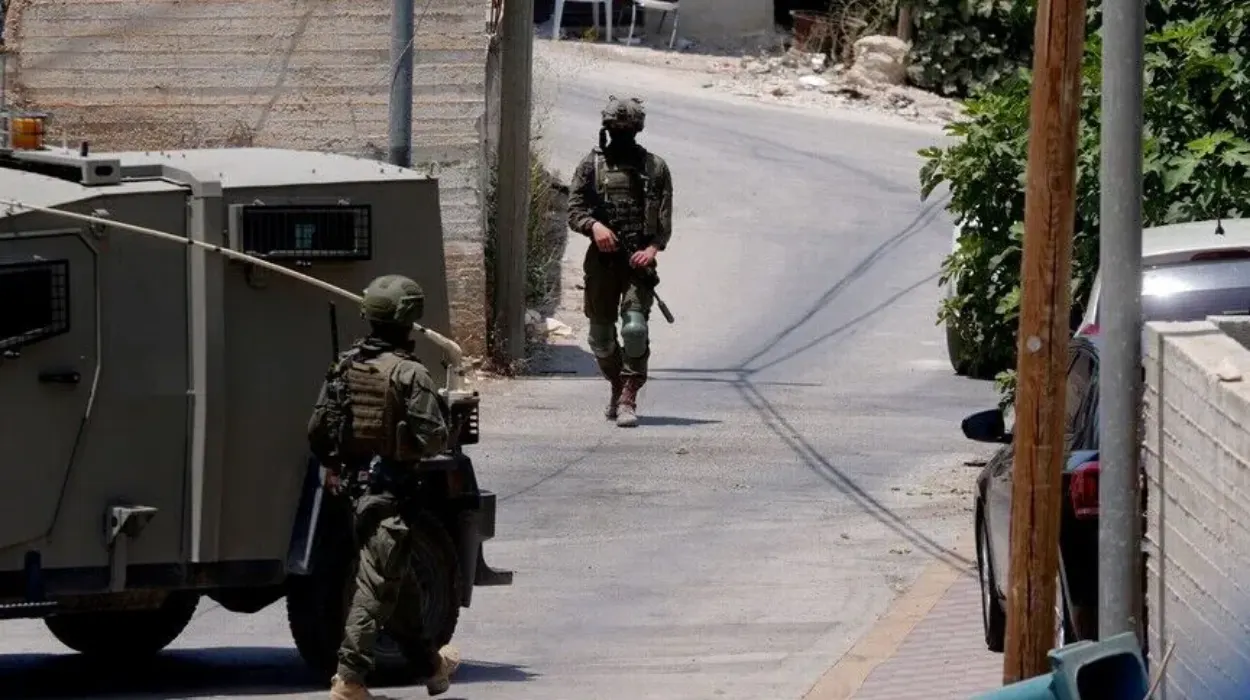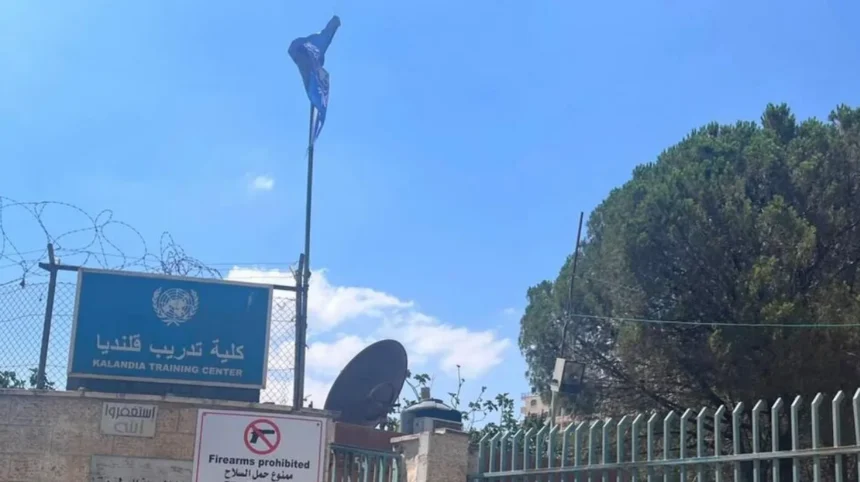
Not simply an operational disruption, the forceful takeover of the UNRWA Kalandia (Qalandia) Vocational Training Center in occupied East Jerusalem on 25 August 2026 is an aggressive tactic that breaches the inviolability of UN facilities, reduces the already limited territory for providing services to Palestinian refugees in Jerusalem, and effectively sabotages the chances of hundreds of youths who have no other means of becoming economically independent than by way of vocational training. The Israeli Security Forces invaded the compound at about 10:00 using at least four armored vehicles and fifty people, held some twenty UNRWA employees in detention, and then stayed inside when the Israeli authorities formally announced the confiscation of the center.
UNRWA described the move as an
“unauthorised and deeply concerning incursion”
and stressed that
“the entry of armed security forces into a United Nations facility, without the authorisation or consent of the United Nations, is unacceptable,”
framing the incident as a breach of the privileges and immunities that protect UN operations under international law.
A seven?decade lifeline for refugee youth
The Kalandia Training Centre (KTC), which was established in 1952, is the oldest vocational training centre in UNRWA and has been in operation for over seven decades as a free, high-quality training program leading Palestinians from the occupied West Bank out of poverty and into skilled employment. Every year, approximately 340 youths, many of whom are from poor families, are provided with training in 16 specializations, such as electromechanics, car mechatronics, carpentry, masonry, telecommunications, and interior design. The UNRWA claims that about 90% of KTC graduates have found employment after graduation. According to Roland Friedrich, who is the Director of Affairs in the West Bank of UNRWA, the closure will
“deprive 340 male youth of their right to education and future opportunities,”
while Christian Saunders, the acting Commissioner-General of UNRWA, said that the closure is part of an ongoing effort to harm UNRWA, and by extension, the refugees’ right of return, reparations, and compensation, because
“340 young people will lose needed training and the opportunity to live a life of dignity.”
The legal and diplomatic fault line
At the heart of the dispute is a clash between Israel’s domestic legislation and the international legal regime that shields UN premises and operations. UNRWA insists that KTC \
“is a United Nations facility protected by the privileges and immunities afforded to the Organisation under international law. Its inviolability must be fully respected,”
and called on the international community to
“act immediately and decisively to safeguard the inviolability”
of the centre and all UN facilities in occupied East Jerusalem. UN Secretary?General António Guterres “condemns in the strongest terms” the unlawful entry, continued presence, and unauthorized works, and demanded that Israel
“immediately cease interference with UNRWA installations”
and “vacate, return and restore” all affected premises to the United Nations without delay.
From legislation to enforcement: the road to Kalandia
Without considering the context of the preceding legislative and administrative campaign, the seizure makes no sense. In October 2024, the Knesset enacted new legislation that prohibited any activities of UNRWA and any contact with the organisation; this took effect in early 2025, leading to the closure of UNRWA headquarters in Sheikh Jarrah, six UNRWA schools in East Jerusalem and several health clinics, depriving hundreds of children of schooling and thousands of access to basic medical services.
The UNRWA draws a direct connection between the KTC raid and the aforementioned “anti-UNRWA” campaign, citing the fact that the centre is the last UNRWA facility working in the occupied East Jerusalem following the closure of other facilities in the region. The Egyptian authorities condemned the storming of the KTC centre and supported the position of UNRWA, arguing that the entrance to a UN facility with weapons without UN approval is not acceptable, while IBAHRI reiterates that the centre is a UN facility and thus protected under
“the privileges and immunities of the Organisation under international law.”
The human cost: lost skills, lost futures
Underlying all this is a harsh reality – the immediate disruption of a system of vocational education, accreditation and training that has turned deprivation into employability across generations. Data from UNRWA itself shows that the agency gives basic education to about 48,000 children in the West Bank and also vocational education to over 2,000 Palestine refugees, including hundreds of young Palestinians who through the efforts of KTC learn vocational skills and qualifications which will enable them to join the workforce and seek economic freedom at a time when the level of deprivation remains high. In terms of timing, it is even more harmful since KTC is already open for registration for the coming academic year starting on 1 September, with parents and students planning accordingly for an education facility which has been now suddenly shut down. Friedrich’s concern that such an event creates a dangerous precedent regarding safety of its staff and the conduct of operations by UN in various places is not exaggerated. If armed access to UN facilities can be taken lightly in the West Bank, the risk considerations for UN staff in different places change entirely.
Strategic implications: erasing refugee infrastructure, advancing annexation
Analysts see the KTC seizure as part of a broader Israeli strategy to erase institutional markers of Palestinian refugeehood in and around Jerusalem while advancing de facto annexation of the West Bank. Al Jazeera reported that the raid
“exposes Israel’s strategic push to erase refugee rights, seal West Bank annexation,”
with Qatar warning of systematic efforts to strip millions of Palestinians of essential services. The Jerusalem Municipality’s urban planning documents, cited in Israeli media, envision an “educational complex” and related infrastructure on or around the site, aligning with long?standing efforts to reshape the demographic and institutional landscape of East Jerusalem. From this vantage point, KTC is not just a school; it is a symbol of the international community’s ongoing responsibility toward Palestinian refugees, and its removal is a signal that Israel intends to replace UN?mandated structures with Israeli?controlled ones, regardless of international objections.
What the international response reveals
The scope and rhetoric of the condemnations from the UN Secretary-General, UNRWA officials, Egypt, and human rights organizations illustrate the common belief that the KTC incident serves as an unprecedented test of how far the UN’s premises protections may extend in the face of the highly politicized sovereign dispute. According to Guterres’ spokesman, he was “greatly alarmed” since the development “would deprive young people of the vocational education which they are receiving.” Such a connection of humanitarian damage with a violation of law shows the gravity of the situation at hand. The request from UNRWA to the international community to react “immediately and decisively” is not only an appeal for this particular compound but for the precedent regarding the fact that the premises of the UN must not be arbitrarily altered by the host state or the occupying power without the consent of the UN organization.