The world’s climate has crossed a threshold where extreme heat is no longer an occasional anomaly but a defining feature of the Anthropocene. On Tuesday, the United Nations weather agency, the World Meteorological Organization (WMO), issued a stark assessment:
“Extreme heat is becoming more frequent, more intense, it’s lasting longer, and covering much wider areas than in the cooler climates of the past,”
said John Kennedy, WMO’s head of climate information, at a press briefing in Geneva. His remarks were anchored in a simple but powerful comparison: the famously hot European summer of 1976, long treated as a benchmark for severe heat, now looks like a relic of a cooler era.
Kennedy painted a visual contrast between then and now. In 1976, he noted, the global temperature map showed
“a few isolated areas above average temperatures in a much cooler world,”
whereas today “the picture is reversed,” with most of the globe running above average and only scattered cooler patches. That inversion captures the essence of the current crisis: what was once exceptional is becoming normal, and what was once normal is increasingly rare.
The 1976 benchmark and today’s extremes
The summer of 1976 is still remembered across Western Europe as a time when the continent was going through drought conditions, crops were stressed, and record high temperatures. However, in climate science, 1976 has become a benchmark against which changes are measured. Europe as a region has warmed up by about 2°C since 1976; it became the fastest-warming continent where the intensity of heat extremes increases.
The situation with rising temperatures in Europe has a global context. According to the UN weather agency, the 11 years of recent time have become the warmest ever recorded in the modern era, and oceans continue accumulating heat. In June 2026, Western Europe experienced its hottest month, while June globally became the second-warmest ever recorded. According to the Copernicus Climate Change Service, Western Europe’s average temperature in June 2026 was 20.74°C, 3.05°C warmer than the average June temperature from 1991 to 2020. This figure has broken the previous record of June 2025. This is not an anomaly, but it is another sign of climate change caused by greenhouse gases emitted into the atmosphere by people.
How heat extremes are changing
The WMO’s message is consistent with the broader scientific consensus captured in the Intergovernmental Panel on Climate Change (IPCC) assessments. The IPCC’s Sixth Assessment Report states it is “virtually certain” that the frequency and intensity of hot extremes, including heatwaves, have increased globally since 1950, while cold extremes have decreased. This is not a subtle shift.
According to research syntheses used by UN-related organizations, the number of “3-sigma” extreme heat episodes per month – heat waves far beyond what was normal before – jumped 90 times over in 2011–2020 from the 1951–1980 levels. Currently, the number of “extreme heat events” takes place simultaneously on about 9% of all terrestrial areas compared with a minute share in mid-20th century. The bottom line is that heat waves become more intense, longer, and widespread. The global average heat wave intensity, its duration, and heat wave day numbers have increased since 1950 until the early 2010s. Every extra 0.5 °C increase of global warming leads to visible increases in heatwave intensity, frequency and duration, according to fact sheets, aligned with WMO, based on the IPCC conclusions.
Regional lenses: Europe and beyond
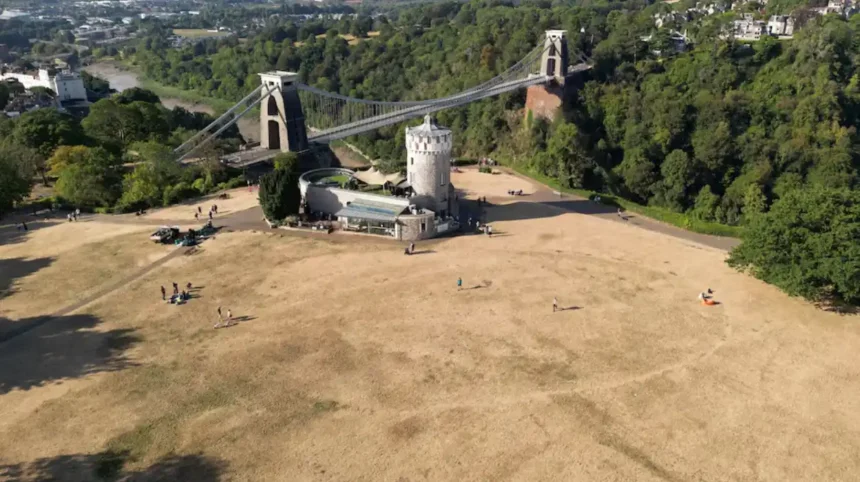
Europe’s experience offers a vivid illustration of the broader trend. Between 2015 and 2024, the number of days exceeding 30°C in the UK more than trebled compared with the 1961 to 1990 average, according to the Met Office. While 1976 was once an example of a rare event, UK temperatures have passed 35°C in six of the past 10 years. Climate scientists warn that events like the 1976 heatwave will become more common over the coming decades, with peak temperatures in today’s climate for a comparable event estimated at 38°C or 39°C in parts of southern England.
Ed Hawkins, Professor of Climate Science at the University of Reading, has estimated that even peak temperatures in 2026 would be 3–4°C higher in some locations compared with those in 1976.
“What felt like a freak event to grandparents in 1976 will become a new normal for their grandchildren,”
Hawkins has warned, pointing to a future where 40°C days, once considered a 1-in-200-year event in the UK, become far more likely. In a 1976-style drought occurring today, climate model simulations suggest water deficits would be about 10% worse than they were in 1976, compounding risks to agriculture, ecosystems and water supplies.
Beyond Europe, the pattern is similar. In the northern mid- to high latitudes, the average number of days between May and September with at least one large heatwave doubled from the 1980s to the 2010s, rising from 73 to 152 days. This lengthening of the heat season has profound implications for public health, energy demand, labor productivity and infrastructure resilience.
Record warmth, El Niño and the near-term outlook
This warning by the WMO has come at a time when there have been several consecutive record-breaking years and a developing El Niño, which is a natural weather pattern and usually causes global warming. According to a May 2026 report commissioned by the WMO, the temperatures from 2026 to 2030 will be between 1.3°C to 1.9°C above the average temperatures recorded between 1850 and 1900. The chances of having at least one year within the period from 2026 to 2030 being warmer than 2024 are 86%, and a 75% possibility that the temperatures during this period will be 1.5°C above the pre-industrial temperature averages. In mid-2026, WMO issued a warning regarding an intensification of the El Niño leading to increased global warming, and increase of risks of heat waves, drought and flooding, as well as above average temperatures in most land areas, including Africa, Southern Europe, the Indian sub-continent, East Asia and South America.
Health, humanitarian and policy stakes
The human cost of intensifying heat is already visible. The World Health Organization (WHO) states that heat stress is a leading cause of weather-related deaths, and that heatwaves are increasing in frequency, duration, intensity and magnitude due to climate change. Extended periods of high day and night temperatures create cumulative stress on the human body, raising risks of illness and death, especially among older people and those with heart, lung or kidney conditions.
An estimate by the Grantham Institute of Imperial College London found that there were about 2,700 additional deaths in England and Wales due to the 2026 heatwaves in May and June, of which 42% were due to the increased warmth resulting from human-induced warming. The Grantham Institute estimate also noted that the maximum temperatures during the daytime in England and Wales are now 3-4°C warmer than what they would have been in absence of the human-induced warming, thus increasing the health hazards of these heat waves. While the dry heat is harmful, the humid heat is even more hazardous as it prevents the body from using the mechanism of cooling through sweating.
Compared to preindustrial conditions, the maximum wet-bulb globe temperature during the June 2026 heat wave was about 3°C warmer. There are physiological limits beyond which outdoor activities such as labor, sport and even walking are impossible. Governments are now beginning to take these risks seriously. In August 2026, India declared the heatwaves and lightning to be a natural calamity, making available national and state disaster relief funds for them.
At the global level, UN Secretary?General António Guterres, reacting to the El Niño–driven heat risks in 2026, called for a halt to new fossil fuel projects, describing the situation as a “planet already on fire.” His stance ties the meteorological trend directly to energy policy: as long as fossil fuel emissions continue to rise, the baseline for extreme heat will keep shifting upward.
What the science says—and what it implies
There is strong science behind the WMO’s findings. The IPCC reports that man-made greenhouse gas emissions have caused the increased occurrence and/or intensity of temperature extremes, such as heat waves, since the 1950s, with future warming set to continue the trend. It is not just one study that has come up with this conclusion, but a number of different lines of evidence from observations, attribution studies, and modeling. The WMO’s key point—that climate change is causing extreme heat to become more common, more intense, and more prolonged—is a summary of this conclusion, and has significant health, agricultural, economic and other ramifications.
The practical implication is that adaptation can no longer be treated as a secondary concern. The UK, for example,
“has been built for a climate that doesn’t exist anymore and is not adapted to the needs of current and future climate change impacts,”
according to the Grantham Institute’s press release. Similar statements could be made for many countries whose housing stock, power grids, transport networks and urban designs were calibrated to a cooler past. As heatwaves move north and intensify in regions unaccustomed to them, the mismatch between infrastructure and climate will only grow.
A turning point for policy and planning
This latest report from WMO ought to be viewed as a diagnosis as well as a warning. First, in terms of the diagnosis, the report proves beyond any reasonable doubt that the world has entered a completely new era where summer temperatures like those of 1976 are not the limit of the extreme heat but are just its middle point. Second, in terms of the warning, it clearly shows that in case there is no swift reduction in greenhouse gas emissions, the extremes of heat will become even more common, intense and prolonged which will inevitably lead to severe consequences for food security, availability of water, labor productivity and public health. At the governmental level, therefore, it is critical to pursue the strategy which would include both mitigation (to prevent further increase in global temperatures) and adaptation (to adapt to those that are already inevitable).