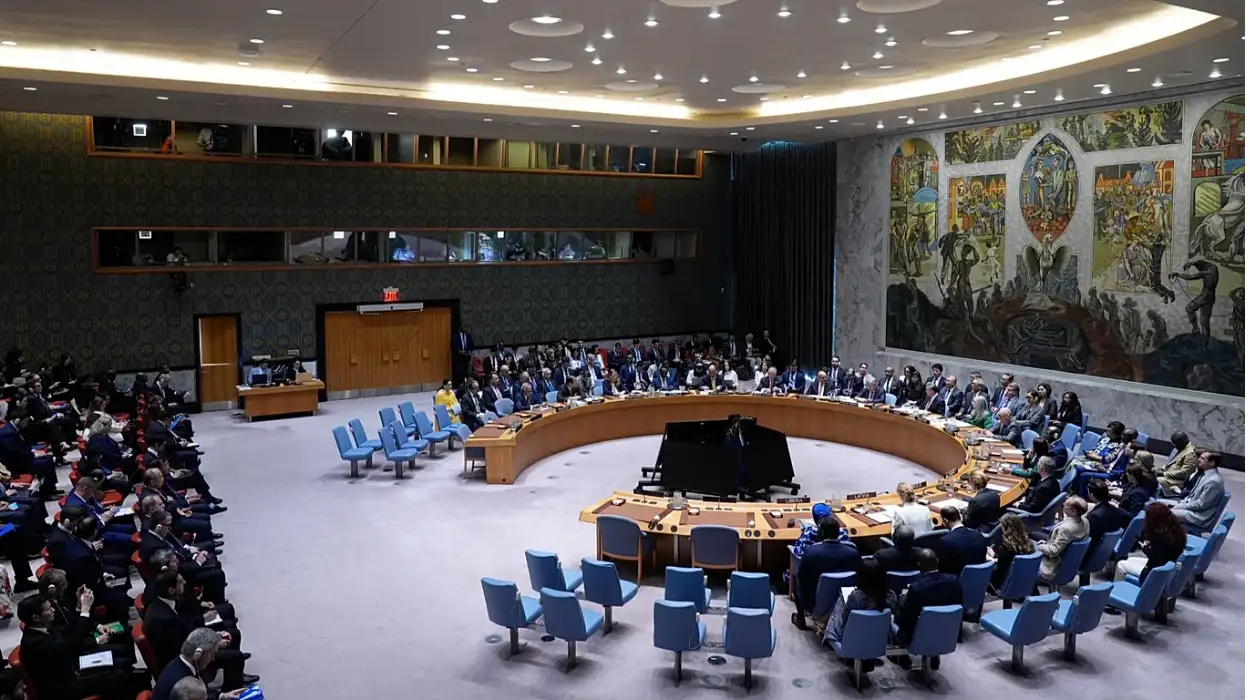
The United States plans to pay $850 million toward the roughly $5 billion it owes the United Nations, offering a measure of financial relief to an organisation facing severe cash-flow pressures while leaving most of Washington’s arrears unresolved.
The Trump government has informed the Congress about its plans of transferring more than $800 million to the United Nations. This payment will consist of $725 million for the UN regular budget and $125 million for peacekeeping operations in Haiti and the Democratic Republic of Congo. According to The Associated Press report, the plan is still subject to the congressional procedure and does not settle the whole US debt. Should the payment be made in its entirety, the US would still owe almost $4.15 billion, taking into account the fact that no further assessments would be accrued. In other words, the planned payment would make up about 17% of the $5 billion in debt owed.
The plan clearly demonstrates the difficult task that faces the Trump government. Washington wants to see certain structural reforms in the United Nations but criticizes the organization for its bureaucratic expansion, political bias, and wasteful expenditures. Nevertheless, the administration understands that refusing to pay the full sum can undermine US influence and cause financial instability in the organization.
What the payment would cover
The proposed allocation reflects two distinct categories of US obligations. The larger amount, $725 million, would go toward the UN’s regular budget, which finances the organisation’s central operations, including salaries, diplomatic meetings, administrative services and the work of its principal bodies.
The remaining $125 million would be directed toward peacekeeping missions in Haiti and the Democratic Republic of Congo. Both countries face major security, political and humanitarian challenges, making the allocation significant beyond its accounting value.
The payment would also follow a $160 million transfer made in February 2026. That earlier payment was presented as an initial instalment toward Washington’s wider UN debt. If both transfers are completed, the Trump administration would have paid approximately $1.01 billion toward UN obligations during 2026.
However, the administration reportedly made no payment to the United Nations in 2025. That interruption contributed to the growth of arrears and increased pressure on the organisation’s already strained finances.
The proposed payment should therefore be viewed as a partial down payment rather than a change in the basic direction of US foreign policy. Washington continues to distinguish between payments it considers legally or contractually required and voluntary contributions that can be reduced or cancelled in response to policy disagreements.
The scale of the US debt
The reported $5 billion figure includes unpaid assessed contributions associated with the regular UN budget and peacekeeping operations. The exact total can vary depending on the date of calculation and whether the accounting includes other UN-related bodies, tribunals or disputed obligations.
A US State Department report using figures as of January 1, 2025, listed US arrears of approximately:
- $668.2 million for the UN regular budget.
- $1.5097 billion for UN peacekeeping budgets.
- $20.6 million for war-crimes tribunals.
Furthermore, the report pointed out that there is a discrepancy between the US and UN reports, especially on matters relating to obligations regarding peacekeeping missions. While there are some figures that have been classified as being subject to restriction under US domestic laws or policies, the UN continues to consider them as unpaid assessments. Paying the entire amount of $850 million would only help in settling some of the disputes but not others. This is important since the problem does not only concern the fact that the US has the financial capability to settle those obligations. It also involves whether the US Congress approves the payment and whether the White House thinks the UN has performed sufficiently to warrant such payments.
Why the arrears accumulated
Congressional restrictions and budget delays
The collection of US arrears is a consequence of several years of budgetary quarrels, restrictions and withholding of funds in Congress. The State Department has reported that some of the regular-budget debts were related to non-payment of assessments in periods of Congress providing budget through Continuing Resolutions. The estimates provided by the State Department in January 2025 indicated about $445 million worth of unpaid 2024 regular-budget assessments due to limitations in funding. It appears that the collection of at least some of these arrears was a result of the process of US appropriations rather than deliberate refusal of the US administration to accept the decisions of the United Nations. The system of US government implies the involvement of Congress in payments of international debts. It means that an assessment made by the UN does not necessarily mean its payment as soon as it is accepted by the United States.
The peacekeeping assessment cap
A second major factor is the statutory limit on US funding for peacekeeping. US law has restricted Washington’s contribution to 25% of UN peacekeeping costs, while the country’s assessed rate can exceed that level.
The State Department attributed approximately:
- $919.8 million in peacekeeping arrears to the 25% cap applied from fiscal years 2017 to 2020.
- $261.9 million to the cap applied from fiscal years 2021 to 2024.
- $328 million to peacekeeping arrears dating from before 2001.
These figures show that the problem predates the current administration. The Trump administration inherited a substantial debt, although its decisions to withhold additional funds and reduce voluntary support have sharpened the confrontation.
Policy-based withholding
Another reason why the US is withholding funds from the UN is due to political differences with the UN bodies and programs. The Department of State pointed out political conflicts with respect to human rights activities, large-scale construction works, and some UN bodies with missions relating to Palestinians. The US has made other objections against the UN policy towards Israel and Palestinians, which includes aid programs perceived as politically motivated or lacking accountability by the US government. Republicans have asked the administration to put pressure on the UN agency for Palestinian refugees, making it more difficult for the administration to convince Congress.
Trump administration demands reform
The proposed payment comes amid an aggressive US campaign to reshape the United Nations. President Donald Trump and senior officials have accused the organisation of waste, excessive bureaucracy and ideological overreach.
The US Ambassador to the UN Mike Waltz has backed the UN80 programme for reform advocated by Secretary General António Guterres. However, he believes that the programme does not do enough. Waltz has described the approach as tough love because he feels that financial contribution of Washington should be made conditional to reforming institutions. Moreover, according to Waltz, the UN should focus only on peace and security and not attempt to manage growing list of political, developmental, climate and humanitarian responsibilities. He has criticized duplicity of UN institutions and has asked for their consolidation in terms of logistics and administrative tasks.
The policy of the administration has involved quitting from, or moving to quit from, various UN-related institutions. Also, there has been a cut back in voluntary contribution to various UN agencies and programmes. The US has quit WHO and UNESCO which proves how dissatisfied the US is with the multilateral framework. Therefore, the payment program may not necessarily mean that Washington has moved away from its reform campaign. Rather, it might have been done so as to maintain some sort of leverage. By making some payments, the US can make its point that it is meeting at least its core obligations while asking for changes in the functioning of the organization.
UN warns of financial collapse
The United Nations is under growing financial pressure because several member states have delayed or failed to make payments. The United States is the organisation’s largest contributor and has historically been responsible for approximately 22% of the regular budget, as well as a substantial share of peacekeeping costs, subject to the US statutory cap.
The UN General Assembly approved a 2026 regular budget of approximately $3.45 billion, around 7% lower than the budget adopted for 2025 and about $200 million higher than Guterres’ initial proposal.
Guterres has warned that the organisation could exhaust its cash reserves by July 2026 if member states do not pay their assessments. He has described the financial situation as an imminent threat to the UN’s ability to operate and has criticised rules requiring the organisation to return unspent contributions even when member states have failed to meet their assessed obligations.
The secretary-general has warned that the crisis could force the UN to delay payments, freeze recruitment and reduce essential work. The impact would extend beyond New York-based administration. Countries that provide troops and police to peacekeeping missions could face delayed reimbursements, potentially affecting the ability of missions to maintain personnel and equipment.
The financial crisis also has political consequences. When the UN cannot pay for peacekeeping, humanitarian coordination or diplomatic operations, its authority is weakened. Member states may become less willing to participate in missions, while rival powers can exploit the perception that the organisation is unable to fulfil its responsibilities.
Congressional battle ahead
Even though the administration has informed Congress, approval of the plan is not a certainty. Several Republican members of Congress feel that the United States must have more guarantees that the reforms have taken place for it to release several hundred million dollars. As quoted in an AP article, a Republican congressional aide said that the notification was not strong enough in terms of threatening the US in withholding its money from the UN agency for the Palestinians. He said this anonymously since the congressmen have not decided on how to act. This criticism shows the political difficulty surrounding the plan.
There are members of Congress who feel that the assessment must be paid legally to retain US influence and others feel that the US must maintain the financial leverage until there are changes in the policies and organization of the UN. The payment will also serve as a bargaining chip in the discussion about the budget of the State Department. Congress may impose some other requirements for the US to pay its dues. This will complicate matters further for the UN’s financial situation. This issue is not only between Republicans. The supporters of the UN in the Congress feel that the US should not allow the arrears to weaken the institution that it has helped to form and use for strategic advantage. They also argue that failure to pay could provide China with an opportunity to increase its influence within the UN bodies and institutions.
A recurring American problem
Overdue payments by the United States to the United Nations are certainly not unprecedented. According to the State Department, peacekeeping arrears began accruing as early as 1963, and arrears for the regular budget go back to 1980. The situation became critical in the 1990s, as the US was at the risk of losing its voting rights in the UN General Assembly due to Article 19 of the UN Charter. Soon after, the Congress approved the Helms-Biden Act, which provided close to $1 billion to repay US arrears to the UN and other international organizations in return for reductions in US assessment rates. The cycle has been repeating itself: the UN adopts a budget and levies an assessment on the US; Congress constrains or postpones the payment; Washington pays a portion of the sum; and the rest of the amount outstanding becomes the topic of another political showdown. The fact implies that the present $850 million plan is both urgent and structural.