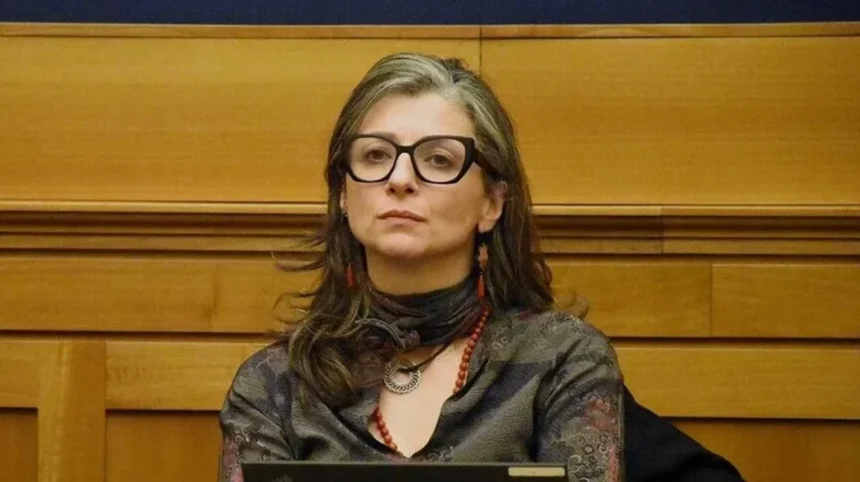
In a dramatic statement of principle, the United Nations’ most senior human rights expert in charge of the occupied Palestinian territories has issued a damning ultimatum to the world body’s most powerful organ, declaring that diplomatic inaction is no longer an option amidst rising violence in Gaza and the West Bank. Special Rapporteur Francesca Albanese has publicly asked whether the Security Council is able to ever escape its paralysis in time to stop escalating violations. Her solution is that an “international protection presence” must now be put in place in the occupied territories to protect Palestinians from further attacks. Her plea combines cold statistics of the numbers of deaths and displacements together with a hard legal case based on the Advisory Opinion of the International Court of Justice in 2024, and transforms the question from one of emergency aid to the enforcement of international law.
The central issue in Albanese’s appeal is simply stated but deeply controversial: the Council’s inability to take action – repeatedly because of vetoes by the US – has made it part of the problem by making it a roadblock to the peace it should guarantee, while occupation continues to deepen and expand. She presents the problem not as an accumulation of discrete events, but as a structural problem in which other states are obliged to act to terminate Israel’s unlawful occupation of Palestinian territory in accordance with the International Court of Justice’s ruling that the presence in the occupied Palestinian territory constitutes a breach of international law.
Record violence in the West Bank underpins the alarm
Albanese’s urgency, therefore, lies in UN-verified statistics indicating that 2026 has now emerged as the most deadly year for Palestinians living in the West Bank area since monitoring became possible. 76 Palestinians have been killed in the West Bank area in 2026 by Israeli military or settlers as of 10–11 August, 18 of which are children, according to UN briefings to the Security Council. Looking at the broader timeframe from 7 October 2023 to 24 July 2026, 1,122 Palestinians have been killed in the West Bank area, of which 246 are children, according to figures described by UN officials as the outcome of “decades of unresolved conflict” and increasing structure of occupation. Settler violence lies at the heart of this development. UN has reported over 1,430 settler-related incidents in 2026 resulting in deaths, injuries, property damage, or both, affecting around 260 Palestinian communities.
By late July 2026, OCHA had noted over 1,330 such incidents with an average of 6.6 attacks daily leading to loss of life or destruction. The killings too have increased with 18 Palestinians being killed by settler attacks in 2026 by 20 July, higher than the 17 killed in 2025. It is contended that these are not acts of vigilantism but policies enabling this trend with NGO such as Yesh Din claiming that 94% of investigations into assault by Israelis against Palestinians in the West Bank (excluding East Jerusalem) since 2005 being closed without indictment.
The human impact extends beyond deaths. In July 2026 alone, more than 275 Palestinians, half of them children, were newly displaced by home demolitions, as families are pushed out of areas targeted for settlement expansion or military control. Ramiz Alakbarov, the UN Deputy Special Coordinator for the Middle East Peace Process, told the Security Council on 11 August that the West Bank situation must be treated as an emergency requiring urgent action, warning that the Palestinian Authority is being driven “to the brink of collapse” while prospects for a viable Palestinian state erode. In this context, Albanese’s demand for an international protection force is presented not as an abstract idea but as a direct response to communities facing daily raids, arson, beatings, and forced displacement with little recourse to justice.
Gaza’s fragile ceasefire and the shadow of continued war
While the West Bank burns, Gaza remains locked in a precarious limbo. A limited ceasefire has been in place since October 2025, after the Security Council endorsed the US?backed “Comprehensive Plan to End the Gaza Conflict” under Resolution 2803 (2025). Yet UN agencies report that the truce has not translated into safety or recovery. Israeli strikes, ground incursions, and restrictions on aid continue, even as the so?called “yellow line” of Israeli military control advances in parts of the enclave. The result is a grim paradox: a formal ceasefire coexisting with steady casualties and a humanitarian landscape that remains catastrophic.
From 10 October 2025 to late July 2026, the UNRWA estimates that 1,180 Palestinians died and 3,810 have been wounded in Gaza, whereas the health ministry in Gaza estimates that there have been 1,209 deaths and 3,943 injuries over the same approximate time period. The reports from the Gaza Ministry of Health reveal that 73,420 Palestinians have been killed in Gaza since the conflict erupted on October 7, 2023. However, public health scholars as well as independent research indicates that the actual number of casualties might be much higher because thousands of unidentified bodies are lying underneath the debris. The significance of these numbers lies in the fact that rather than an end to the war, the war’s violence has been transformed.
As Albanese rightly claims, Gaza is a case where genocide is taking place, and she reinforces the point through the statistics about child amputees. For her, Gaza currently has “the most child amputees in world history.” Therefore, she believes that the only way to stop the atrocities and save Gaza is to take action against the political and legal causes of the conflict. The representatives of the UN are of the view that the reconstruction of Gaza can’t be ensured unless there is a political process, and the political process won’t work as long as Gaza is being destroyed and violence continues in the West Bank. Although Alakbarov calls for the complete enforcement of Resolution 2803 and the Comprehensive Plan, he also makes the point clear that the technical solutions like aid corridor, reconstruction funds, and coordination mechanism will fail unless there is a prospect of ending the occupation and reaching a two-state solution.
The legal argument: from humanitarian crisis to unlawful occupation
What distinguishes Albanese’s latest intervention is how explicitly she ties the humanitarian emergency to the legal status of the occupation. She leans heavily on the ICJ’s July 2024 advisory opinion, which found Israel’s presence in the occupied Palestinian territory unlawful and said all states must not recognize or assist the situation and must act to end it. In her reading, this transforms the debate: the issue is no longer only about specific settlement projects like the E1 corridor or particular military operations, but about the occupation itself as a continuing violation of international law.
According to Albanese, third states have a duty according to the ICJ to act so as to put an end to the unlawful occupation of Israel. There is a need for concrete measures, including sanctions and trade embargoes among others, which will enable them to discharge their duty in this regard. According to Albanese, the failure of the Security Council to pass resolutions criticizing the occupation of Israel because of the vetoes imposed by the United States, proves that the Council cannot meet its Charter obligations in this regard.
However, there are two other options which could help to realize this objective; these include the use of good offices and diplomacy on the part of the Secretary-General, and the Unitting for Peace resolution of the General Assembly. Such an analysis is not only of academic significance, but is also aimed at ensuring that states and regions take action beyond declarations of their concern. This is the case of the European Union, which has registered great concern about the humanitarian crisis in Gaza and the West Bank. There has been condemnation of illegal Israeli settlements and the acts of violence committed by the settlers and has called for free passage of humanitarians and the implementation of the Security Council Resolutions.
The Security Council’s paralysis and the search for alternatives
The term “paralysis” is not rhetorical flourish in this context; it describes a repeated pattern in which draft resolutions on Gaza and the West Bank are blocked or diluted by veto?wielding members, especially the United States. Albanese explicitly questions whether Guterres’ diplomacy and the General Assembly can overcome this deadlock, noting that the Council has been unable to act decisively on Gaza and the West Bank due to US vetoes. Her proposal for an international protection presence is, in part, a test of whether the UN system can innovate around the Council’s constraints, drawing on past models of civilian protection and monitoring missions in other conflicts.
The political ramifications are significant. With the Council paralyzed by the absence of a decision and increasing violence occurring at unprecedented rates, the pressure to have the General Assembly play a bigger role and take actions through the implementation of sanctions, embargoes on arms sales, or trade embargoes in connection with settlement products and weapons would become overwhelming.
In turn, Israel and its supporters see West Bank operations as a means of countering terrorism against the militants, where security issues provide justification for using force and restricting movement. The difference in narratives—the lawful self-defense versus an illegal occupation and collective punishment—is the main reason for the deadlock in the work of the Security Council. The initiative put forward by Albanese attempts to tip the scales of this discussion in a different direction, focusing on the idea that the occupation itself serves as the source of violence and destabilization. She claims that violence has shifted from Gaza to the West Bank, and without having a political and legal strategy to address the situation with the occupation, all humanitarian measures will be addressing the symptoms of the problem only.