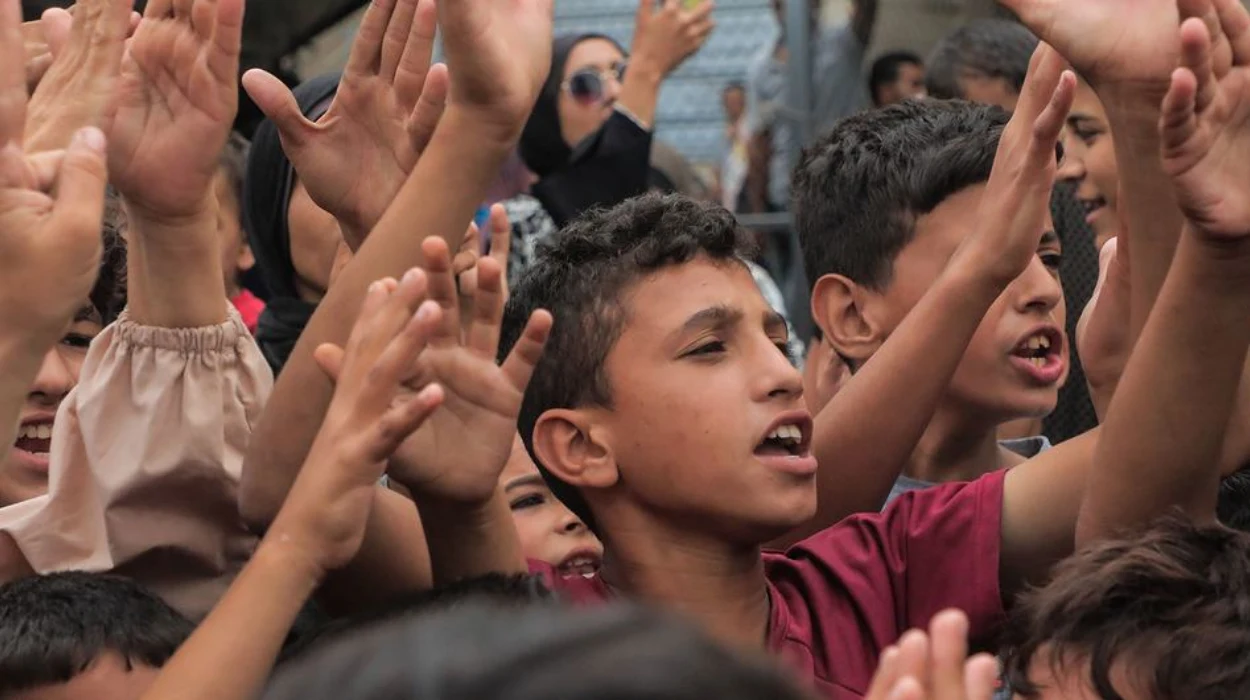
The Sudan war education crisis has reached a critical point, with at least 8 million school-age children now out of school and millions more facing severe disruption to their learning. The United Nations has warned that the continuing conflict is not only destroying classrooms but also threatening the future of an entire generation.
Speaking at a UN Security Council Arria-formula meeting on safeguarding education in Sudan on 7 August 2026, UN Deputy Secretary-General Amina Mohammed said the war had continued for 1,210 days and had placed the country’s children at the centre of one of the world’s worst humanitarian emergencies.
“Among everything this war is taking, one of the most significant is the future of Sudan—depriving the education of its children,”
Amina Mohammed said.
Her warning reflects the scale of a crisis that extends well beyond the closure of schools. Children have been displaced, teachers have gone unpaid, classrooms have been damaged or occupied by armed groups, and families have been forced to choose between education and physical safety.
Education system under attack
The education sector in Sudan has taken a massive hit ever since fighting broke out between the Sudanese Armed Forces and the Rapid Support Forces paramilitary group in April 2023. As per the United Nations, there are 8 million school-going children who are unable to receive their education and this problem is particularly more serious for displaced children as well as those who have escaped to other countries. The condition is worst in Darfur as almost three-quarters of the schools in the area are said to be destroyed or dysfunctional. Five out of six children have left school, according to the United Nations. This has not only resulted in the damage of formal educational institutions but the temporary learning centers for displaced people as well.
As of 2024, the UN has confirmed over 67 instances where schools have been attacked in Sudan. There have also been more than 154 instances where schools have been used as military bases. The UN has noted that these numbers may only be underestimates due to the fact that certain conflict-affected regions remain inaccessible to the monitors of the international community.
The use of schools for military purposes puts children and their teachers at direct risk. It also denies displaced communities the chance of finding shelters, healthcare centers, feeding centers and security within such structures. The European Union has given the education crisis an even broader picture. It stated that eight million children do not have access to any form of education while roughly seventeen million have had their learning process severely disrupted. It was also said by the EU that nearly half of all the schools in Sudan have either been destroyed, damaged or are being used for purposes other than education.
Darfur bears the heaviest burden
While fighting has impacted education across the Sudan, the situation in Darfur is especially devastating. This region has a history of conflict, displacement and ethnic violence, and the ongoing war has worsened the vulnerabilities that already existed. In Darfur, people are continually fleeing the area as their towns and villages are attacked. Children often have to flee multiple times and end up losing school certificates and identity cards. When people move to other countries like Chad, Egypt or South Sudan, additional problems occur because the local communities there also have difficulties with limited resources. Parents do not want to take their children to schools anymore because they fear attacks, abductions, sexual abuse or being recruited into armed groups. As Mohammed stated, families now feel safer at home than at school.
“Parents will tell you they would rather keep their children at home than send them to a classroom, because home for them is the only place left where they can keep them safe,”
Mohammed said.
The statement illustrates how the conflict has changed the meaning of education for Sudanese families. Schools, which should serve as protected civilian spaces, are now associated with danger in many areas. Even when a school remains standing, parents may avoid sending children if roads are controlled by armed groups or if the facility has previously been attacked.
Teachers and children under pressure
The situation has also greatly affected the teaching sector in Sudan. According to reports, more than half of Sudan’s teachers are unpaid, despite still teaching in camps despite displacement, insecurity, and lack of basic resources. The departure of the teachers will make the recovery process very difficult even if there is no conflict any longer. Teachers have run away from their homes, have died, sustained injuries, and are working without pay.
There could be shortage of teachers, books, classrooms, and exams centers in schools reopening after the conflict period. Not only do the children lose formal classes, but schools also offer food, vaccination programs, psychological services, protection, and reporting for any form of abuse of children at schools. School closures result into the denial of these opportunities. The disruption in learning for such a long time increases the likelihood of permanent school dropout. Children who stay out of school for many years may not easily resume schooling, especially if they are needed to work, look after other siblings, and take care of displaced family members.
The disruption also creates a serious gender divide. Families facing extreme poverty may prioritise boys’ education while keeping girls at home to perform household work or care for relatives. In areas where sexual violence is widespread, parents may also fear sending adolescent girls to school.
A wider humanitarian catastrophe
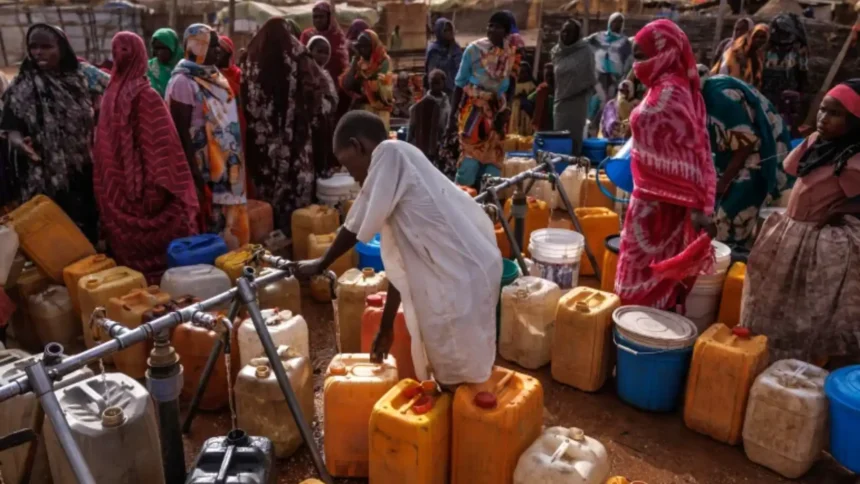
This crisis in education is part and parcel of the humanitarian disaster happening in Sudan. Sudan was referred to by the UN as having the world’s biggest crisis of displacement, and one of the biggest crises of hunger in the world. It is projected that 34 million people will need help in 2026. About 13.6 million people will be displaced in previous UN estimates. This comprised about 9.3 million internally displaced people and about 4.3 million refugees in neighboring countries. Subsequent estimates put the figure of displaced people at around 14 million people. Over 21 million people have acute food insecurity, and health services have been seriously compromised. UN organizations have also highlighted the fact that acute malnutrition in children has hit catastrophic levels in North Darfur and Greater Kordofan.
Mohammed said famine had taken hold in parts of the country and warned that 4 million women and children could face acute malnutrition during 2026. The combination of hunger, displacement, disease and the collapse of healthcare has made children especially vulnerable.
For displaced families, education often becomes an immediate casualty of survival. Parents who lack food, shelter or medical care may be unable to pay transport costs, buy uniforms or replace lost documents. Children may also be forced to work or search for food instead of attending classes.
International demands on the warring parties
The European Union has urged the Sudanese Armed Forces and the Rapid Support Forces to cease attacks on schools and school personnel. The EU has also demanded the cessation of military use of schools and urged the two conflicting sides to provide humanitarian access. The European Union has stated that the conflicting parties have to comply with the international humanitarian and human rights laws and conduct investigations into attacks on schools, teachers, and students.
Protection of education was linked to demands for ceasefire, protection of civilians, accountability, and return to civilian led and inclusive governance. Denmark has also addressed the issue during its address to the Security Council, pointing out that almost half of all schools in Sudan had either been destroyed, damaged, or used for sheltering purposes. The destruction of schools is linked by Copenhagen to the choice of armed actors to engage in hostilities from civilian-populated areas.
Denmark called for an immediate end to hostilities, full humanitarian access and accountability for violations. It also urged the international community to consider expanding the mandate of the International Criminal Court to cover the whole of Sudan. Japan urged UN member states to uphold Security Council Resolution 2601, which focuses on protecting education from attack during armed conflicts. Tokyo said the international community must maintain pressure on the parties and support practical measures to preserve education services.
The Security Council has repeatedly called on both sides to halt fighting, protect civilians and comply with international humanitarian law. It has condemned attacks on civilian infrastructure and warned that deliberate attacks on protected civilian objects may constitute war crimes.
No military solution to the crisis
The conflict began after tensions between Army chief Abdel Fattah al-Burhan and RSF commander Mohamed Hamdan Dagalo, known as Hemedti, escalated over the country’s political transition and the proposed integration of the RSF into the regular armed forces.
The war has since divided Sudan territorially.
While SAF has gained control over much of northern, eastern, and central Sudan, including Khartoum and Port Sudan, the RSF continues to exercise its influence in Darfur and southern Kordofan. Moreover, other armed forces have also joined the conflict, thus making the delivery of humanitarian assistance even more difficult. As for the UN stance on the issue, there should be no military solution to the ongoing civil war. Indeed, the UN Security Council demands a lasting ceasefire and the launching of an inclusive political process led by the Sudanese. In addition, the creation of any parallel institutions in the country is strongly discouraged as is the involvement of any foreign forces in the prolonged conflict in Sudan. The education crisis confirms the political stance. With every passing month, there are fewer and fewer children who take their exams and have good teachers.
Risk of a lost generation
The United Nations has warned that Sudan risks losing another generation to war. The country had already endured years of conflict and underdevelopment before the latest crisis, and the destruction of its education system threatens to make recovery more difficult.
“Sudan has already lost a generation to its earlier wars, and it is losing another one now,”
Mohammed said.
The issue goes beyond the sheer fact of uneducated youth. This warning addresses the consequences of the disruption of the educational system for future prospects in terms of employment, stability, and rebuilding. Uneducated children will be more susceptible to recruitment, abuse, and radicalization. Education is one of the few organizations which could unite the displaced and hosting communities. Education will give the children order, security, and sense of unity within a divided country torn apart by violence. For this reason, the international community’s reaction should not be restricted to provision of temporary classes or schools. What Sudan needs now is a ceasefire, protection of the civilian infrastructure, remuneration of teachers, reconstruction of schools, help to the displaced children, and an accountable process.
The UN and its partners have helped more than one million children return to some form of learning during 2026. That effort demonstrates that education can continue even amid conflict, but it remains far below the scale required. The central issue is whether the international community can prevent the emergency from becoming permanent. As Mohammed’s warning makes clear, the longer the war continues, the harder it will be for Sudan’s children to return to school—and the greater the risk that the country will emerge from the conflict without the educated generation needed to rebuild it.