The UN Security Council’s second informal “straw poll” on 21 August 2026 is not merely a procedural checkpoint; it is a high-stakes litmus test that will clarify which candidates can survive the veto politics of the P5 and which will quietly exit the race to succeed António Guterres. With eight contenders on the ballot and the first round already exposing fractures, this vote sharpens the contest between reform-minded technocrats, seasoned regional heavyweights, and aspirants banking on the UN’s long-overdue first woman secretary-general.
The Mechanics of Influence: How Straw Polls Shape the Race
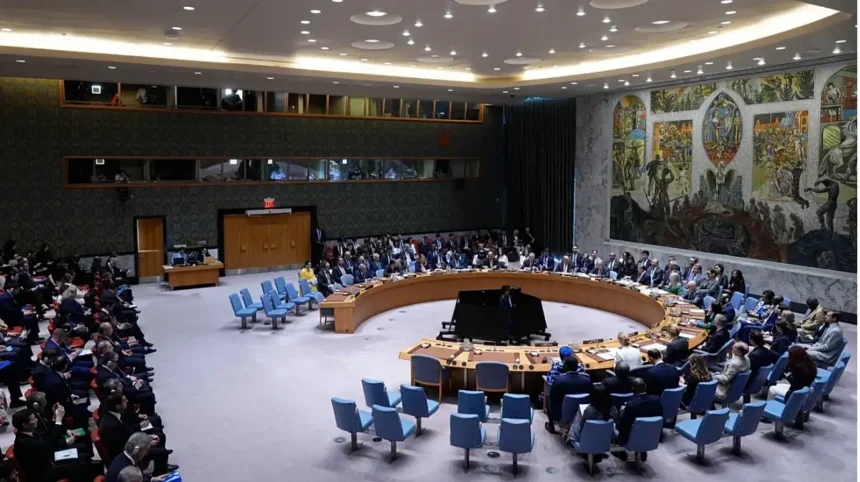
The straw polls are unbinding polls which serve as an attempt to express the support of the 15 Security Council members while circumventing the potential diplomatic damage caused by the formal use of veto power. During this process, each member casts his vote for each candidate using one of three ballots, which read: “encouraged,” “discouraged,” or “no opinion expressed.” These ballots are destroyed upon counting and the presidency simply confirms that the poll was held but does not disclose the result.
What makes the second round unique is that there are colour-coded ballots used for the five permanent members of the Council (the United States, China, Russia, the United Kingdom, and France). This system enables the Council to determine if the candidate is “discouraged” by a P5 member state without disclosing which one exactly. The official threshold of votes needed to recommend a candidacy remains the same: at least nine out of fifteen votes with no veto from a P5 member according to Article 97 of the UN Charter.
The Field of Eight: Regional Bets, Gender Pressure, and Veto Math
The 21 August vote will be contested by eight contenders, among whom Ivonne A-Baki of Ecuador, who joined the race only a few days prior to the vote following her nomination by Tonga. The field comprises largely of candidates from Latin America and the Caribbean—Rebeca Grynspan (Costa Rica), Rafael Grossi (Argentina), Michelle Bachelet (Chile), María Fernanda Espinosa (Ecuador), and A-Baki (Ecuador)—reflecting the tradition of regional rotation which has favored this region at present. Accompanying them are the names of Carolyn Rodrigues-Birkett of Guyana, Olara Otunnu of Uganda, and Macky Sall of Senegal. The gender aspect is inevitable: there are three leading contenders who happen to be women (Grynspan, Bachelet, Espinosa), and there is increasing pressure on the UN to choose its first ever woman secretary-general.
First Poll Fallout: Grynspan’s Lead, Bachelet’s Warning Sign
The first straw poll on 30 July produced no official results, but leaked figures circulated widely in diplomatic circles and among UN watchers. Costa Rica’s Rebeca Grynspan emerged as the clear front-runner with roughly 10 “encourage” votes and only one “discourage”, the lowest discouragement of any candidate. Guyana’s Carolyn Rodrigues?Birkett followed closely with about nine “encourage” and two “discourage”, while Argentina’s Rafael Grossi logged around seven “encourage” and two “discourage”.
Michelle Bachelet, despite her global profile as a former Chilean president and ex?UN high commissioner for human rights, received about six “encourage” but five “discourage”. That level of opposition, especially if even one came from a P5 member, is a serious warning sign. María Fernanda Espinosa showed a wide but soft base: roughly five “encourage”, two “discourage”, and eight “no opinion”, indicating many members were still hedging. African candidates Macky Sall and Olara Otunnu reportedly drew higher “discourage” counts, weakening their early viability.
One telling detail from the first round: about 34% of all ballots were “no opinion”, significantly higher than in 2016’s first poll (~21%). That suggests a field still in flux, with many members reluctant to commit before seeing how P5 colours play out in subsequent rounds.
Candidate Platforms in Context: Reform, Rights, and Realpolitik
While the candidates’ platforms have become increasingly similar with a focus on reform, their emphases highlight different theories of change. Rebeca Grynspan has outlined her platform based on building back trust in multilateralism, advocating for effective conflict mediation and utilizing technology in strategic planning. She has positioned herself as “a product of peace” and has publicly opposed Holocaust denial, thereby presenting herself as a moral leader in the polarized environment. Rafael Grossi, as the current IAEA director-general, has a technocratic and crisis management leadership style. He has called for practical action-driven UN leadership and has been vocal about his views on Iran’s nuclear dossier and nuclear aspects of the war in Ukraine. He has argued that
“there is need for open dialogue and sustained reform implementation.”
His followers believe that he is able to manage the geopolitical tensions without making a spectacle of himself.
The human rights and accountability component plays an important part in Michelle Bachelet’s platform, which is quite understandable considering her previous experience as the head of the UN human rights office. However, the fact that she accumulated a significant number of “discourage” votes in the previous elections indicates that some capitals consider her approach to be too politically sensitive in view of the often paralyzed nature of the Security Council caused by geopolitical rivalry.
Ivonne A?Baki, the newest entrant, has already drawn attention with a sharp critique of the Security Council itself, calling for “Security Council overhaul” and warning that
“the world is on the brink of war”.
She argues the UN must serve all member states equally, a line that resonates with smaller states frustrated by P5 dominance.
Olara Otunnu stresses continued reform of the UN and restoration of its moral authority, while Macky Sall, a former head of state, brings the heft of African executive experience but faces the same structural hurdles that have long limited African candidacies in practice.
Veto Dynamics and the Colour-Coded Ballot: Reading Between the Lines
By far the most significant change in the voting process for the second time around will be the introduction of color-coded P5 ballots. While there is no information provided as to which of the permanent members has cast a “discourage” vote, it is clear whether or not the opponent has a supporter who can veto the appointment. Practically speaking, this means that if in the first round the candidate received numerous “discourage” votes, then his support will fall drastically in case these votes came from P5 members.
Some changes in the lineup of candidates can be expected as some of them are likely to get consolidated while the others would be out of the game. At the same time, there will be no candidate who will have a decisive and unopposable advantage in this second poll, further rounds being expected. Some candidates may give up if they receive strong “discourage” signals, especially in case they are accompanied by color-coding of the ballot. This is also the reason why the issue of rotation within regions becomes so relevant as Latin America’s turn makes it less likely for a P5 member to veto on this ground.
Transparency Under Pressure: The Push to Publish Poll Results
The issue of the secrecy of straw polls has always been a point of contention. Quite a number of the member states have called upon the Security Council to release the results of the straw polls as this lack of transparency tends to erode the legitimacy of the process. However, no consensus has been reached, hence the results continue to be unofficial and are sometimes released through leaks. There is also a proposal by the ACT Group and other stakeholders that the Security Council can recommend several candidates to the General Assembly if it fails to reach an agreement on one candidate.
Timeline to October: What Comes Next
This formal procedure started in April 2026 through candidate nominations and General Assembly interactive dialogues. The first straw vote took place on 30 July, while the second one on 21 August. More straw votes will follow in the next few weeks, with the use of color-coded P5 ballots in order to identify vetoes better. The Security Council is aiming to complete its deliberations and come up with a recommendation on or before 1 October, after which the appointment of the secretary-general will be undertaken by the General Assembly for a five-year period starting from 1 January 2027.
The Stakes Beyond Personnel: Reform, Legitimacy, and Global Trust
But the stakes go beyond merely who gets the job; this is a test of whether the UN will be able to adjust its system of leadership selection for the multipolar age without bowing to veto power. The effectiveness of the secretary-general in negotiating peace agreements, combating climate change, and promoting human rights depends on his or her legitimacy, which, in turn, is dependent upon a selection process that is seen as legitimate itself. If the Council comes up with a candidate widely accepted and not vetoed, it may bring some credibility back to multilateralism. But if it defaults to choosing the lowest common denominator after opaque horse-trading, it will only confirm the perception of UN subservience to great powers. The second straw poll is the first true test of this assumption in the current cycle.