The world is set to cross the critical 1.5°C global-heating threshold within the next few years, marking a decisive setback for the Paris Agreement’s central climate ambition. Yet a new United Nations assessment says the future is not predetermined: immediate emissions cuts, rapid adaptation and carefully governed carbon removal could still limit warming to about 1.8°C and eventually bring temperatures back below 1.5°C.
The warning is contained in the UN Environmental Programme report titled “Limiting Overshoot,” which addresses the inevitable overshooting of the Paris temperature limit as identified by the scientific community and vulnerable nations. The report does not suggest that the 1.5°C limit is unimportant. On the contrary, the report contends that governments need to go beyond this target “from above” by minimizing the overshoot to the smallest size and duration possible.
The report offers no encouraging scenarios. Even the most ambitious scenario in the report would lead to a rise in temperatures up to 1.8°C above pre-industrial levels halfway through the century. But under the existing policies, the median warming may be up to 2.6°C by 2100, with the report suggesting that the warming under current policies may range as high as 2.3°C. This is not only a matter of statistics but rather significant differences in the risks to human wellbeing, agricultural production, freshwater resources, ecosystems, infrastructures and the economy.
The Paris target is slipping
Since its adoption in 2015, the Paris Agreement aims to keep global warming below 2°C above pre-industrial levels, “and pursuing efforts to limit the temperature increase even further to 1.5°C.” The latter number was viewed as a critical target of the agreement to avoid the most dangerous consequences of climate change especially for small island states, coastal zones and developing countries. The latest assessment from the UN Environment Program (UNEP) warns that staying consistently within 1.5°C is no longer feasible at the current rate of development. The 1.5°C threshold is likely to be breached “within a few years” but the precise timeframe depends on the definition, baseline and rate of global emissions reduction. The report defines such scenario as “overshoot trajectory” where the global warming surpasses 1.5°C threshold, peaks and goes down with the achievement of net-zero and net-negative emissions. This strategy is quite risky since some of the impacts of climate change would become more severe, while others could become irreversible.
UNEP Executive Director Inger Andersen said the assessment should not be interpreted as permission to abandon the Paris goal.
“Let’s be very clear, that 1.5C target is still the goal but now, we need to approach it differently from above,”
Andersen said.
She also delivered one of the report’s starkest conclusions:
“There are no good outcomes if we remain above 1.5C.”
The wording reflects the scientific understanding that climate risks rise progressively with each additional increment of warming. There is no single moment at which the planet suddenly moves from safety to catastrophe, but the probability of severe and irreversible damage increases as temperatures climb and remain elevated.
A narrow best-case pathway
The most hopeful scenario outlined by UNEP would require countries to implement their existing nationally determined contributions, fulfil long-term net-zero commitments and adopt further ambitious measures. Under that pathway, global heating could peak at about 1.8°C around mid-century before declining. The report’s authors say the world would need to halve greenhouse-gas emissions by 2035 to have a realistic chance of keeping peak warming close to 1.8°C. That would require a transformation of energy, transport, industry, buildings, agriculture and land use within less than a decade.
The pathway requires net zero emissions to be achieved as well. UNEP states that net zero “is a crucial step which cannot be avoided.” In order to reduce atmospheric carbon dioxide beyond zero, carbon dioxide removals would be needed which would remove more carbon from the atmosphere than humans still produce.
The carbon removal measures could be afforestation, enhancing carbon sinks naturally, better soil management, use of direct air capture technology and the use of BECCS (Bioenergy with carbon capture and storage). However, the report states that carbon removal measures are risky, costly and also constrained by ecological and political barriers. The main idea is that the carbon removal should be complementary but not a substitute for rapid reductions of emissions of fossil fuels. For instance, growing of forests cannot offset forever the increased use of coal, oil and gas. Forests can catch fire, they can experience drought conditions and their ability to sequester carbon decreases with the increase in temperatures. Therefore, the “overshoot, peak and decline” approach is provided in the report.
The cost of every fraction
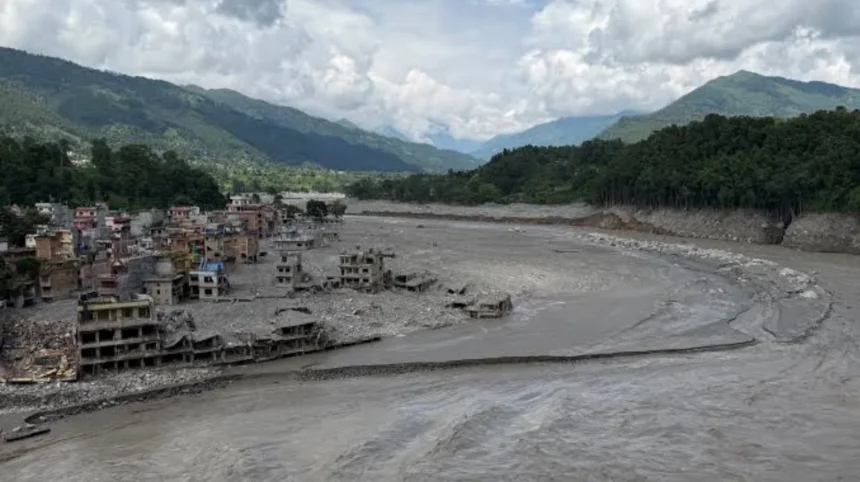
Human impacts and effects of overshoot will greatly depend on the degree of warming and the duration of temperatures being higher than 1.5°C. According to research findings connected with UNEP, the temperature rise to a maximum of 3°C can lead to loss of over 25 percent of glacier mass and contribute up to 13 centimeters towards sea level rise by 2100. There will be additional repercussions of melting glaciers that will not be confined to just mountain ranges.
Water supplies will be jeopardized in regions dependent on seasonal runoff from melting glaciers; while the initial increased risks of floods caused by fast melting will turn into reduced water flow after some time. Impacts will also affect food supply systems. With lack of adaptation, food output in the world can decline by up to 14 percent by 2050 under warming circumstances. This will be the result of heat stress, water shortages, drought, crop losses, pest attacks and heavy rainfall. Cities will have more instances of heat emergencies, flooding, and failure of infrastructure. Coastal lowland communities and island populations will be affected by permanent flooding, salinization and loss of property, agriculture and cultural sites.
Andersen said recent climate extremes were already demonstrating the direction of travel.
“Extreme heatwaves are showing us that climate impacts strike faster, hit harder and last longer,”
she said. She added:
“Every fraction of a degree avoided, every year by which overshoot is shortened, and every adaptation action taken will save lives, will protect ecosystems, and reduce economic losses.”
That argument is particularly important politically. If 1.5°C is treated as already lost, governments and citizens may conclude that further action is futile. The UN is instead insisting that the difference between 1.8°C, 2°C, 2.6°C and higher levels of warming will determine the scale of future suffering.
Climate governance must change
The report also challenges governments to redesign climate policy for a world preparing for temporary overshoot. Existing frameworks have generally focused on preventing warming from crossing a threshold. The new assessment says policy must also address the consequences of crossing it and create a credible route back.
Debra Roberts, a report author and co-chair of the Intergovernmental Panel on Climate Change, said the implications went beyond technical adjustments.
“The rules of the game are now changing,”
Roberts said.
She made the case that
“existing methods are no longer fit for purpose”
and argued that climate governance should be redesigned along the lines of an overshoot path. This would imply a combination of mitigation efforts with “bold adaptation” instead of their being treated in isolation or conflict with each other. The governments would need to safeguard the infrastructure and lives while sustaining popular backing for emissions reductions. Otherwise, continuous catastrophes could drain out the resources and the focus of politics away from climate policy. But adaptation has its limitations. The construction of sea walls, development of drought-tolerant crops, early warning systems, and heat-resistant buildings can lower the losses, but it will not be able to prevent all of them.
Frontline states demand action
The report has particular resonance in the Pacific, where governments have long argued that 1.5°C is a matter of survival rather than diplomatic ambition. Palau President Surangel Whipps Jr. described the findings as “a fork in the road moment for the planet.” He said the assessment should trigger
\“an urgent and unprecedented increase in political will and investment in a climate safe future.”
Whipps also expressed the frustration of countries that contributed relatively little to historical greenhouse-gas emissions but face some of the most immediate consequences.
“Nobody can read this report and conclude otherwise,”
he said. Vishal Prasad of Pacific Island Students Fighting Climate Change said young people in the region regarded the findings as terrifying. Referring to the International Court of Justice’s climate-related advisory opinion, Prasad said:
“Keeping to 1.5C is not a choice, it is a legal obligation.”
He added:
“We are not asking for your goodwill. We are not begging you. We are telling you what international law requires of you. End fossil fuel expansion. Your corporate profits cannot be allowed to extinguish our future.”
Those remarks capture the widening gap between scientific warnings and political decision-making. While governments have expanded renewable-energy capacity and introduced climate targets, fossil fuels continue to dominate global energy consumption and new oil and gas projects remain under development.
Critics say the report needs a clearer exit
UNEP’s latest estimate has been appreciated as an honest attempt to discuss overshoot, yet some scientists do not find it credible enough to get back to 1.5 °C. Bill Hare, CEO of the climate policy think tank Climate Analytics, has noted that the report did a good job of describing the danger but failed in showing how we could get out of it. He criticized the lack of emphasis on the importance of rapidly phasing out fossil fuels and the evidence of reaching zero emissions in some sectors by mid-century. This issue is rather serious as the scenario based on future carbon removals can serve as a political pretext for procrastination. Countries or businesses could justify their emissions today saying that they would remove carbon dioxide from the atmosphere later, although future removal capacity cannot be assured.
UNEP’s own assessment recognises that uncertainty. The more the planet warms, the more nature’s ability to store carbon may decline. Drought, wildfires, forest dieback and thawing permafrost could reduce natural absorption and release additional greenhouse gases.
Richard Betts of the UK Met Office and the University of Exeter said the consequences of glacier loss illustrated why limiting overshoot mattered.
“We are committed to glacier loss,”
Betts said, while stressing that emissions reductions could prevent the situation from becoming much worse.