The United Nations has issued one of its most urgent warnings in recent months, declaring an imminent risk of mass atrocities in Sudan’s Kordofan region. The warning, delivered by the UN Security Council and reinforced by the UN’s top human rights official, centers on El Obeid, the capital of North Kordofan state, where hundreds of thousands of civilians face an escalating threat as paramilitary forces reinforce their positions.
The blunt statement comes at a time when there is rapid deterioration in Sudan’s oil rich Kordofan province that has become the latest theater in its civil war. The war, which has been raging for more than two years now, has left civilians stuck behind ever-changing battle lines with growing violence and famine looming large in certain parts of the country. The UN senior political and humanitarian officials informed the Security Council yesterday that the danger of new mass atrocities is very real indeed.
The El Obeid Offensive: A Gathering Storm
The immediate trigger for the UN’s alarm is the anticipated offensive against El Obeid, where the Rapid Support Forces (RSF) have conducted substantial military reinforcements. The UN Security Council expressed profound alarm over these reports of RSF troop buildup around El Obeid, warning that an imminent offensive carries the risk of serious international crimes.
The UN has indicated that more than 500,000 people are endangered by the offensive and will be exposed to atrocities if the offensive continues unimpeded. The number of people in peril is a terrifying level of vulnerability condensed into one urban area, with people having been forced to move numerous times due to the escalation of the war into Sudan. The UN’s rights commissioner made an impassioned appeal to end the offensive on June 17. “Stop this madness,” the commissioner called out, cautioning that the offensive could lead to international crimes and a worse humanitarian catastrophe.
Historical Precedent: The el-Fasher Genocide Pattern
The warning in Kordofan is not happening in isolation. It follows a horrific pattern of atrocities already documented in Sudan’s conflict, particularly in el-Fasher, where the UN found that RSF actions had hallmarks of genocide. The 18-month siege of el-Fasher ended in October 2025 with mass killings that international investigators identified as signs of a possible genocidal path.
According to an assessment published by the United Nations in February 2026, the RSF undertook a concerted effort of destruction against non-Arabic population groups in el-Fasher. According to the results of the research, RSF troops have been carrying out mass executions of civilians, destroying their homes, and attacking certain ethnic groups, conducting what the researchers referred to as an extermination campaign. Human rights chief expresses his concern regarding the possibility of the next wave of violence, comparable to el-Fasher, as the number of casualties increases in Kordofan region.
The Kordofan Front Line: Oil, Power, and Brutality
Sudan’s oil-rich Kordofan region has turned into a major front line in the war between the army and rival paramilitary forces, as both sides compete for control of strategic territory. The region’s economic significance, combined with its position linking central Sudan to the western borders, has made it a critical battleground in the three-year conflict.
Recent reporting from July 2025 documented how Kordofan became the latest front line, with both the Sudan Armed Forces (SAF) and RSF pouring resources into the region.
This has led to formerly peaceful settlements turning into battlefields, with farm lands being bombarded, markets being razed and infrastructure getting destroyed. Violence has been especially rampant in North Kordofan, where over 450 people including children and pregnant women have been killed in Bara and other neighboring villages. In el-Fula and Abu Zabad, more than 20 civilians have been killed in air strikes that targeted even schools where families were taking refuge.
International Response: Fifty Nations Demand Action
The UN warning has triggered a coordinated international response. On June 18, 2026, more than 50 countries issued a joint statement expressing profound concern about the imminent threats of atrocities and intentional killings in Sudan.
“We are profoundly concerned about the imminent threats of atrocities and intentional killings in Sudan,”
the joint statement declared, urging maximum pressure on both the RSF and SAF to halt their military operations.
This is one of the most coherent statements on the Sudan crisis by the international community in the last few months, and shows that the global community realizes the seriousness of the crisis. The UN Security Council in its meeting held on 19th June has gone even a step further by demanding an immediate cessation of attack on El Obeid by the RSF. The council has been concerned about the significant military buildup and atrocity risk.
The Humanitarian Catastrophe: 33.7 Million in Need
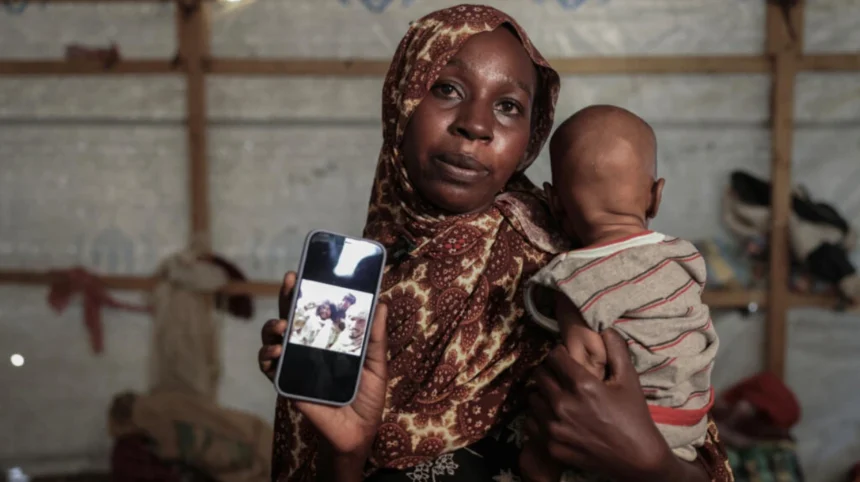
The atrocities warning emerges within the context of Sudan’s broader humanitarian catastrophe. In 2026, 33.7 million people—representing 60% of them children—need humanitarian assistance, making Sudan the biggest humanitarian crisis in the world today.
More than two years after Sudan went to war, violence is escalating, hunger is imminent in some regions of Sudan, and civilian populations continue to find themselves caught up in the conflict zones as the fronts shift. UN staff informed the Security Council that the likelihood of further mass atrocities was worryingly high, underscoring the point that the humanitarian crisis is directly a result of the ongoing violence, and is not a different issue entirely. The humanitarian crisis in Kordofan region is a manifestation of the tragedy unfolding throughout the nation. Humanitarian staff members continue to be at risk with three killed and four injured following an RSF drone attack on Kordofan in February 2026.
The RSF-SAF Conflict: A War Without End
The conflict driving these atrocities involves two primary forces: the Sudan Armed Forces (SAF), the country’s official military, and the Rapid Support Forces (RSF), a paramilitary organization that has grown into a powerful warlord faction. Both sides have been implicated in atrocities, though the UN has found more documented evidence of systematic campaigns by the RSF.
RSF, initially created as a paramilitary group, has developed into an independent military body with a command structure, source of funds, and territory under its control. SAF, on the other hand, is the recognized military wing of the state that has not been able to maintain control amid the expansion of RSF. International stakeholders have recommended both of these entities to be subjected to maximum pressure, with the joint statement made on June 18 indicating that action needed to be taken against RSF and SAF. It is due to the fact that the suffering of civilians in Sudan has been caused by both of them.
The Path Forward
The UN’s warning represents both a call to action and a grim prediction. Without immediate intervention, the Risk of mass atrocities in Sudan’s Kordofan will likely materialize into full-scale atrocities comparable to those witnessed in el-Fasher. The question now is whether international pressure can halt the El Obeid offensive before it begins.
The UN Security Council’s demand for the RSF to halt its assault provides a framework for immediate action, but enforcement remains uncertain. The joint statement by 50+ countries signals international unity, but the mechanisms for translating that unity into concrete pressure on Sudan’s warlords remain unclear.
For the 500,000 civilians at risk in El Obeid, the coming days may determine whether they survive the imminent offensive or become victims of the next wave of mass atrocities in Sudan’s endless war. The UN’s warning, issued with desperate urgency, serves as both a prophesy and a plea: “Stop this madness,” the rights chief demanded, before the madness consumes another half-million lives.